

Archive · 30 Sep 2025
AstroSat: India's Space Observatory Completes A Decade
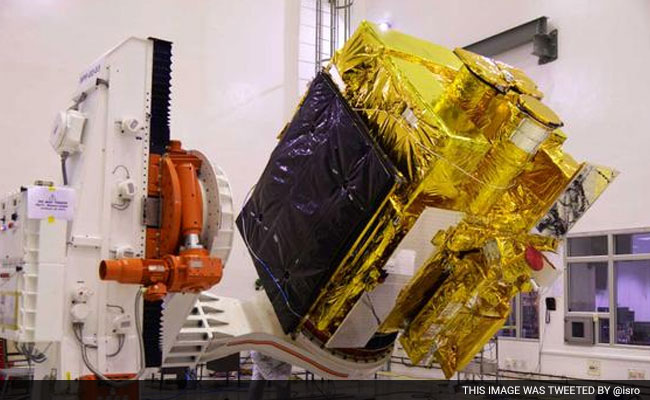
Imagine a giant space telescope called AstroSat that India launched to study things far away in space.
It's been looking at the universe for 10 years!
AstroSat helps scientists see different kinds of light, like X-rays and ultraviolet, from things like black holes and faraway galaxies.
It has found amazing things, like light from 9 billion light-years away!
Scientists all over the world use AstroSat to learn more about space.
It's like having a super-powered eye that helps us understand the mysteries of the universe.

AstroSat is India's first multi-wavelength astronomy satellite.
Launched on September 28, 2015, by ISRO.
AstroSat has made remarkable discoveries, including far-UV photons detection.
The satellite studies celestial phenomena, including black holes and supernovae.
AstroSat has a user base of about 3,400 from 57 countries and is used by Indian universities.
- Who
- ISRO
- What
- AstroSat, India's first multi-wavelength astronomy satellite, completed 10 years of observation.
- When
- Launched on September 28, 2015, and completed 10 years of science observation.
- Where
- Launched from Satish Dhawan Space Centre in Andhra Pradesh, India.
- Why
- To study various celestial phenomena across a broad energy range.
- Satellite Name
- AstroSat
- Launch Date
- September 28, 2015
- Orbit
- 650 km
- Launch Vehicle
- PSLV-C30
- Lifespan
- Exceeded 5 years
- Discoveries
- UV photons from 9 billion light-years, fast-spinning black holes, etc.
- User Base
- 3,400 users from 57 countries