

Archive · 7 Nov 2025
Indian Kitsch Art Reclaimed from 'Tacky' to Trendy
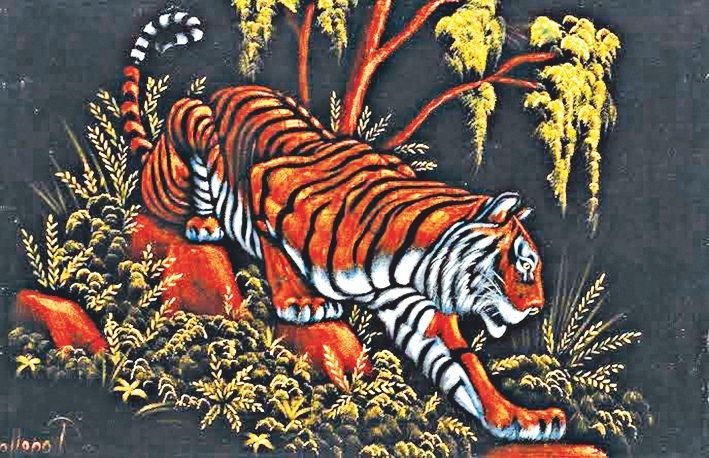
Imagine things that used to be seen as a bit too loud or flashy, like paintings of shiny tigers or colorful pictures of gods, are now becoming cool again in India.
For a long time, people thought these things were 'tacky,' but they were actually a way for families to show they were dreaming big and trying to have nice things.
Now, fancy fashion designers are using these kinds of images, and artists are making them into big, bright artworks.
Even young people are decorating their homes with these colorful items.
It's like India is saying it loves its own unique style, which is full of bright colors and exciting things, and it's not embarrassed by it anymore.
It's a way to be proud of who they are and where they come from.

Indian kitsch art, characterized by vibrant colors and symbolic imagery, is experiencing a resurgence in cultural relevance.
Once dismissed as 'tacky,' kitsch is now being reframed as a genuine expression of Indian aspiration, identity, and chaos.
Luxury fashion designers and artists are incorporating kitsch elements, such as truck art and calendar prints, into high-end products and gallery pieces.
Collectors and young urban Indians are embracing kitsch, decorating homes with vintage and contemporary items that represent cultural pride.
The revival of kitsch is seen as a rejection of minimalism and a celebration of India's authentic, loud, and unapologetic aesthetic.
- Who
- Young urban Indians, fashion designers, artists, and collectors
- What
- Reclaiming and celebrating 'kitsch' art and aesthetics
- When
- Currently, with roots in the '80s and '90s
- Where
- India, from homes and streets to fashion runways and art galleries
- Why
- To embrace cultural identity, challenge elitist notions of art, and celebrate aspiration and chaos
- Definition of Kitsch
- Imagery once mocked as 'tacky' or 'cheap', now seen as India's aesthetic shorthand for aspiration, chaos, and identity.
- Historical Context
- Prevalent in middle-class Indian households in the '80s and '90s as status symbols and reflections of aspiration.
- Modern Manifestations
- Featured in luxury fashion, art installations, digital art, and home decor by young urban Indians.
- Cultural Significance
- Seen as an honest art form, a protest against minimalism, and a reclaiming of Indian aesthetics unfiltered by colonial ideals.
- Key Elements
- Includes velvet tigers, plastic gods, calendar prints, truck art, Bollywood posters, and vibrant, often gaudy, colors.