

Archive · 11 Jun 2025
South Korea and Global Political Divide: Gender Polarization Explained
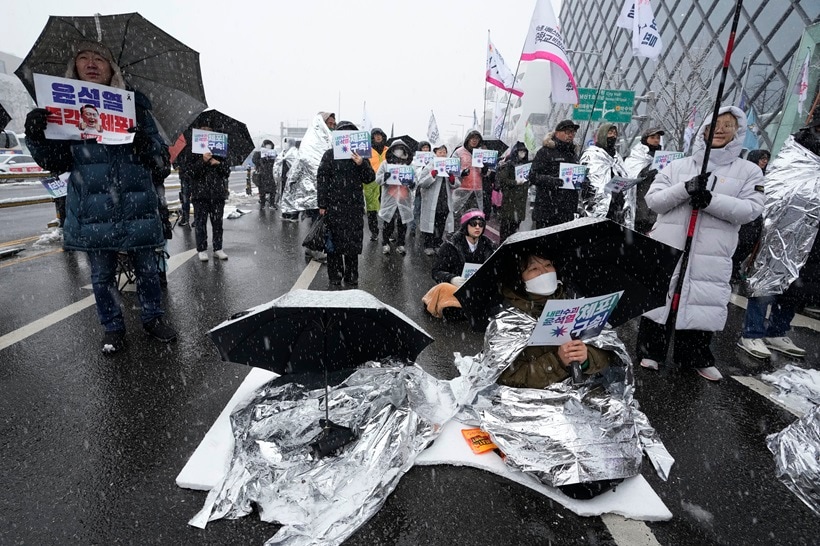
Imagine a country where young people are split on who to vote for based on if they are a boy or a girl.
In South Korea, many young women like the more liberal parties, while young men tend to vote conservative.
This is because some young men feel left out as women gain more opportunities.
The divide also shows up in other countries, where men and women have different views on things like women's rights.
This split makes it harder for everyone to agree and work together, especially on important topics.

South Korea elected Lee Jae-Myung as president, amid gender-based political divisions.
Young women predominantly support progressive parties, while young men lean conservative.
Gender divides were evident in election exit polls and impeachment protests.
Socio-economic anxieties and online anti-feminist narratives fuel the conservative shift among young men.
Globally, young men are increasingly drawn to conservatism, influenced by differing factors.
- Who
- Lee Jae-Myung, young voters, and political parties like the Democratic Party (DP) and People Power Party (PPP).
- What
- South Korea's political landscape is experiencing polarization based on gender, impacting voting patterns and societal views.
- When
- In June, South Korea elected a new president, with data reflecting voting patterns in 2024 and 2025.
- Where
- South Korea, and examples from the US and Germany are discussed.
- Why
- Socio-economic anxieties, online echo chambers, and differing views on gender equality contribute to the divide.
Feminist Perspective
Conservative Perspective
Feminism and its perception
Feminist Perspective
Advocates for gender equality, criticizes policies perceived as anti-women, and supports progressive parties.
Conservative Perspective
Views feminism as a threat, potentially fueling resentment and opposition among some young men.
- President of South Korea
- Lee Jae-Myung
- Gender Pay Gap (South Korea, 2025)
- 31.2%
- Support for Lee (DP) among men in their 20s
- 24%
- Support for conservatives among men in their 20s
- 74.1%
- Support for Lee (DP) among women in their 20s
- 58.1%
- US Presidential Election (2024)
- Kamala Harris (women), Trump (men)