

Archive · 7 Sep 2025
Sinking Islands: Legal Status in Question as Sea Levels Rise
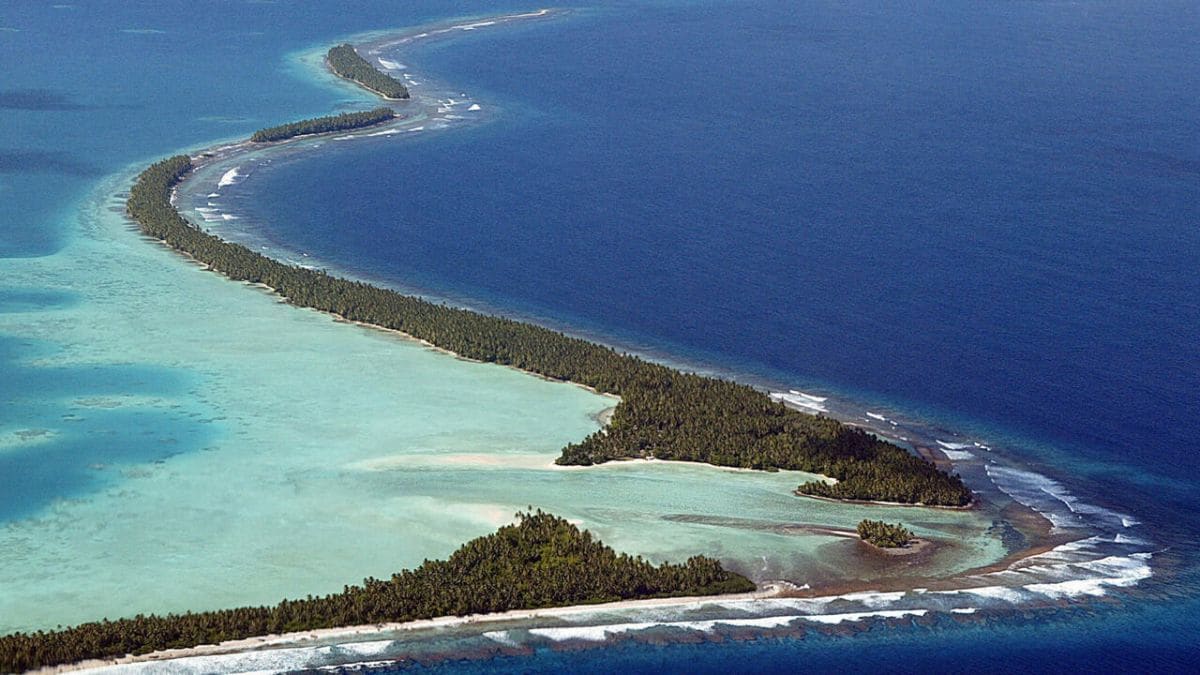
Imagine countries that are just islands, like Tuvalu, are slowly being covered by the ocean because the world is getting warmer.
This makes it hard for people to live there.
A big question is, if these islands disappear, are they still countries?
International law says a country needs land, people, and a government.
If the land goes away, it's tricky.
Some countries are trying to stay a country even if the land is gone, like Tuvalu, which is becoming a digital nation.
The International Court of Justice has said it's a problem, but hasn't fully decided if these island nations can still be countries if they are underwater.
It’s a complex issue with no clear answers yet.

Rising sea levels threaten the existence of small island nations like Tuvalu and the Maldives.
The loss of land raises questions about whether these nations can maintain statehood.
Tuvalu has partnered with Australia and is digitizing to preserve its statehood.
The Maldives is exploring engineering solutions to raise the island's heights.
The International Court of Justice acknowledges the threat, but the legal status remains unclear.
- Who
- Small island nations like Tuvalu, Kiribati, Maldives, and the Marshall Islands, along with the International Court of Justice.
- What
- The potential loss of statehood for island nations due to rising sea levels caused by climate change.
- When
- The ongoing effects of climate change and rising sea levels are currently impacting these nations.
- Where
- Small island nations around the world, specifically Tuvalu and the Maldives.
- Why
- To determine if these nations can remain sovereign states even if their land disappears.
- Affected Nations
- Tuvalu, Kiribati, Maldives, Marshall Islands
- Threat
- Rising sea levels due to climate change
- Legal Question
- Can sinking islands remain states?
- Solutions Explored
- Digitization (Tuvalu), engineering (Maldives)
- International Court of Justice (ICJ)
- Acknowledged climate change threat, but unclear on statehood implications.