

Archive · 30 Jun 2025
Asteroids: Compositions and Their Solar System Significance
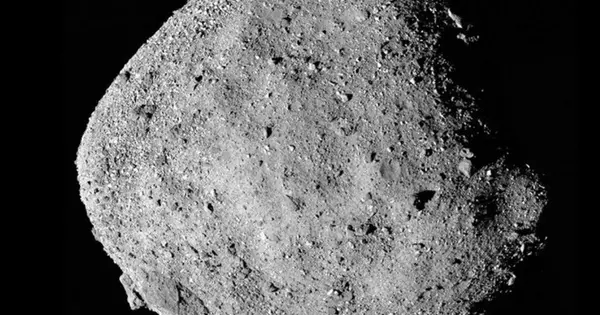
Asteroids are like tiny planets made of rock and metal, found throughout our solar system.
They're leftovers from when the planets formed, so scientists study them to understand how the planets, like Earth, were created.
There are different kinds of asteroids: some are made of carbon-rich materials, others are stony with metals, and some are rich in metals.
These asteroids can also help us learn about water and organic materials that were present in the early solar system.

Asteroids are small, rocky bodies orbiting the Sun, smaller than planets.
They provide clues about the early Solar System's composition.
Asteroids are categorized into three main types: C-type, S-type, and M-type.
C-type asteroids, the most common, contain clay, silicate rocks, and organic carbon.
S-type asteroids are made of rock and metals like nickel and iron.
- Who
- Scientists study asteroids to understand the solar system's formation.
- What
- Asteroids are small, rocky bodies orbiting the Sun.
- When
- Asteroids provide clues about the early composition of the Solar System.
- Where
- Asteroids are found in the solar system, with different types in different parts.
- Why
- To understand the composition of the solar system and the formation of planets.
- Type of Object
- Small rocky bodies
- Size
- Smaller than planets
- Main Types
- C-type, S-type, M-type
- C-type Composition
- Clay, silicate rocks, organic carbon
- S-type Composition
- Rock and metals (nickel, iron)