

Archive · 4 Oct 2026
Antara Haldar’s Everyman Challenges Economics’ Rational Man
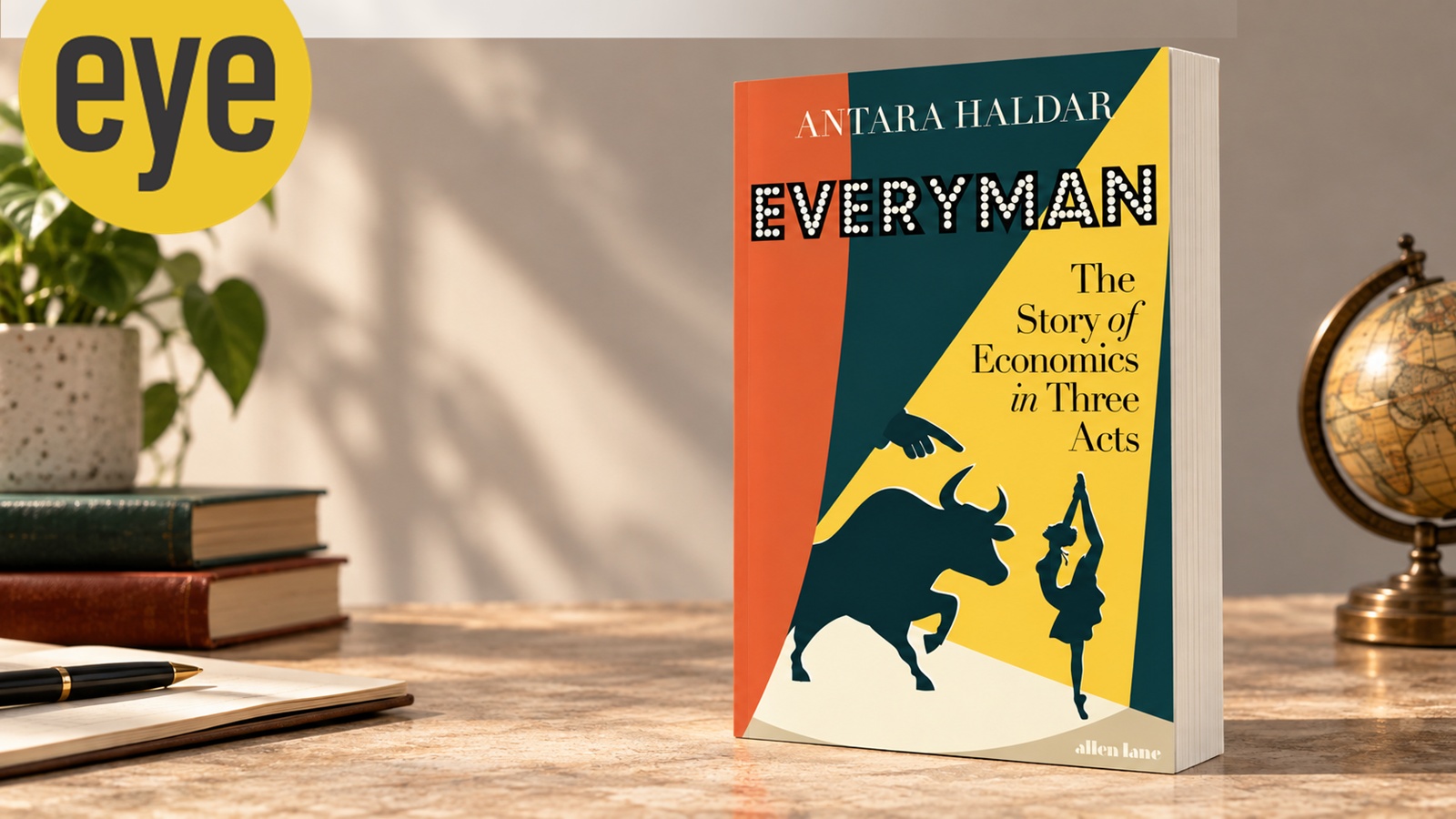
Antara Haldar has written a book about how economists sometimes imagine people.
In that picture, called “Neo” in the book, people mostly try to get the best deal for themselves.
Haldar contrasts Neo with “Everyman,” who represents people’s ability to cooperate and care about more than money.
The book says that if we keep describing people as selfish, they may start acting more selfishly.
It argues that working together and government help can be important for solving shared problems.
A reviewer liked the book’s creative storytelling and many references.
But the reviewer also thought some arguments were too simple and some descriptions of famous economists were unfair.
The review suggests that both sides of this conflict can exist within the same person.

Cambridge economist Antara Haldar’s book Everyman: The Story of Economics in Three Acts presents economic ideas through characters, including the self-interested “Neo” and the more cooperative “Everyman.”
The book argues that Homo economicus is a limited model of human behavior and that treating people as purely self-interested can help make them that way.
Haldar’s fable emphasizes cooperation and state action as ways to address public problems such as inequality, insecurity, and ecological damage.
The reviewer praises the book’s inventive characters, wide-ranging references, and literary style, particularly its final third.
The reviewer also finds the argument uneven, saying its portrayals of major economists can be caricatured and that the Neo-versus-Everyman conflict is too simplistic.
- Who
- Economist Antara Haldar, author of Everyman: The Story of Economics in Three Acts; the article’s reviewer is a contributing editor at The Indian Express.
- What
- A review of Haldar’s book, which uses characters to examine economics’ model of rational, self-interested people and its limits.
- Why
- The book questions whether the idea of people as mainly self-interested adequately explains human behavior and addresses social problems.
The book’s critique
The reviewer’s reservations
How well rational-choice economics explains people
The book’s critique
Haldar argues that the self-interested rational actor is a limited construction that can shape people’s behavior and neglects human complexity and cooperation.
The reviewer’s reservations
The reviewer says the book makes Neo too much the root of all evil and notes that the conflict between Neo and Everyman is more like an internal struggle within people.
Economics’ intellectual history
The book’s critique
The book presents Neo as emerging from ideas associated with Smith, Keynes, and Hayek.
The reviewer’s reservations
The reviewer argues that the book’s opening treatment risks caricaturing these thinkers and that its critique overlooks ideas they already addressed.
- Book
- Everyman: The Story of Economics in Three Acts
- Author
- Antara Haldar, a Cambridge economist
- Central characters
- Neo, representing the rational self-interested actor, and Everyman, representing greater human complexity and cooperation
- Book’s argument
- Human beings are more complex than the narrowly self-interested model suggests; cooperation and state action can serve the public good.
- Reviewer’s praise
- The book’s inventive characterization, range of references, and literary style
- Reviewer’s criticism
- The argument is uneven, sometimes caricatures economists, and oversimplifies the conflict between Neo and Everyman