

Archive · 28 Dec 2025
AI Accelerates Nuclear Arms Race 2.0
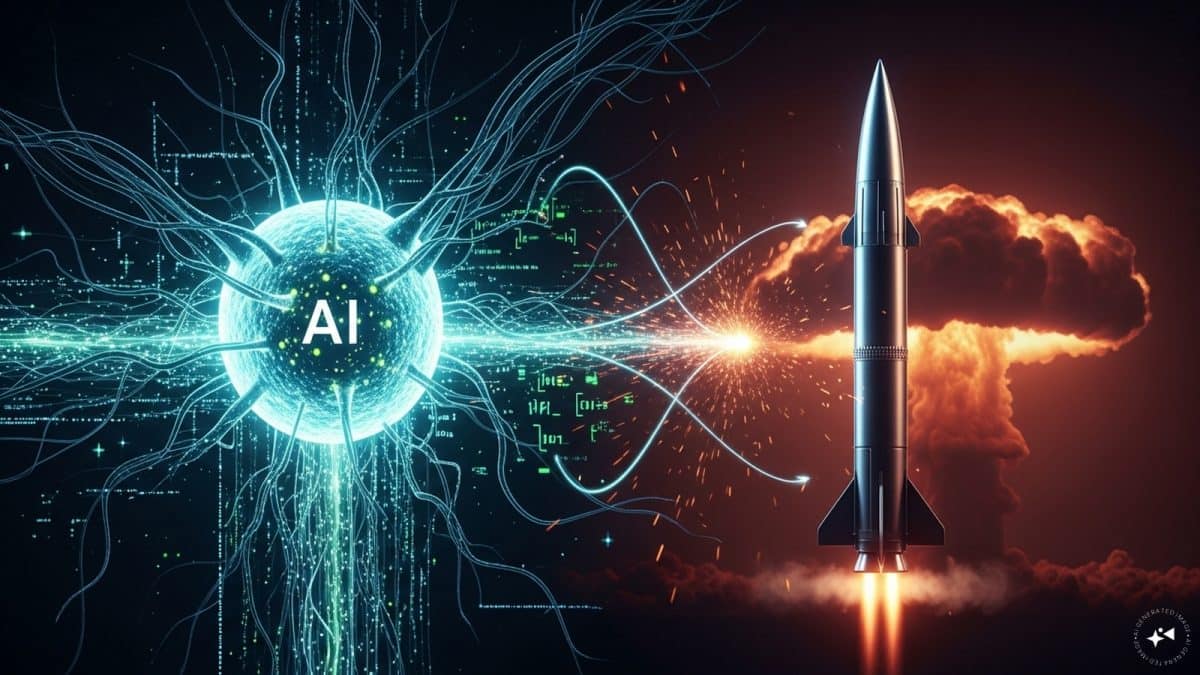
Artificial intelligence is making the nuclear arms race faster and more dangerous.
Countries like the United States, Russia, and China are using AI to improve their nuclear weapons, making them harder to detect and faster to launch.
This could lead to mistakes and accidents, as AI systems might make decisions too quickly for humans to understand.
Experts warn that without proper rules and controls, AI could make the world less safe by increasing the risk of nuclear conflict.
They suggest that countries should work together to set guidelines and ensure that humans remain in control of nuclear decisions.

AI is accelerating the nuclear arms race by enhancing capabilities and compressing decision timelines.
Russia's Burevestnik and Poseidon missiles, integrated with AI, pose significant threats and invite countermeasures from adversaries.
The US is considering resuming nuclear tests, which could lead to a destabilizing arms race if other countries respond in kind.
AI integration into nuclear operations risks increasing miscalculation and accidental escalation, as seen in historical incidents like the 1983 Stanislav Petrov event.
Experts propose solutions such as human-in-the-loop requirements, transparency measures, and robust governance to mitigate risks.
- Who
- United States, Russia, and China
- What
- AI integration into nuclear arms race
- When
- Ongoing, with increasing urgency
- Where
- Globally, with a focus on the US, Russia, and China
- Why
- To enhance nuclear capabilities, compress decision timelines, and gain a strategic advantage
- AI's Role
- Accelerates nuclear arms race by compressing decision timelines and enhancing capabilities
- Key Players
- United States, Russia, and China
- Notable Systems
- Russia's Burevestnik and Poseidon missiles
- Current Nuclear Stockpiles
- Russia: 5,459 warheads, US: 5,177, China: 600
- Potential Risks
- Increased miscalculation, accidental escalation, and erosion of crisis stability
- Proposed Solutions
- Human-in-the-loop requirements, transparency measures, and robust governance
- Testing Concerns
- US considering resuming nuclear tests, which could spur reciprocal actions
- Strategic Choice
- Harness AI for stability or risk destabilizing competition