

Archive · 31 May 2025
Giant Penguin Fossil Reveals Insights into Ancient Marine Life
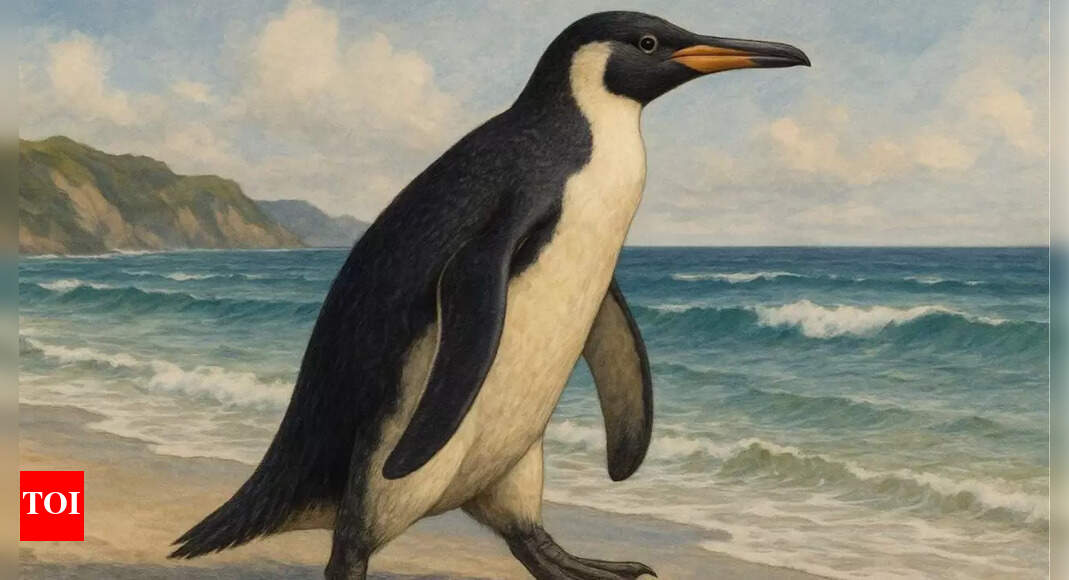
Scientists found fossils of a giant penguin called Kumimanu fordycei, which lived 57 million years ago in New Zealand.
This penguin weighed about 350 pounds, much bigger than modern penguins.
It helps us understand how penguins evolved to be so big so early in time.
These giant penguins could dive deeper to find food, like big fish.
They also stayed warm in the water.
The reason they died out might be because marine mammals like seals started to compete with them for food.
Today, smaller penguins survived and evolved into the types we see now.

A giant penguin fossil (Kumimanu fordycei) was discovered in New Zealand.
The penguin weighed approximately 350 pounds and lived 57 million years ago.
This finding suggests penguins evolved to large sizes earlier than previously thought.
Giant penguins likely had advantages like deeper diving and better heat retention.
Competition with marine mammals may have contributed to their extinction.
- Who
- Researchers from the University of Cambridge and Te Papa Museum discovered and analyzed the giant penguin fossil, Kumimanu fordycei.
- What
- The discovery of a 57-million-year-old giant penguin fossil, Kumimanu fordycei, provides new insights into penguin evolution and prehistoric marine life.
- When
- The giant penguin lived approximately 57 million years ago during the Paleocene epoch.
- Where
- Fossils were found in New Zealand, along the North Otago coast.
- Why
- Giant penguins disappeared due to competition with marine mammals and changes in their environment.
Giant Penguins
Marine Mammals
Competition
Giant Penguins
Giant penguins faced challenges in obtaining food and breeding sites.
Marine Mammals
Marine mammals like seals competed with penguins for resources, potentially leading to the decline of giant penguin populations.
- Species
- Kumimanu fordycei
- Weight
- 350 pounds (154 kilograms)
- Time Period
- Paleocene epoch
- Location
- New Zealand
- Age
- 57 million years ago