

Archive · 28 Nov 2025
IIT-Madras Professor Explains Perfect Dosa Physics
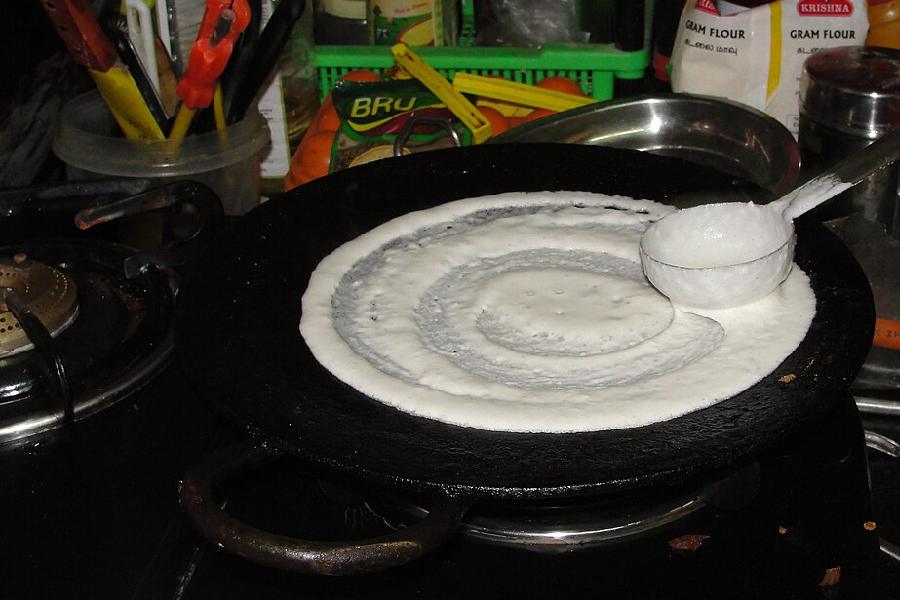
A professor from IIT-Madras has explained how to make the perfect dosa using science.
He says the secret is in the temperature of the pan (tawa) and something called the Leidenfrost effect.
This effect makes water droplets dance on a hot pan, which helps the dosa cook evenly without sticking.
The batter also needs to be just right, with tiny air pockets from fermentation that help make the dosa crispy.
When you sprinkle water on the pan and it dances, that means it's the perfect temperature for making a great dosa.
People online are talking about this, some finding it interesting and others joking about it.

IIT-Madras professor Mahesh Panchagnula explains the science behind making the perfect dosa.
The Leidenfrost effect, where water droplets hover on a hot surface, is key to cooking the dosa evenly.
The ideal tawa temperature allows the batter to spread smoothly and cook without sticking.
Fermented batter with air pockets helps achieve the dosa's crispy texture.
The research has sparked online discussions, with mixed reactions from the public.
- Who
- Professor Mahesh Panchagnula from IIT-Madras
- What
- Explained the physics behind making the perfect dosa
- When
- Recently highlighted by IIT-Madras
- Where
- IIT-Madras, India
- Why
- To understand the science behind the ideal dosa
- Professor
- Mahesh Panchagnula
- Institute
- IIT-Madras
- Scientific Principle
- Leidenfrost Effect
- Key Factor
- Tawa Temperature
- Batter Consistency
- Fermentation