Archive · 1 Oct 2026
TERI study says India needs a multi-fuel transport future
A new study looked at which fuels may work best for different vehicles in India.
It found that no single fuel is the best choice for every vehicle.
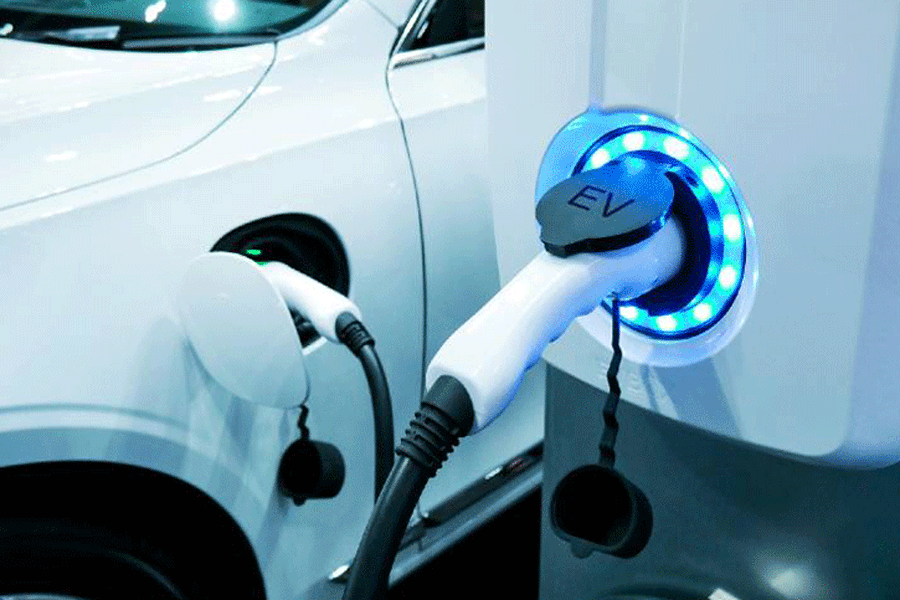
Electric vehicles may work especially well for two-wheelers and some city vehicles.
CNG may continue to be useful for cars, buses and some commercial vehicles.
LNG could help trucks that travel long distances.
Large electric trucks can cost more, take longer to charge and carry less cargo.
Electric vehicles also depend on how clean the electricity and battery-making processes are.
The study says India should use several fuels while improving charging, recycling and energy systems.

A TERI-PNGRB study says no single fuel suits every Indian road-transport segment.
EVs are projected to lead in two-wheelers and gain ground in three-wheelers, cars and lighter commercial vehicles.
CNG remains competitive for passenger cars, taxis, buses and light commercial vehicles, while LNG could serve long-haul freight.
Under India’s current electricity mix, CNG generally has the lowest overall environmental burden across most assessed categories.
Charging delays, infrastructure gaps, battery costs, payload limits and critical-mineral supply risks could slow full electrification.
- Who
- The Energy and Resources Institute and the Petroleum and Natural Gas Regulatory Board conducted the study, with comments from Vibha Dhawan and Tarun Kapoor.
- What
- The study assessed petrol, diesel, CNG, electricity and LNG across six vehicle segments and recommended a segmented, multi-fuel strategy.
- When
- The study was released on Wednesday and examined scenarios for 2030, 2040 and 2050.
- Where
- It was released in New Delhi and assessed conditions in ten Indian locations, including Delhi, Mumbai, Bengaluru and Chamba.
- Why
- India needs to reduce transport emissions while balancing affordability, reliable mobility, infrastructure, environmental impacts and energy security.
- Study title
- Comparative Assessment of Vehicular Fuels in India's Energy Transition: A Multi-Dimensional Approach
- Organizations
- The Energy and Resources Institute and the Petroleum and Natural Gas Regulatory Board
- Vehicle segments
- Two-wheelers, three-wheelers, private and commercial four-wheelers, light commercial vehicles and heavy-duty vehicles
- Assessment priorities
- Economic factors received a 31.49% weighting, followed by environmental factors at 22.34% and technical factors at 21.25%
- Long-term vehicle pathways
- EVs lead in two-wheelers and gain importance in three-wheelers, cars and lighter commercial vehicles; CNG and LNG retain roles in other applications
- Environmental finding
- Under the current electricity mix, CNG generally had the lowest overall environmental burden across most assessed vehicle categories
- Heavy-duty comparison
- In a 55-tonne comparison, a representative electric truck weighed about 8.8 tonnes unloaded versus roughly 7.1 tonnes for an LNG truck
- Net-zero target
- The report considers India's commitment to reach net-zero carbon emissions by 2070