

Archive · 21 Jul 2026
Bangladesh Instability Threatens India's Siliguri Corridor
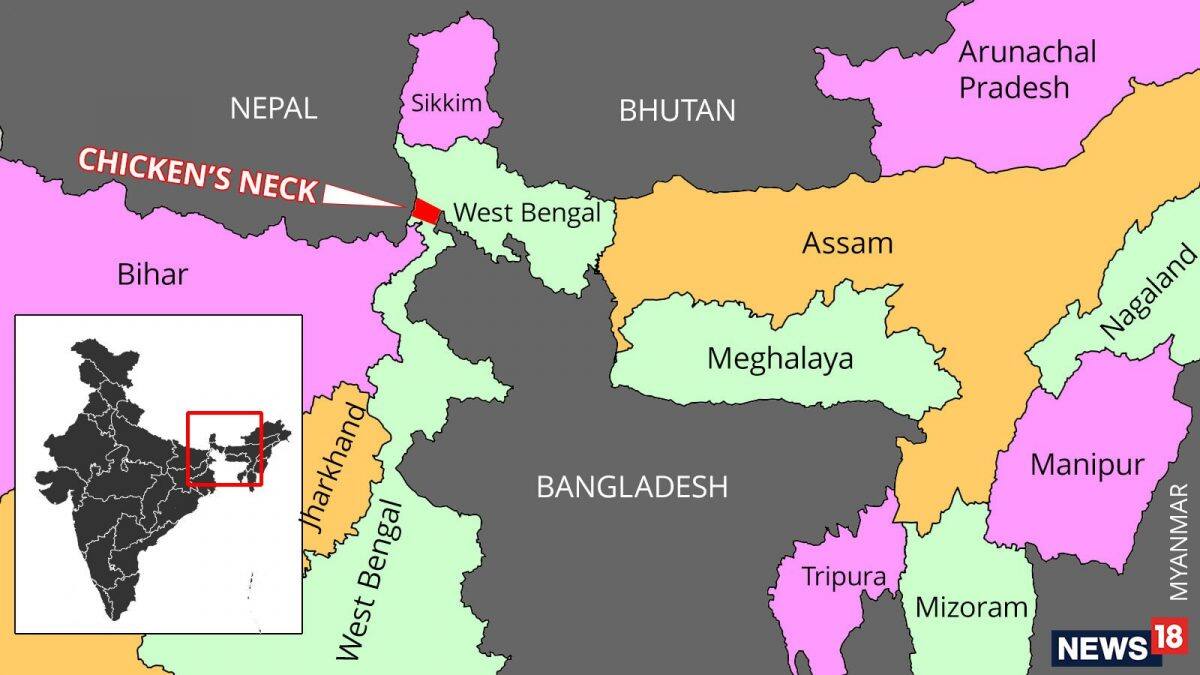
India is worried about the situation in Bangladesh because it affects a narrow strip of land called the Siliguri Corridor, which connects India's northeastern states to the rest of the country.
Bangladesh's new government, led by the BNP and influenced by the hardline Jamat-e-Islami party, is not as friendly to India as before.
This is concerning because Bangladesh shares a long border with India, and there are issues like undocumented migration and security threats.
Additionally, China and Pakistan are becoming more involved in Bangladesh, which could pose a threat to India.
The US is also increasing its presence in Bangladesh, which India sees as a potential risk.
To address these concerns, India is considering making the Siliguri Corridor a union territory to better manage security threats.

Bangladesh's new government, led by the BNP and influenced by Jamat-e-Islami, is less friendly to India, posing a security threat to the Siliguri Corridor.
China and Pakistan are increasing their influence in Bangladesh, which could further threaten India's security interests.
The US is also increasing its military presence in Bangladesh, which India views with suspicion.
The India-Bangladesh border is porous, leading to issues such as undocumented migration and security concerns.
India is considering declaring the Siliguri Corridor a union territory to enhance security and respond quickly to internal and external threats.
- Who
- India, Bangladesh, China, Pakistan, and the United States
- What
- The geopolitical instability in Bangladesh and its implications for India's Siliguri Corridor.
- When
- The situation is ongoing, with recent developments including the ouster of Sheikh Hasina and the rise of the BNP and Jamat-e-Islami.
- Where
- The Siliguri Corridor in India and the border regions of Bangladesh.
- Why
- The instability in Bangladesh, influenced by internal politics and external actors like China, Pakistan, and the US, poses a significant security threat to India's northeastern states.
Pro-India Perspective
Anti-India Perspective
Geopolitical Influence
Pro-India Perspective
India views Bangladesh as a strategic partner and seeks to maintain stable relations for regional security.
Anti-India Perspective
Anti-India factions in Bangladesh, such as Jamat-e-Islami, oppose closer ties with India and advocate for policies that align with Pakistan and China.
Security Concerns
Pro-India Perspective
India is concerned about the security implications of Bangladesh's growing ties with China and Pakistan, which could threaten the Siliguri Corridor.
Anti-India Perspective
Anti-India factions argue that Bangladesh should prioritize its own national interests and maintain a balanced foreign policy, including strengthening ties with China and Pakistan.
US Involvement
Pro-India Perspective
India views US involvement in Bangladesh as a potential threat, especially if it undermines India's security interests in the region.
Anti-India Perspective
Pro-US factions in Bangladesh see US involvement as beneficial for economic and military cooperation, which could help counterbalance Chinese influence.
- Siliguri Corridor
- A 22-km-wide land choke passage connecting India's northeastern states to the rest of the country.
- Jamat-e-Islami
- A hardline Islamic party in Bangladesh that opposes closer ties with India.
- BNP
- Bangladesh Nationalist Party, currently in power, with significant influence from Jamat-e-Islami.
- Chinese Involvement
- China has invested in Bangladesh's infrastructure and military, including the construction of a deepwater port in Chittagong.
- US Involvement
- The US is increasing its military presence in Bangladesh, including discussions on bilateral military exercises and port access.
- Porous Border
- The India-Bangladesh border is porous, leading to issues such as undocumented migration, security concerns, and smuggling.
- Siliguri Corridor Security
- India is considering declaring the Siliguri Corridor a union territory to enhance security and respond quickly to internal and external threats.