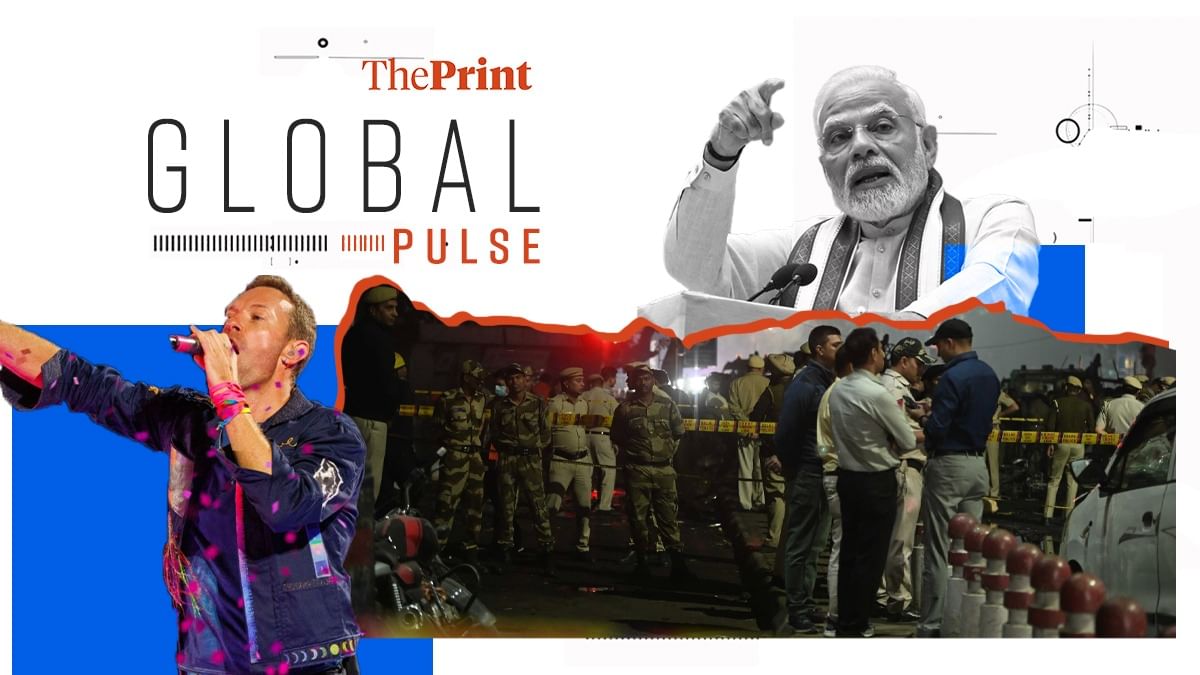
Archive · 13 Nov 2025
India and Pakistan Blame Game Amid Blasts and Rivalry

Imagine two neighbors, India and Pakistan, who sometimes don't get along.
After some loud bangs (explosions) happened in both their houses, some news reporters are wondering if they will start blaming each other, which could make things worse, like when they had a fight with toy airplanes (drones) before.
Even though they argue, investigators have a tricky job figuring out who did what because other groups might be involved.
Meanwhile, India is also getting a lot bigger economically, like becoming the fourth-biggest store in the world for money.
But, it's like having a giant store with lots and lots of people who don't have much money each, so many are still very poor.
Also, India wants to have big music shows like other countries, but it's hard to find good places and get permission to put them on because of lots of rules.
They are also trying to make new phone apps to talk to each other, but a big popular app from another country is hard to beat.

Explosions in India and Pakistan raise fears of a mutual blame game, escalating tensions between the rival nations.
Investigators face complex trails, with potential involvement of various terrorist groups and the impact of drone technology highlighted.
Despite projected economic growth making India the fourth-largest economy, a significant portion of its population remains in poverty.
India aims to become a top global live entertainment market by 2030 but faces infrastructure and regulatory challenges.
New digital platforms are emerging in India, though challenges remain in competing with established international rivals like WhatsApp.
- Who
- Global media (The New York Times, The Economist, Financial Times) reporting on incidents in India and Pakistan, and analyzing bilateral relations, economic status, and the live entertainment sector.
- What
- Reports on deadly blasts in India and Pakistan, the potential for a blame game, India's economic progress alongside its poverty issues, challenges in developing its concert economy, and the emergence of new digital platforms.
- When
- Recent events, with projections for the financial year ending 2025 and goals for 2030.
- Where
- India and Pakistan, with mentions of global economic comparisons and the broader geopolitical context of South Asia.
- Why
- To analyze the volatile relationship between India and Pakistan, assess India's economic development and social challenges, and highlight the growth and hurdles in India's live entertainment industry.
Global Media Speculation
Official/Analyst Stances
Blame Game Over Blasts
Global Media Speculation
Speculates that the explosions in India and Pakistan could lead to a predictable 'blame game' escalating tensions, as seen after previous conflicts.
Official/Analyst Stances
Analysts in New Delhi acknowledge high tensions but suggest the investigation trails could be complex, with New Delhi being a radar for other groups like ISIS, and Pakistan facing its own militant attacks.
Rhetoric and Escalation
Global Media Speculation
Notes Pakistan's political and military leadership has increased inflammatory rhetoric against India since their clash in May.
Official/Analyst Stances
Highlights that the spring conflict demonstrated how quickly escalation can occur with new technologies like drones.
- India's Projected Economic Rank
- Fourth largest economy globally by end of FY25, overtaking Japan.
- India's GDP per Person
- Remains low relative to overall GDP, with 75 million people living on less than $3/day in 2022.
- Global Hunger Index Rank
- India ranks 102nd out of 123 countries.
- India's Live Entertainment Market Goal
- To be among the top five global markets by 2030.
- Challenges in India's Concert Economy
- Scarcity of international-standard venues and over 10 separate permissions/permits required per event.
- Mentioned Technology
- Arattai (potential WhatsApp competitor), Zoho, drones, Aadhaar, UPI.