

Archive · 1 Nov 2025
Brazil's Amazon River Blasting Project Faces Ecological and Community Opposition
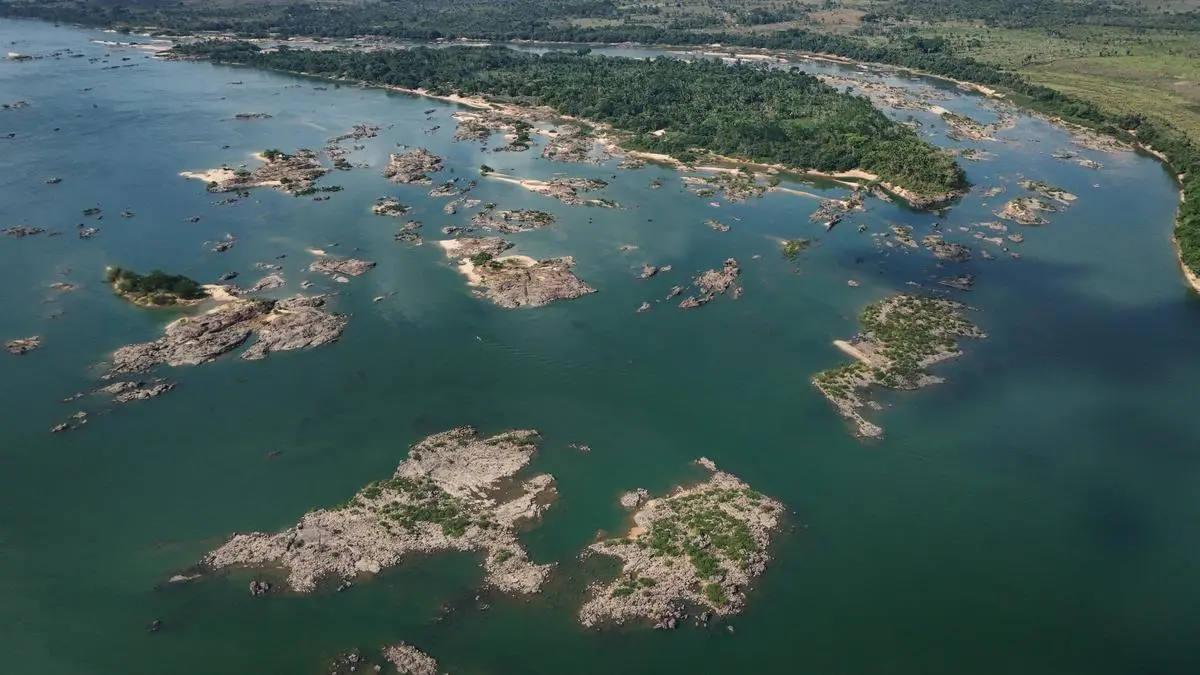
Brazil wants to blast away rocks in a big river in the Amazon so that large boats can travel all year.
This is to help ships carry more farm products like soy and corn, making it cheaper to send them to other countries.
It could make shipping as easy as on the Mississippi River.
But, people who live by the river, like fishermen and those who collect coconuts, are worried.
They fear the noise and ships will hurt their ability to fish and collect, and disrupt their homes.
Scientists are also concerned that blasting could harm the fish, turtles, and dolphins that live in the river.
The government says they will try to protect the animals and that the project will help Brazil's economy, but some people worry it could lead to more forests being cut down for farms.

Brazil plans to blast 22 miles of rocky rapids on the Tocantins River, an Amazon tributary, to allow year-round barge traffic.
The project aims to reduce freight costs for agricultural exports like soy and corn, potentially rivaling major global shipping routes.
Federal prosecutors are seeking to halt the $7.3 billion project due to concerns for riverside communities and environmental impacts.
Local residents fear the disruption to their livelihoods, including fishing and harvesting babassu coconuts.
While proponents cite economic benefits and cleaner transport, critics warn of potential harm to biodiversity and indirect emissions from agricultural expansion.
- Who
- Brazilian government regulators (Ibama, DNIT), federal prosecutors, scientists, local communities (fishermen, babassu coconut harvesters), and state governor Helder Barbalho
- What
- Regulators have authorized blasting a 22-mile channel through rocky rapids on the Tocantins River, an Amazon tributary, to enable year-round barge traffic for agricultural exports. This project aims to reduce freight costs and potentially compete with major global shipping routes.
- When
- Legal hearings were held in late September, and the environmental agency authorized blasting outside sensitive reproductive and migratory seasons. Discussions regarding emissions are set to occur at the UN COP30 climate summit in November.
- Where
- Tocantins River, a major tributary in the Amazon Basin, near the village of Tauiry, Brazil.
- Why
- To create a more efficient and cheaper shipping route for Brazil's agricultural products (soy and corn), reducing reliance on long truck trips and potentially cementing Brazil's position in global grain trade. While proponents cite economic benefits and cleaner transport, critics warn of ecological harm and disruption to local livelihoods.
Proponents
Critics
Economic Development vs. Livelihood Disruption
Proponents
The project will create a more efficient and cheaper shipping route for agricultural exports, boosting Brazil's global trade and reducing reliance on polluting truck transport. Governor Helder Barbalho believes economic development and environmental preservation can coexist.
Critics
The blasting and increased barge traffic will disrupt the livelihoods of riverside communities, including fishermen and babassu coconut harvesters, potentially displacing them and threatening their way of life and survival.
Environmental Management vs. Ecological Harm
Proponents
Brazilian environmental agency Ibama has authorized blasting outside sensitive reproductive and migratory seasons, with provisions for monitoring and relocating turtle nests. Transport agency DNIT will implement measures to scare animals away from blasting areas.
Critics
Researchers warn that destroying the rapids could harm the river's biodiversity, affecting endangered fish, turtles, and river dolphins. There are also concerns that cheaper shipping could indirectly drive deforestation for further agricultural expansion.
- Project Cost
- $7.3 billion
- Total Riverway Dredging Scope
- 110 miles
- Blasting Scope
- 22 miles of rocky rapids on the Tocantins River
- Forecasted Annual Cargo
- 20 million metric tons of corn and soybeans
- Estimated Freight Cost Savings
- River barges are around 60% cheaper than road freight for medium- and long-distance shipping.
