

Archive · 9 Nov 2025
IIT Delhi Researchers Highlight PM2.5, AI Fears, and Antibiotic Resistance at Open House
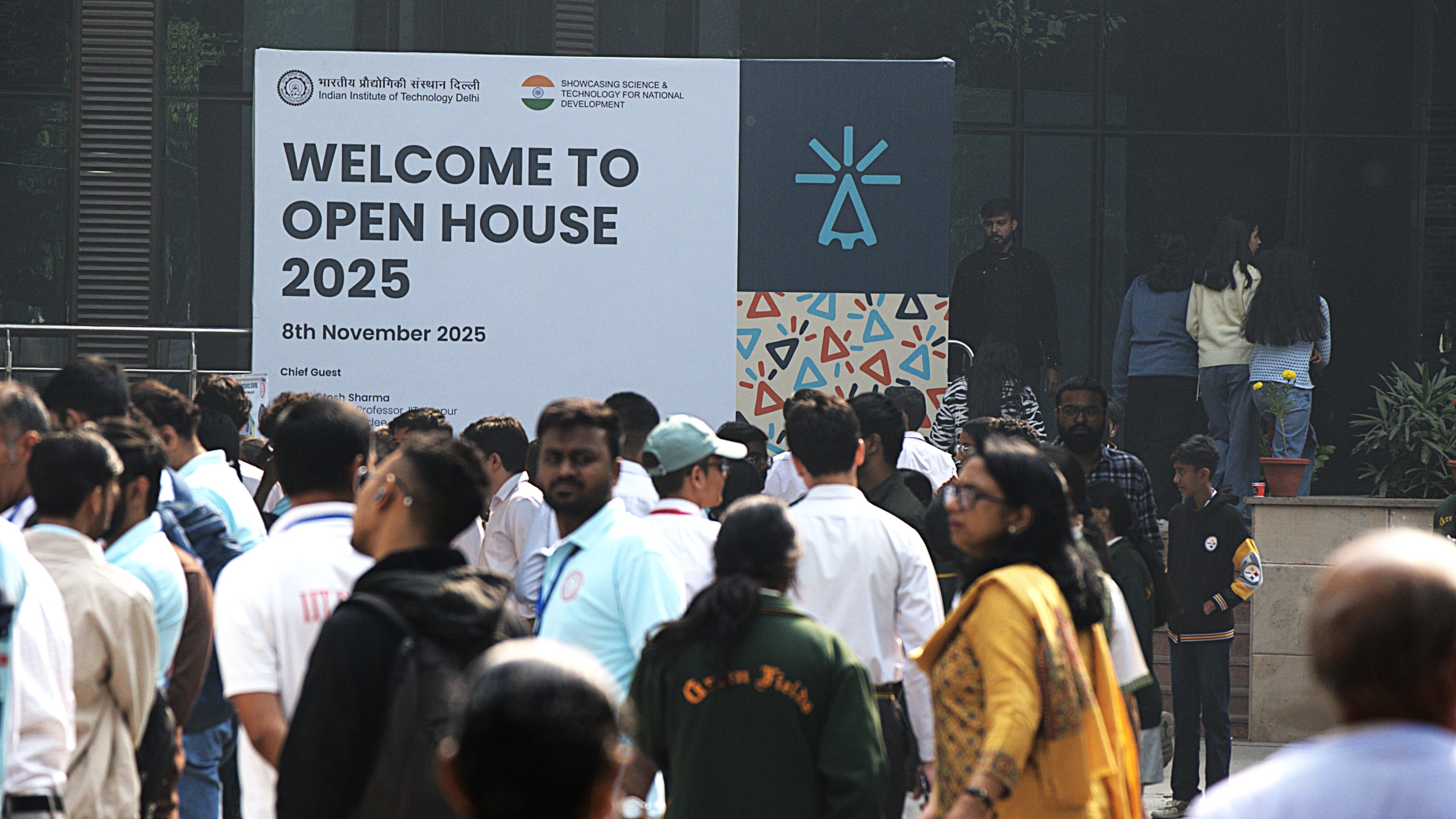
Imagine tiny dust particles in the air, called PM2.5.
A scientist found that if pregnant people breathe too much of this air, especially in the first three months of pregnancy, their babies might be born too small, too early, or even stillborn.
Another researcher is looking into how people worry that smart computers, called AI, might take their jobs.
People are scared that the AI will do the thinking and coding parts, leaving them with less to do.
But some people are figuring out how to work with AI, not against it, by learning new skills and asking their bosses to help them adapt.
Lastly, another scientist discovered that the food we eat, like chicken and eggs, might have tiny bits of medicine called antibiotics in them.
This can happen because chickens are given antibiotics to keep them from getting sick, and these medicines can end up in the food we consume, making it harder for us to fight off real infections later.

IIT Delhi's 18th Open House showcased research on PM2.5's impact on birth risks, AI-related job anxieties, and antibiotic resistance in food.
Research indicates exposure to PM2.5 pollution increases risks of low birth weight, preterm birth, and stillbirth, with the first trimester being most vulnerable.
Working professionals express fear of generative AI replacing them, leading to feelings of insecurity and obsolescence.
Antibiotic residues, particularly tetracyclines and fluoroquinolones, are found in poultry products like eggs due to their widespread use in farming.
Solutions presented include meeting air quality guidelines to reduce birth risks and developing rapid, consumer-centric kits to detect antibiotic residues in food.
- Who
- Researchers at IIT Delhi, including Doris Seyinde, Shweta Kumari Choudhary, and Shikha Balayan
- What
- Presented research on the impacts of PM2.5 pollution on birth outcomes, anxieties of working professionals regarding generative AI, and the prevalence of antibiotic resistance in food products.
- When
- Saturday, during the 18th IIT Delhi Open House
- Where
- Indian Institute of Technology (IIT) Delhi
- Why
- To showcase cutting-edge research to students, faculty, and industry representatives, addressing public health, societal, and technological challenges.
Meeting WHO Guidelines
Meeting National Standards
Impact of Air Quality Standards on Birth Outcomes
Meeting WHO Guidelines
Meeting the World Health Organization's recommended standard of 5 micrograms per cubic meter for PM2.5 would significantly decrease adverse birth outcomes.
Meeting National Standards
Meeting Nigeria's national standard of 20 micrograms per cubic meter for PM2.5 would also significantly decrease adverse birth outcomes.
- Event
- IIT Delhi Open House 2025
- Visitors
- Over 3,500
- PM2.5 Exposure and Low Birth Weight (Nigeria)
- 8% increased chance
- PM2.5 Exposure and Preterm Birth (Nigeria)
- 6% increased chance
- PM2.5 Exposure and Stillbirth (Nigeria)
- 4% increased chance
- Most Vulnerable Pregnancy Stage to PM2.5
- First trimester
- Antibiotic Residues Found in Poultry
- Tetracyclines and fluoroquinolones
- Cost of Rapid Antibiotic Detection Kit
- Approximately Rs 100