

Archive · 22 Jul 2026
Magnetic Forces Guide Lab-Grown Blood Vessel Growth
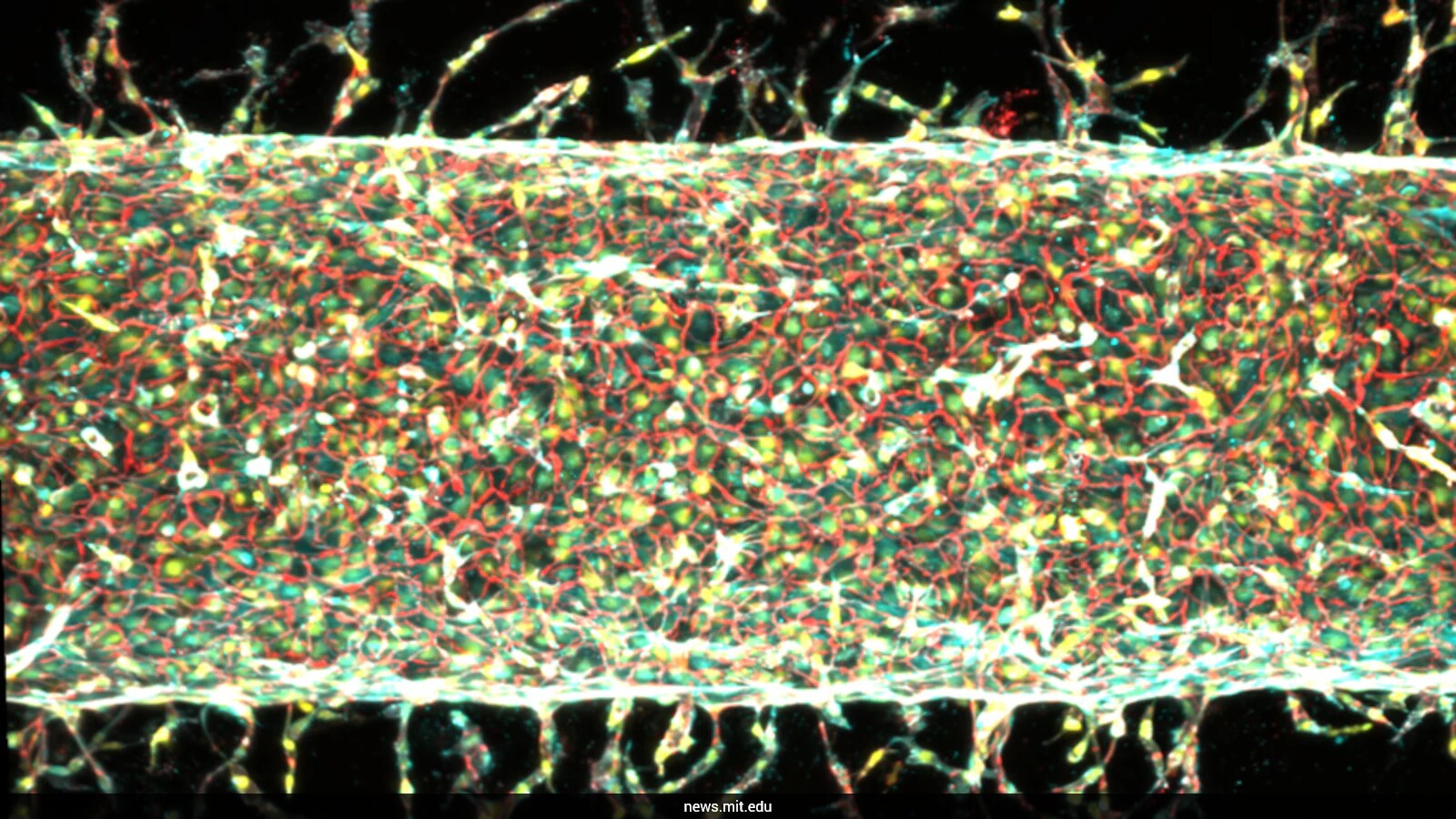
Scientists at MIT have found a new way to grow tiny blood vessels in a lab using magnets.
These tiny vessels, called capillaries, are very important because they help deliver oxygen and nutrients to cells.
Before this, scientists struggled to grow these vessels accurately using chemicals or 3D printing.
The new method uses a tiny chip with special cells and a magnet.
By moving the magnet, they can control how the vessels grow.
They discovered that stretching the cells helps them grow better and found a special gene called PIEZO1 that plays a big role in this process.
This could help in creating replacement organs and tissues for medical use in the future.

Scientists at MIT developed a technique using magnetic forces to guide the growth of lab-grown blood vessels.
The method involves using a tiny chip with endothelial cells and a magnet to control vessel growth.
Mechanical stretching of cells significantly boosts the formation of new capillaries.
A gene called PIEZO1 was identified as crucial for vessel growth.
The research is in its early stages, with plans to test blood flow and integration into larger tissues.
- Who
- Researchers at the Massachusetts Institute of Technology
- What
- Developed a technique using magnetic forces to guide the growth of lab-grown blood vessels
- When
- The research has been published in PNAS, indicating recent completion
- Where
- Massachusetts Institute of Technology
- Why
- To overcome the hurdle of recreating tiny blood vessels in a laboratory environment and to create fully functional replacement organs and tissues
Traditional Methods
Magnetic Force Technique
Precision in Vessel Formation
Traditional Methods
Traditional methods like chemical growth factors and 3D printing lack the precision needed to form realistic, organized vessel networks.
Magnetic Force Technique
The magnetic force technique allows for precise programming of the direction, length, and quantity of growing capillaries.
Mechanical vs. Chemical Stimulation
Traditional Methods
Chemical signals alone cannot achieve the level of physical control needed for organized vessel growth.
Magnetic Force Technique
Mechanical stretching of vessel cells significantly boosts the formation of new capillaries, triggering specific biological pathways.
- Research Team
- Massachusetts Institute of Technology
- Key Cells Used
- Endothelial cells
- Key Gene Identified
- PIEZO1
- Publication
- PNAS
- Next Steps
- Testing blood flow and integration into larger lab-grown tissues