

Archive · 8 Nov 2025
Indian Children's Literature Expands to Include Complex Emotions and Diverse Themes
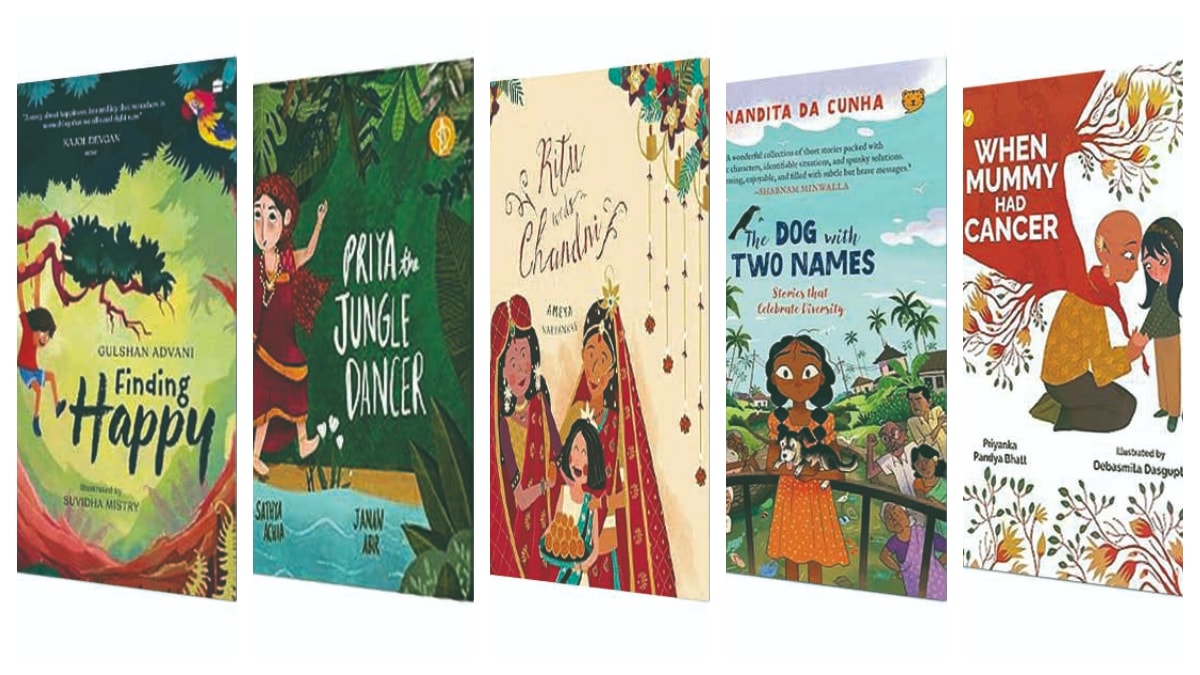
Imagine storybooks for kids!
For a long time, they mostly had funny animal stories or fairy tales.
But now, writers and artists in India are making new kinds of books.
These books talk about things like feeling sad when someone is sick, being brave when things are hard, or understanding people who are different.
For example, one book is about a family dealing with a mom who has cancer, and another is about two women getting married.
These stories help kids learn to be kind and understand others better.
They show that it's okay to talk about feelings, even tough ones.
It’s like giving kids a gentle way to understand the world and all the different people in it.
These new stories help children grow into caring and understanding people.

Indian children's literature is broadening beyond traditional animal tales and rhymes to include themes of grief, resilience, queerness, and illness.
Authors like Nandita da Cunha, Gulshan Advani, and Priyanka Pandya Bhatt are creating stories that address complex emotions and personal experiences.
Illustrators like Debasmita Dasgupta and Janan Abir use visuals to convey vulnerability and emotion in age-appropriate ways.
Publishers and editors are increasingly recognizing a market demand for books that promote empathy, diversity, and emotional intelligence.
This shift reflects a desire to equip children to navigate complex social realities and develop a deeper understanding of themselves and others.
- Who
- Indian authors, illustrators, editors, and publishers
- What
- Expanding the scope of children's literature to include complex emotional and social themes, diverse representation, and a focus on empathy and resilience.
- When
- Recent years, with a pronounced shift over the last couple of years.
- Where
- India
- Why
- To equip children with emotional intelligence, foster empathy, reflect broader societal changes, and address the complexities of modern childhood in an age-appropriate manner.
Traditional Children's Literature
Contemporary Children's Literature
Focus
Traditional Children's Literature
Primarily focuses on animals, rhymes, and simple moral tales.
Contemporary Children's Literature
Incorporates a wider range of themes including grief, resilience, queerness, illness, and empathy.
Approach to Difficult Topics
Traditional Children's Literature
Less emphasis on addressing complex emotional or social issues directly.
Contemporary Children's Literature
Directly addresses difficult topics like cancer, grief, and queerness in age-appropriate ways.
Representation
Traditional Children's Literature
Often lacks diverse representation in terms of identity and experience.
Contemporary Children's Literature
Actively seeks to include queer representation and diverse cultural narratives.
- New Themes in Children's Books
- Grief, resilience, queerness, illness, empathy, belonging, compassion, coexistence, happiness.
- Authors and Their Works
- Nandita da Cunha (The Dog With Two Names), Gulshan Advani (Finding Happy), Priyanka Pandya Bhatt (When Mummy Had Cancer), Ameya Narvankar (Ritu Weds Chandni), Sathya Achia (Priya the Jungle Dancer).
- Illustrators and Their Contributions
- Debasmita Dasgupta (When Mummy Had Cancer), Janan Abir (Priya the Jungle Dancer).
- Publishing Houses Involved
- Yali Books (New York), Penguin Random House (India), HarperCollins Children's Books India.
- Key Message for Children
- Stories serve as a safe space for children to question, react, and develop empathy and resilience.
- Reasons for the Shift
- Growing demand from parents and educators for content promoting positive values and diverse perspectives; societal changes; influence of digital media.