

Archive · 17 Jan 2026
Pompeii's Public Baths Had Human Waste
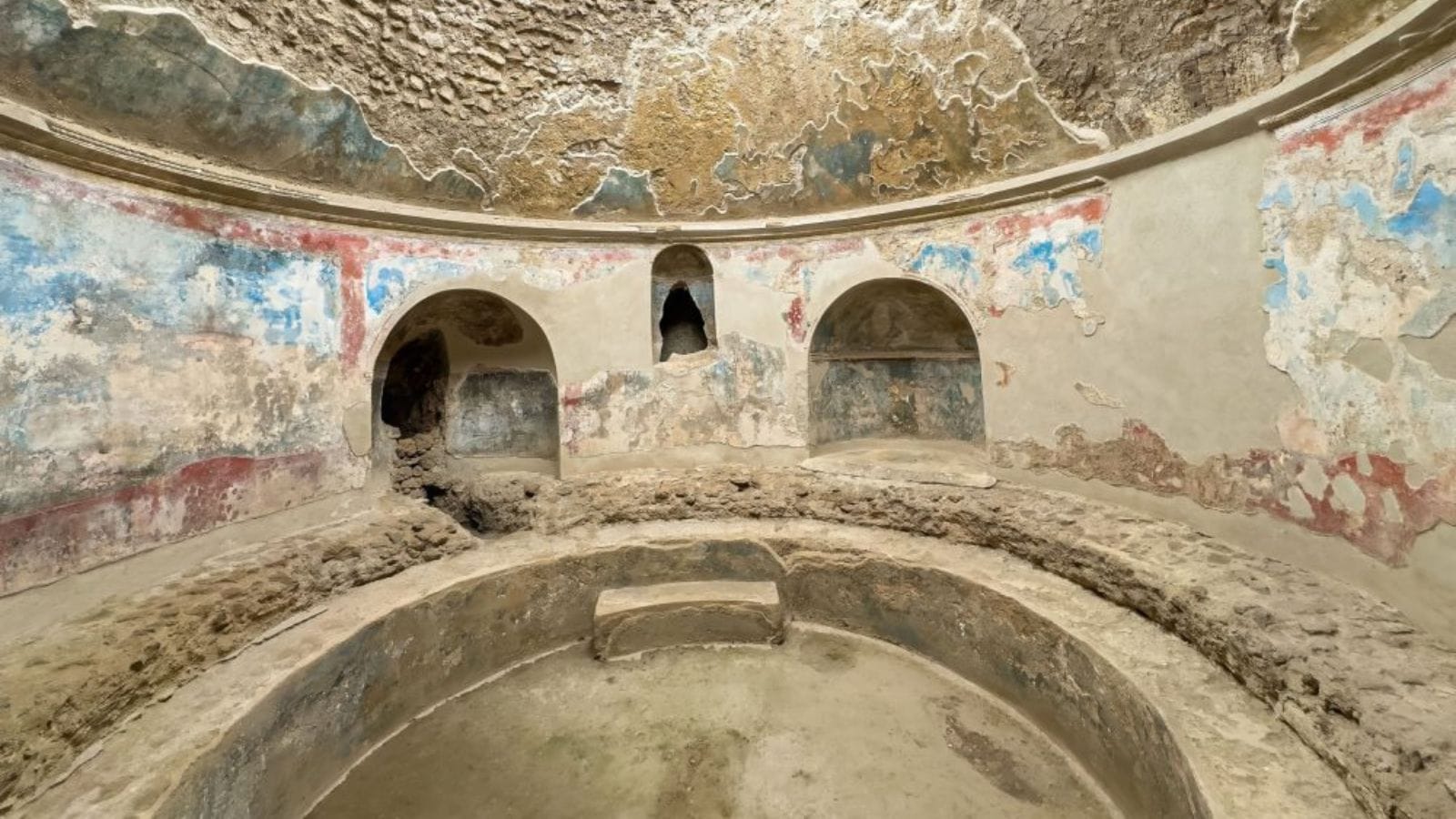
Scientists found that the public baths in ancient Pompeii were not as clean as people thought.
Before an aqueduct was built, the baths used groundwater from deep wells, which was often dirty with human waste and metals like lead.
The water was only changed once a day, so it didn't stay clean.
After the aqueduct was built, the baths got cleaner water from natural springs, but it was still not perfect.
The baths were probably noisy, crowded, and smelly, with people sweating and relieving themselves in the shared water.
Researchers are now doing more tests to learn even more about what was in the bath water.

Pompeii's public baths were found to be contaminated with human waste and heavy metals before the first century AD.
The baths initially relied on groundwater from deep wells, which was polluted and only changed once a day.
The arrival of an aqueduct in the first century AD improved water quality by supplying water from natural springs.
Even with the aqueduct, the baths were still noisy, crowded, and smelly, with people sweating and relieving themselves in the shared water.
Researchers are conducting additional DNA tests on mineral deposits to learn more about what bathers brought into the water.
- Who
- Researchers studying Pompeii's public baths
- What
- Discovery of human waste and heavy metals in Pompeii's public baths
- When
- Before and after the first century AD, with recent research published on Monday
- Where
- Pompeii, southern Italy
- Why
- To understand the hygiene and water supply of ancient Pompeii's public baths
- Location
- Pompeii, southern Italy
- Time Period
- Before and after the first century AD
- Water Source Before Aqueduct
- Groundwater from deep wells
- Water Source After Aqueduct
- Natural springs
- Contaminants Found
- Human waste, lead, copper, zinc
- Water Change Frequency
- Once a day
- Study Publication
- Proceedings of the National Academy of Sciences