

Archive · 6 Nov 2025
Chandigarh Police Power Shift: Central Cadre Officers Now Lead Key Posts
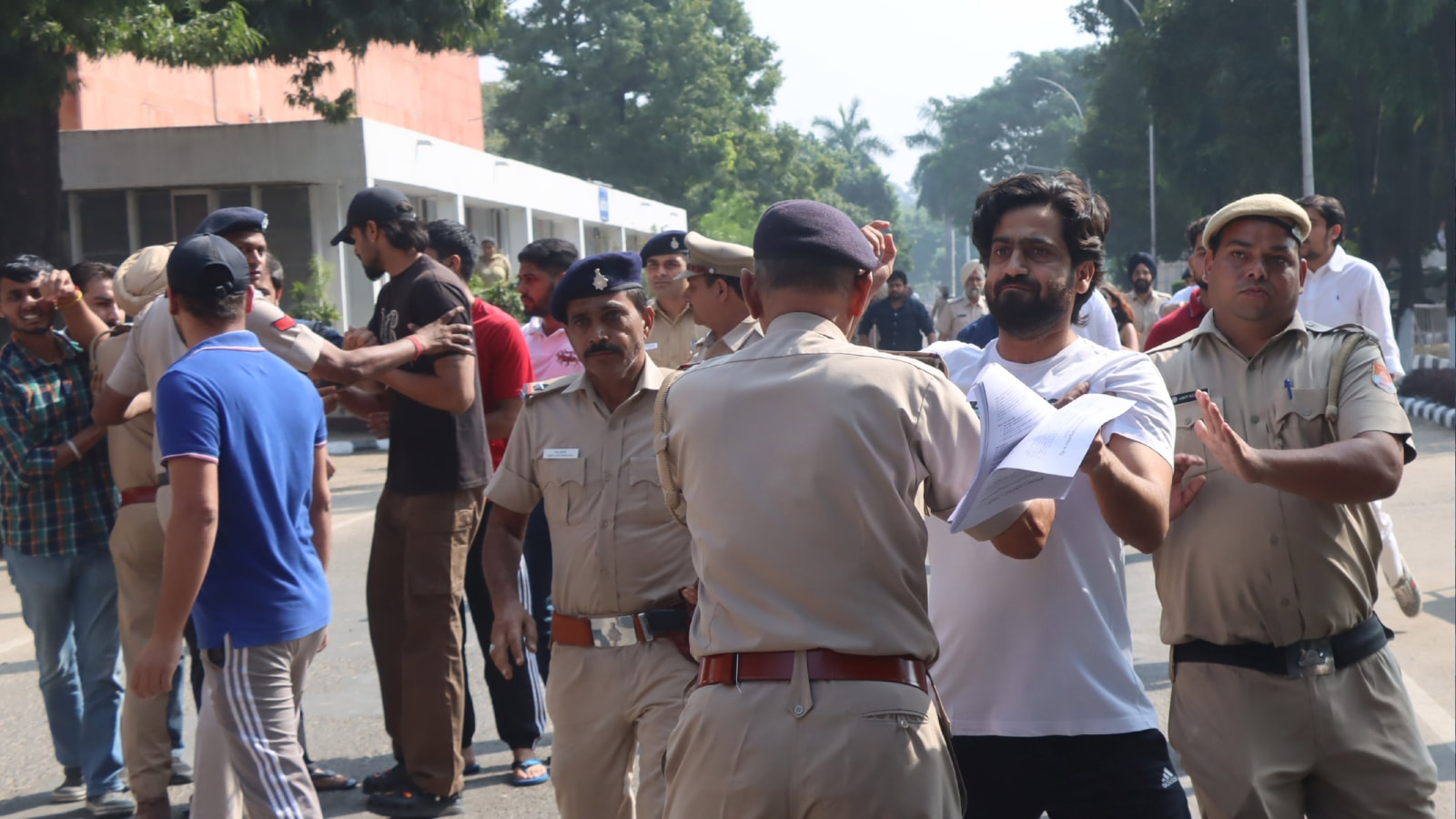
Imagine the police force in a city.
For a long time, most of the top bosses were people who grew up in that city or worked there for many years, knowing all the streets and problems.
Now, more and more of the important jobs are being given to police officers who are sent from other parts of the country.
These officers come from special groups, like the ones that work in Delhi or other special areas.
They bring different experiences and follow rules from a central government.
Some people think this is good because it makes the police more professional and brings new ideas.
But others worry that the local officers, who know the city best, are not getting the most important jobs anymore.
It's like the city's police force is becoming more like a national team rather than a local one.

Key command posts in Chandigarh Police are increasingly held by officers from central cadres (AGMUT and DANIPS), reducing the dominance of local Chandigarh Police Service (CPS) officers.
Eight IPS officers are currently in Chandigarh Police; six top posts are held by AGMUT cadre officers, with others from Punjab, Haryana, and DANIPS cadres.
At the DSP level, while CPS officers are numerically superior, DANIPS officers hold high-profile and sensitive posts including Crime Branch and Cyber Crime Cell.
The shift began in 2013 when the Ministry of Home Affairs allowed DANIPS officers to be deputed to Chandigarh.
While this change is seen by some as professionalizing policing and introducing national best practices, others feel it diminishes local officers' roles and familiarity with the city.
- Who
- Chandigarh Police personnel, including officers from AGMUT, DANIPS, and Chandigarh Police Service (CPS) cadres.
- What
- A significant shift in the power structure of the Chandigarh Police, with officers from central government cadres (AGMUT and DANIPS) increasingly holding key command posts over local CPS officers.
- When
- Over the past decade, with a notable policy change in 2013 allowing DANIPS officers to be posted in Chandigarh.
- Where
- Chandigarh, India.
- Why
- The Ministry of Home Affairs (MHA) introduced a deputation policy to bring national-level experience, accountability, and expertise to Chandigarh's unique policing needs as a centrally governed territory and capital for two states, especially to handle a rising population and evolving crime.
Advocates of Central Cadre Dominance
Critics of Central Cadre Dominance
Cadre Officer Assignments
Advocates of Central Cadre Dominance
Deputation of officers from AGMUT and DANIPS cadres brings national-level experience, accountability, and uniformity, professionalizing Chandigarh's policing due to its unique status as a capital for two states and a centrally governed territory. It also brings expertise and better coordination.
Critics of Central Cadre Dominance
The increasing dominance of officers from outside cadres (AGMUT and DANIPS) in key command posts, particularly at the DSP level, diminishes the role and command presence of local Chandigarh Police Service (CPS) officers in core policing functions, confining them to supportive or administrative roles and eroding the familiarity with local issues gained by officers who serve for decades.
Impact on Local Officers
Advocates of Central Cadre Dominance
The influx of DANIPS officers, many of whom are young and recently appointed DSPs, is planned to bring more expertise to handle the rising population and evolving nature of crime incidents in the city.
Critics of Central Cadre Dominance
The current structure leads to an imbalance in growth opportunities for local officers, with CPS cadre officers finding themselves largely confined to secondary or logistical assignments, despite forming a numerical majority at the DSP level.
Force's Evolution
Advocates of Central Cadre Dominance
The changes have improved efficiency and introduced national best practices in policing.
Critics of Central Cadre Dominance
The transition has evolved the Chandigarh Police from a homegrown, locally led institution to a centrally directed one, diluting the local legacy of a police service once built by its own ranks.
- Total Police Personnel
- Over 6,000
- Key Leadership Cadres
- AGMUT and DANIPS
- Current DGP
- Sagar Preet Hooda (AGMUT Cadre)
- Current IGP
- Pushpendra Kumar (AGMUT Cadre)
- DSP Cadre Distribution
- 14 CPS officers, 6 DANIPS officers
- Policy Change Enabling DANIPS Deputation
- 2013