

Archive · 18 Jul 2026
Canada Wildfires Spread, Smoke Affects North America
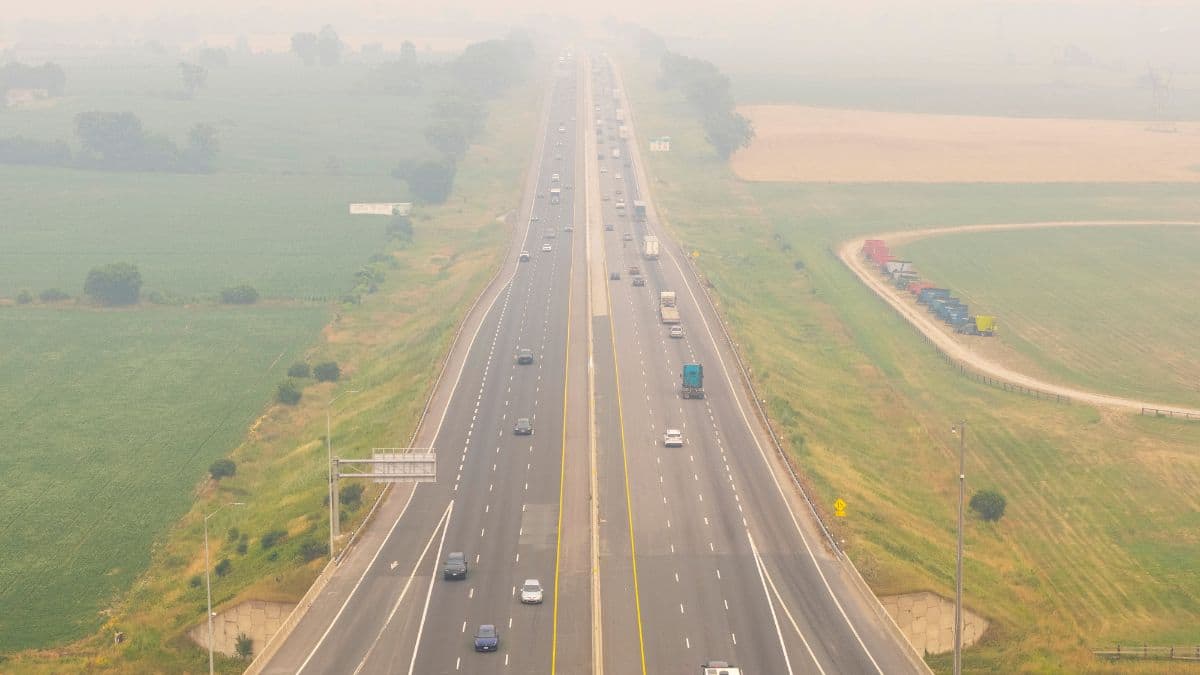
Canada is having a very bad wildfire season.
Many fires are burning at the same time, and the smoke is traveling far, affecting many people in Canada and the United States.
The fires are hard to control because they are in remote areas, and the hot, dry weather makes them worse.
The smoke is making the air unhealthy to breathe, especially for children, older adults, and people with health problems.
Firefighters are working hard, but the fires might continue for a long time.

Hundreds of wildfires are burning across multiple Canadian provinces, with many out of control.
Smoke from the fires has traveled thousands of kilometers, affecting air quality in major cities in Canada and the United States.
Ontario, Quebec, and the Northwest Territories are among the worst-affected regions.
Firefighting efforts include over 150 fire brigades, helicopters, water bombers, and specialized equipment.
The fires are difficult to extinguish due to remote locations, dry conditions, and the formation of 'zombie fires' underground.
- Who
- Canadian authorities, firefighting agencies, residents of Canada and the United States
- What
- Widespread wildfires and smoke affecting air quality and health
- When
- Since late spring, with escalation in summer
- Where
- Across multiple Canadian provinces and affecting the United States
- Why
- Due to prolonged hot weather, below-average rainfall, and environmental conditions
- Active Fires
- 850-897
- Affected Provinces
- 11
- Worst-Affected Regions
- Ontario, Quebec, Northwest Territories
- Firefighting Personnel
- 150+ fire brigades
- Smoke Reach
- Thousands of kilometers across North America
- Health Risks
- PM2.5 particles, carbon monoxide, VOCs, nitrogen dioxide
- Vulnerable Groups
- Children, older adults, individuals with chronic illnesses
- Expected Duration
- Through August