

Archive · 22 May 2025
Standing Seats Proposed for Planes to Increase Capacity and Reduce Costs
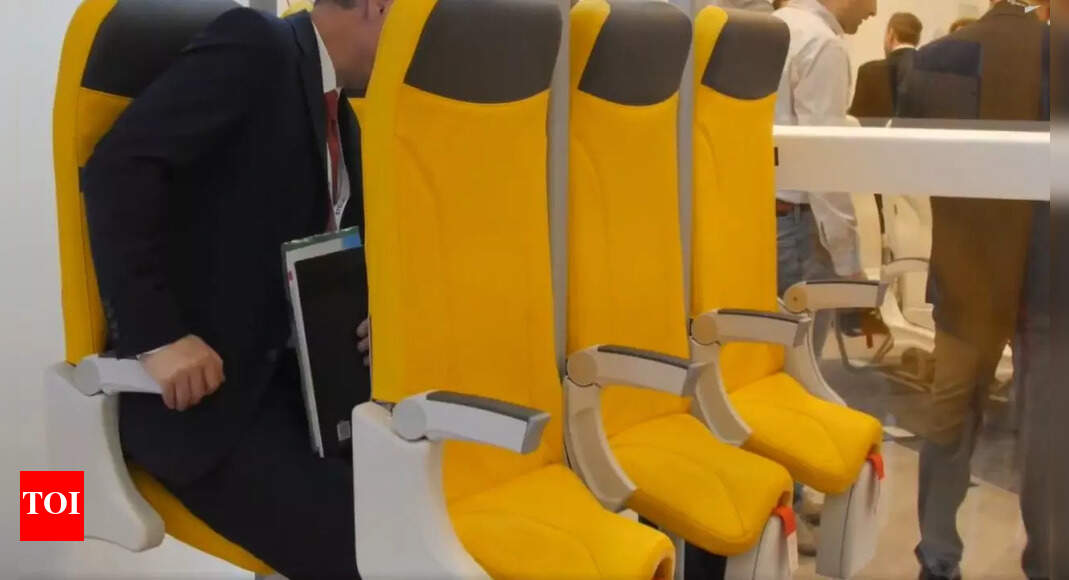
Some airlines are looking into putting in seats where you stand or lean, like on a bike.
The company, Aviointeriors, created a seat called Skyrider 2.0.
They say it would let planes fit more people, weigh less, and save money.
The idea is to have different classes of seating so they can offer cheaper flights.
Some people think this is a bad idea and that it will be uncomfortable.
Others think if the tickets are cheaper, it is acceptable.
The seats might be ready in 2026.
The main idea is to make travel more affordable.

Airlines are considering standing-only seating to increase passenger capacity and reduce weight.
Aviointeriors developed 'Skyrider 2.0', bike-style padded seats.
These seats could be introduced in 2026 and would allow passengers to lean without sitting.
The concept aims to increase passenger capacity by 20% and reduce weight by 50%.
There are differing opinions among passengers regarding the comfort and desirability of standing seats.
- Who
- Aviointeriors is the manufacturer of 'Skyrider 2.0'.
- What
- Airlines are exploring the introduction of standing-only seating options.
- When
- The standing seats are potentially planned for introduction in 2026.
- Where
- Aircraft Interiors Expo 2018 in Hamburg
- Why
- To increase passenger capacity and reduce weight.
Airlines & Cost-Cutting
Airline Comfort Advocates
Passenger Comfort vs. Cost
Airlines & Cost-Cutting
Some passengers believe that airlines are sacrificing comfort by introducing standing seats.
Airline Comfort Advocates
Other passengers are okay with standing seats if the tickets are dirt cheap.
Travel Experience
Airlines & Cost-Cutting
Passengers view standing seats as an uncomfortable and undesirable travel experience.
Airline Comfort Advocates
Airlines aim to offer a multi-class configuration, and are not trying to cram as many passengers as possible into the cabin.
- Seating Type
- Standing seats
- Manufacturer
- Aviointeriors
- Seat Name
- Skyrider 2.0
- Anticipated Passenger Capacity Increase
- 20%
- Weight Reduction
- 50%
- Original Concept Year
- 2010