3 days ago
How Phoolan Devi Became India’s Enduring Bandit Queen Legend
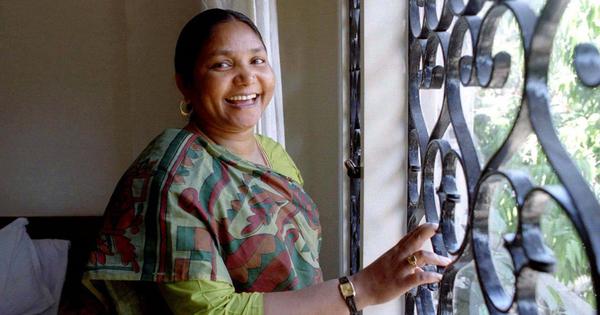
Phoolan Devi grew up poor in Uttar Pradesh and faced serious abuse and discrimination.
She was married as a child to a much older man.
Later, she was forced into a bandit gang and lived in the Chambal Valley.
She became known as the “Bandit Queen.”
Her name became connected to the 1981 killings at Behmai, although she denied being there and blamed another dacoit.
She surrendered in 1983 and remained in prison for 11 years.
After her release, she became a politician and was elected to Parliament.
Writers and filmmakers portrayed her in very different ways, sometimes making her seem larger than life.
She was assassinated in Delhi in 2001.

Phoolan Devi was born in 1963 into a poor Mallah family in Uttar Pradesh.
She endured child marriage, caste discrimination, sexual violence and forced entry into dacoity.
Her alleged association with the 1981 Behmai massacre made her nationally notorious.
After surrendering in 1983, she spent 11 years in prison and entered politics.
Books, films and media coverage transformed Phoolan from outlaw into a contested cultural icon.
- Who
- Phoolan Devi, a dacoit from the Mallah community who later became a Member of Parliament.
- What
- Her life was reshaped into a widely debated legend through alleged revenge, imprisonment, politics, books and films.
- Where
- Her story unfolded in Uttar Pradesh and the Chambal Valley; she later served politically from Mirzapur and was killed outside her residence in Delhi.
- When
- She was born in 1963, surrendered in 1983, entered Parliament in 1996 and 1999, and was assassinated on July 25, 2001.
- Why
- Her experiences of caste oppression, sexual violence and forced banditry, along with the Behmai killings and extensive media coverage, made her an enduring public figure.
Critical interpretations
Admiring interpretations
Outlaw or survivor
Critical interpretations
Critics and some media outlets portrayed Phoolan as a violent criminal, using labels such as “Mistress of Murder” and emphasizing the Behmai killings.
Admiring interpretations
Supporters and later writers emphasized that she endured caste oppression, sexual violence and forced recruitment, presenting her as a survivor who resisted abuse.
The Behmai massacre
Critical interpretations
Phoolan became closely associated with the 1981 killings of 20 people in Behmai, and her alleged role fueled public condemnation.
Admiring interpretations
Phoolan denied being present and attributed the killings to another dacoit, making her responsibility a disputed part of her legacy.
Film portrayals
Critical interpretations
Critics, including Arundhati Roy, argued that Bandit Queen overemphasized rape and turned Phoolan’s suffering into dramatic spectacle without adequately conveying caste and context.
Admiring interpretations
Others praised the film as a powerful depiction of the violence she endured, while newer projects seek to show her as a vulnerable, complex and human figure rather than only a mythic outlaw.
Key facts
- Birth
- 1963, in a village in Uttar Pradesh
- Community
- Mallah, classified among the Other Backward Classes
- Dacoit period
- Four years
- Surrender
- She surrendered to authorities in 1983
- Prison
- She spent 11 years in prison
- Political career
- She was elected to Parliament from Mirzapur in 1996 and 1999
- Death
- She was assassinated in Delhi on July 25, 2001
Quotes
Sondeep Shankar
Photographer who documented Phoolan Devi’s surrender
“I had heard and read so much about her. But she was a little girl. She was so small. She was also very aggressive. I was carrying three cameras. She grabbed one and it broke.”
 scroll.in
“The demon struck me with lightning, and I became the lightning for others.”
scroll.in
Hossein Martin Fazeli
Iranian-Canadian director making a documentary about Phoolan Devi’s legacy
“She was very mythical when I started, and the more I went ahead, the more physical and human she became. I challenge anyone to show me another story that’s similar to this story.”
scroll.in
Sources
Related news

Richie Mehta’s Phoolan Recasts Bandit Queen’s Siege as Thriller

Richie Mehta’s Phoolan Earns Standing Ovation at TIFF Premiere
Hunkkaar: The Roar Trailer Promises A Hard-Hitting Justice Story
Mirzapur Film’s Beena Tripathi Survives, But Loses Agency

Personal Account Describes Abuse, Coercion, Care, and Betrayal
Rasika Dugal Revisits Beena Tripathi’s Trauma Ahead of Mirzapur Film
Jammu and Kashmir Reviews Millions of Books, Withdraws Thousands
Udayan Vajpeyi on Literature, Science, Memory and the Eternal

Geetanjali Shree's Hindi fiction wins global acclaim after Booker

Intellectuals Urge CJI to Uphold Liberty in Umar Khalid Case