9 hrs ago
Agatha Christie’s Novels Reveal an Unexpected Modernist Side
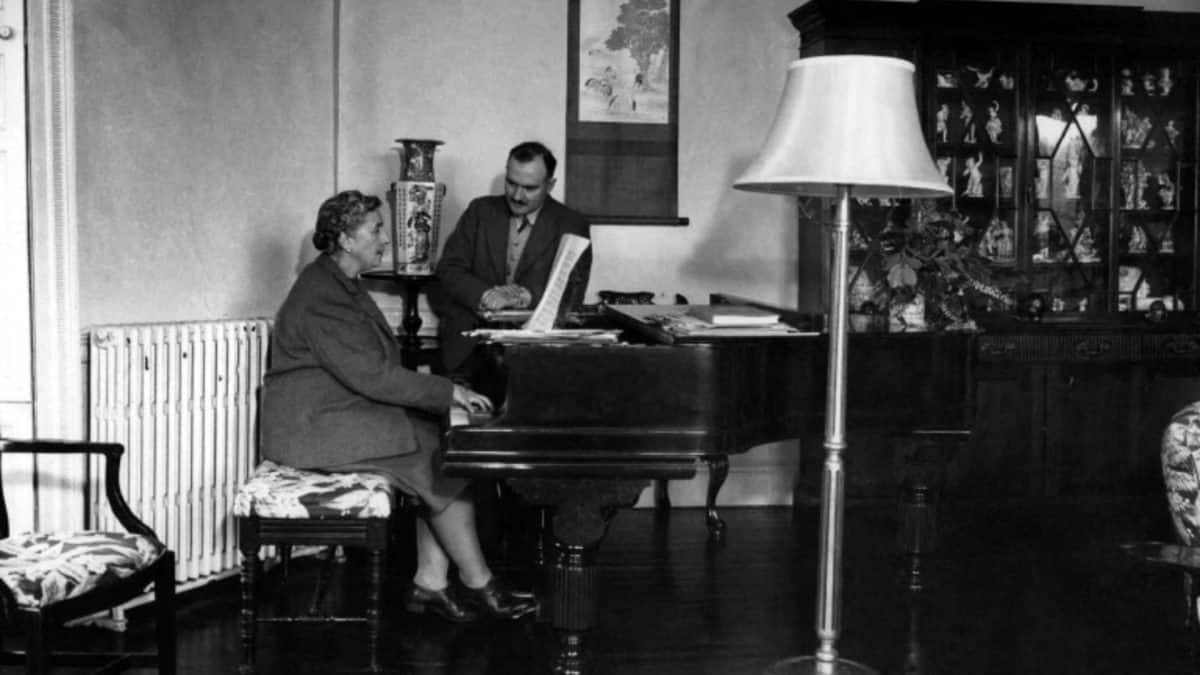
Agatha Christie is famous for writing clever murder mysteries.
Her books often seem like puzzles with clues and suspects.
But some of them also use techniques associated with modernist literature.
They may show the same event from different viewpoints or move between characters’ thoughts.
In The Murder of Roger Ackroyd, readers must question whether the storyteller can be trusted.
In And Then There Were None, there is no detective to explain what is happening.
Christie still usually provides an answer at the end.
This means she combined experimental storytelling with traditional mystery-solving.

Agatha Christie’s novels use fragmentation, shifting perspectives, ambiguity and explorations of inner lives.
The Murder of Roger Ackroyd makes the narrator’s account central to its mystery and famous revelation.
Five Little Pigs presents conflicting memories of the same event through several individual perspectives.
The ABC Murders and And Then There Were None disrupt conventional detective-story expectations in different ways.
Christie used modernist techniques to reach detective fiction’s traditional promise of a final resolution.
- Who
- Agatha Christie, whose novels and lasting influence are examined in the article.
- What
- The article argues that several of Christie’s celebrated detective novels use unexpectedly modernist storytelling techniques.
- Where
- The British Library is hosting a major Christie exhibition; the novels’ settings vary and are not specified as a single location.
- When
- The article notes anniversaries marking 50 years since Christie’s death, 100 years since The Murder of Roger Ackroyd, and 50 years since Sleeping Murder was published.
- Why
- The article seeks to explain Christie’s enduring literary significance beyond her reputation as a puzzle-maker.
Christie as an experimental modernist
Christie as a traditional detective novelist
Her storytelling methods
Christie as an experimental modernist
The novels use fragmented accounts, competing perspectives, unreliable narration and movement between characters’ inner lives, techniques associated with modernist fiction.
Christie as a traditional detective novelist
These techniques ultimately serve detective-fiction purposes: gathering clues, identifying the truth and producing a coherent solution.
Meaning and resolution
Christie as an experimental modernist
Works such as Five Little Pigs and And Then There Were None invite readers to experience uncertainty, memory, suspicion and paranoia from inside the characters’ perspectives.
Christie as a traditional detective novelist
Unlike many modernist novels, Christie’s mysteries promise resolution and generally tie up loose ends in a final explanation.
Her literary reputation
Christie as an experimental modernist
Critics and John Lanchester have argued that calling Christie merely a puzzle-maker overlooks the complexity of her fiction.
Christie as a traditional detective novelist
Her continuing popularity is commonly attributed to ingenious plots, memorable characters and adaptations, while the article acknowledges that her prose can seem commonplace and reflects prejudices of its era.
Key facts
- Author
- Agatha Christie
- Exhibition
- The British Library plans to display previously unseen archival material, including manuscripts, recordings, exam notes and Christie’s 1937 Remington typewriter.
- Key anniversary
- The Murder of Roger Ackroyd is marking its centennial, according to the article.
- Best-selling work
- And Then There Were None has sold more than 100 million copies, according to the article.
- Modernist technique
- Christie’s novels use fragmentation, ambiguity, shifting perspectives and interior viewpoints.
- Featured novels
- The Murder of Roger Ackroyd, Five Little Pigs, The ABC Murders and And Then There Were None.
- Critical argument
- Nicholas Birns, Margaret Boe Birns and John Lanchester have argued that Christie’s fiction is more formally complex than her puzzle-maker reputation suggests.
Sources
Related news

Seven Atmospheric Agatha Christie Novels Worth Reading Again

How The Murder of Roger Ackroyd Changed Crime Fiction

A Beginner’s Guide To Reading Agatha Christie Novels

Readers Seek Interactive Mysteries Beyond Traditional Murder Novels

Billionaire Nirmal Sethia Funds Agatha Christie Mystery Exhibition

Why The Day of the Jackal Still Feels Modern

Pia Ghosh-Roy’s Debut Novel Explores Trauma Across Three Generations

Learnbay Revamps AI Curriculum as India Hiring Surges

AI firms buy second-hand books for destructive scanning surge
Review: Lázár family saga spans Hungary's turbulent twentieth century