

Archive · 23 Jul 2025
NASA-ISRO NISAR Satellite Set to Launch July 30
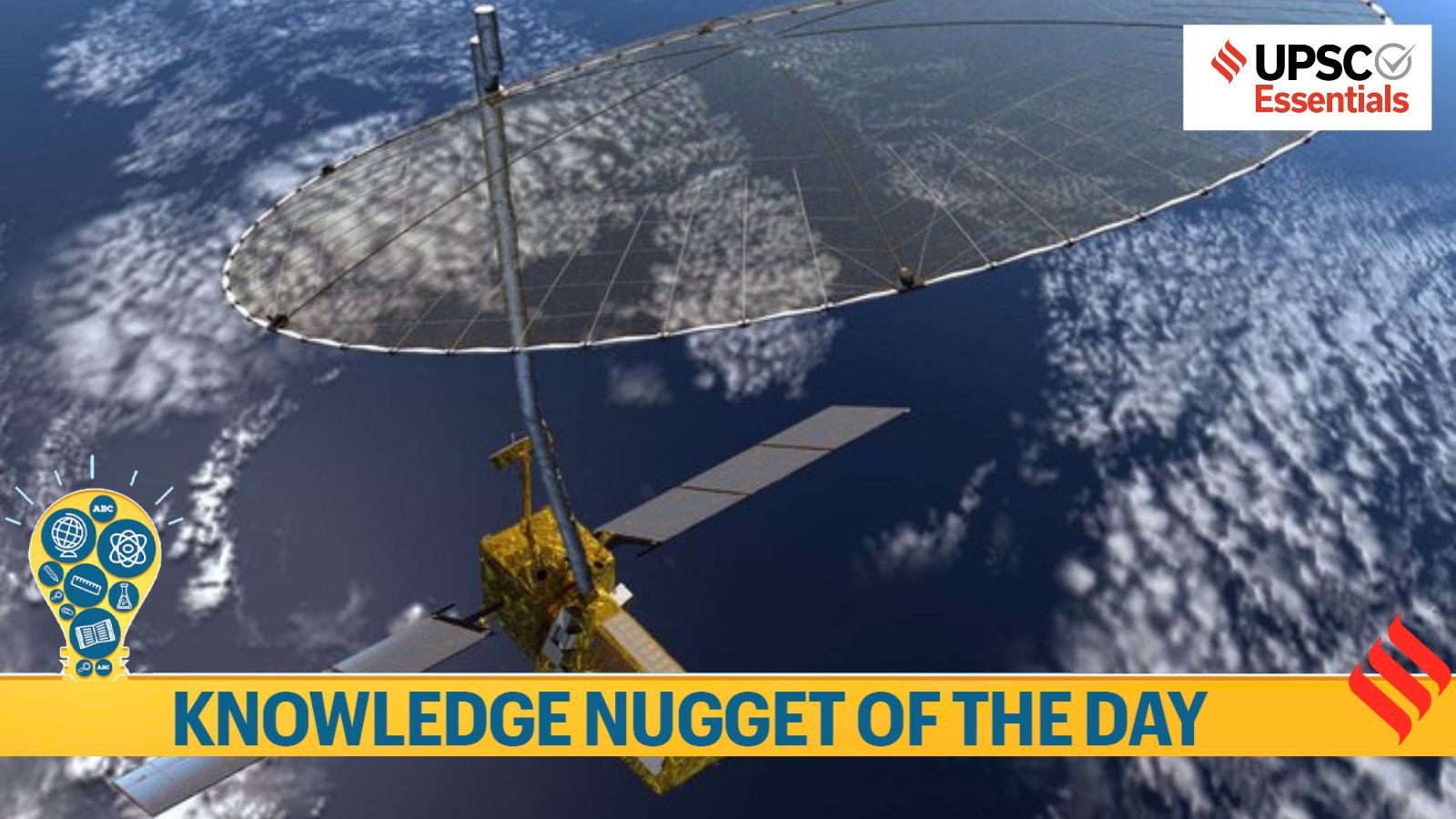
Imagine a super-powered eye for Earth!
NISAR is a satellite built by the US and India to watch our planet.
It uses special radar to take detailed pictures, even through clouds and at night.
This helps scientists see how things on Earth are changing, like melting ice or growing forests.
It can also track things like storms and changes during earthquakes.
Although it can't predict earthquakes, it helps us understand our planet better, including how climate change affects it.
It cost a lot of money, but it promises to provide valuable information about our planet.

NISAR, a joint NASA-ISRO earth observation satellite, is scheduled for launch on July 30.
The satellite will be launched on GSLV-F16 into a 734 km sun-synchronous orbit.
NISAR will scan the entire globe every 12 days, providing high-resolution data.
It will study changes on Earth's surface, including glaciers, sea ice, and vegetation.
NISAR is the most expensive earth observation satellite, costing around USD 1.5 billion.
- Who
- Developed by NASA and ISRO.
- What
- A joint NASA-ISRO earth observation satellite.
- When
- Scheduled for launch on July 30.
- Where
- Will be launched from Sriharikota, Andhra Pradesh.
- Why
- To provide insights into climate change, natural hazards and track changes on Earth's surface.
- Satellite Name
- NISAR (NASA-ISRO Synthetic Aperture Radar)
- Launch Date
- July 30
- Launch Vehicle
- GSLV-F16
- Orbit
- 734 km sun-synchronous
- Coverage
- Entire globe every 12 days
- Cost
- Around USD 1.5 billion