

Archive · 26 Sep 2025
Rajasthan's Desert Berry Ker Faces Threats From Changing Environment
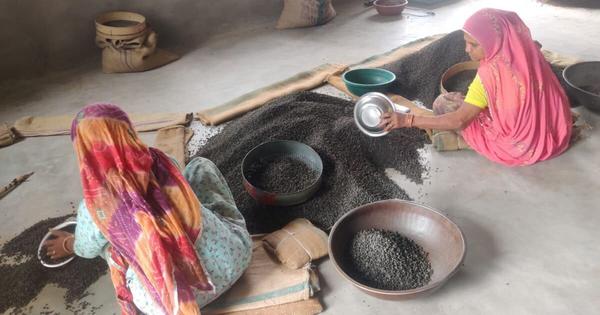
In the desert of Rajasthan, people eat ker, a berry from a special plant.
Women earn money by gathering and selling it.
But now, ker is having trouble.
Changes in farming, like less space for the plants, and more rain or changes in weather are hurting the ker plants.
Scientists are studying how to help ker survive, but they need more research.
The price of ker is going up because there is less of it, and it is becoming harder for women to earn money from it.

Ker (Capparis decidua) is a desert plant that thrives in Rajasthan, India.
Women in Rajasthan traditionally collect and sell ker berries for income.
Changes in agricultural practices, like land use and increased water, are impacting ker.
Changing weather patterns, including rainfall and storms, affect ker production.
Efforts are underway to preserve ker and develop value-added products.
- Who
- Women and farmers in Rajasthan
- What
- The future of ker, a desert berry, is threatened due to environmental changes.
- When
- Current
- Where
- Rajasthan, India
- Why
- Changes in agriculture, water use, and weather patterns affect ker's survival.
Those who believe in a negative impact
Those who don't believe in the negative impact
Impact of babul trees
Those who believe in a negative impact
Babul is a reason for the ker tree disappearance.
Those who don't believe in the negative impact
The babul tree is not the reason for the ker tree disappearance.
- Ker Plant Scientific Name
- Capparis decidua
- Ker Production Region
- Bikaner and Jodhpur districts of Rajasthan
- Estimated Annual Ker Production
- 7,000 tonnes
- Ker's Price (Dried)
- Rs 1,000 - 3,000 per kg
- Price Five Years Ago (Fine Ker)
- Rs 1,000-1,200 per kg
- This Year's Price (Fine Ker)
- Up to Rs 2,000 per kg