

Archive · 19 Jun 2025
Origins of Mutually Assured Destruction During the Cold War
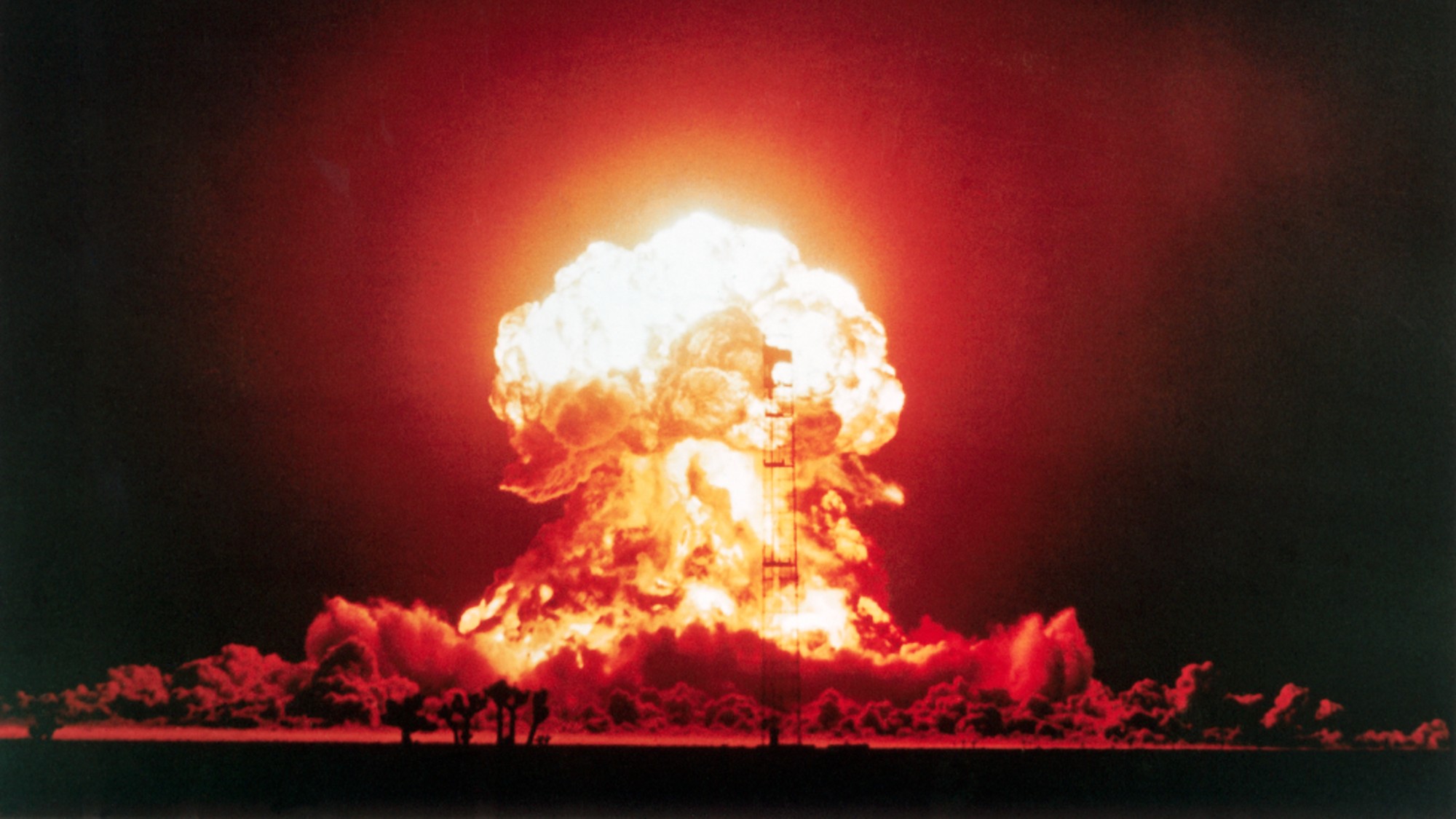
During the Cold War, the US and USSR had many nuclear weapons, enough to destroy each other.
The idea of 'Mutually Assured Destruction' (MAD) was that if one side attacked, the other would strike back, resulting in the destruction of both.
This prevented either side from starting a nuclear war.
The countries built different ways to launch the weapons like bombers and missiles to ensure they could strike back.
Even though there are fewer nuclear weapons now, the idea of stopping war by threatening to retaliate is still used today by many countries.

Mutually Assured Destruction (MAD) was a strategic concept during the Cold War, based on the idea that nuclear weapons prevented war.
The US and USSR developed nuclear arsenals and delivery systems, including bombers, ICBMs, and SLBMs.
The concept of MAD relied on a 'second strike capability' to deter attack, with the threat of retaliation ensuring peace.
Operation Chrome Dome was a US Air Force mission involving B-52 bombers flying near Soviet airspace.
Today, nuclear deterrence continues to play a role in global security, although the number of nuclear weapons has decreased.
- Who
- The US and USSR, along with other nations that have nuclear weapons.
- What
- The concept of Mutually Assured Destruction (MAD), a military strategy of nuclear deterrence.
- When
- The Cold War era, starting in the early 1950s.
- Where
- Primarily between the US and USSR.
- Why
- To deter a nuclear attack by ensuring that both sides would be destroyed if either initiated a strike.
Flexible Response
Second Strike Capability
Strategic Thinking Approaches
Flexible Response
Advocated for nonmilitary and non-nuclear options in the event of an attack.
Second Strike Capability
Advocated for a 'second strike capability', ensuring the ability to retaliate.
- Coined By
- US Secretary of State Robert McNamara
- Initial US Nuclear Stockpile (1953)
- 1,169
- Initial Soviet Nuclear Stockpile (1953)
- 120
- USAF Operation
- Chrome Dome (1961-1968)
- Combined Nuclear Weapons by 1965
- 37,000
- Current Estimated Nukes
- 12,000