

Archive · 17 Nov 2025
Assam's Tea Plantations: Legacy of Colonial Oppression and Modern Challenges
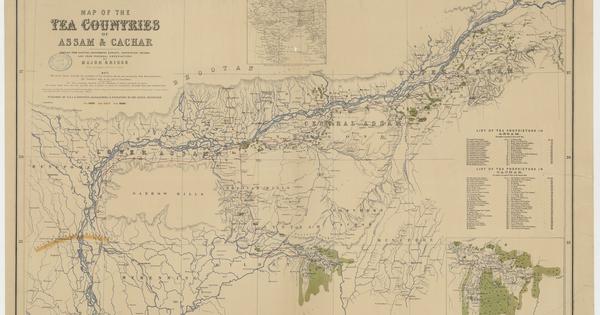
Assam's tea plantations, started by British colonizers, are still a big part of India's economy.
They have a long history of exploiting workers, who are mostly from other parts of India.
Now, the tea industry is facing problems like making less money and having trouble finding people to run it.
Even though things are better for the workers now, they still face problems like not getting paid enough and children working.
The Brahmaputra River, which is close to the plantations, is a big part of the history and the tea industry's future.

Assam's tea plantations, a legacy of British colonial rule, face modern challenges like profitability and leadership crisis.
Tea workers, mostly 'tea tribes' from central India, were brought in under harsh conditions and are still fighting for better rights.
Despite improvements, tea workers face poor living conditions and wages, and children are still engaged in labor.
The tea industry is controlled by a handful of Indian business families and large corporations with international trade networks.
The Brahmaputra River, flowing perilously close to the plantations, is a constant reminder of the region's history and the tea industry's dependence on it.
- Who
- British colonizers, tea workers (tea tribes from central India), tea plantation owners
- What
- Established and operated tea plantations in Assam
- When
- 19th century onwards
- Where
- Assam, India
- Why
- To exploit cheap labor and make profit from tea production
Tea Workers' Rights Activists
Tea Plantation Owners
Worker Exploitation
Tea Workers' Rights Activists
Workers deserve better wages, living conditions, and protection from abuse and exploitation.
Tea Plantation Owners
Plantation owners argue that they provide employment and have improved conditions over time.
Child Labor
Tea Workers' Rights Activists
Children should not be engaged in labor and need access to education.
Tea Plantation Owners
Plantation owners may argue that they provide education opportunities and that some families depend on child labor for income.
- Number of tribes
- 120
- Percentage of Assam's population
- Nearly a fifth
- Major tribes
- Santhal, Munda, Khond, Kharia, Ho, Gond, Bhumij, Kurukh
- First tea consignment sent to Calcutta
- November 21, 1836
- First tea sent to London
- November 1838