1 hr ago
Rising Global Capital Costs Challenge Emerging Economies, Thakur Says

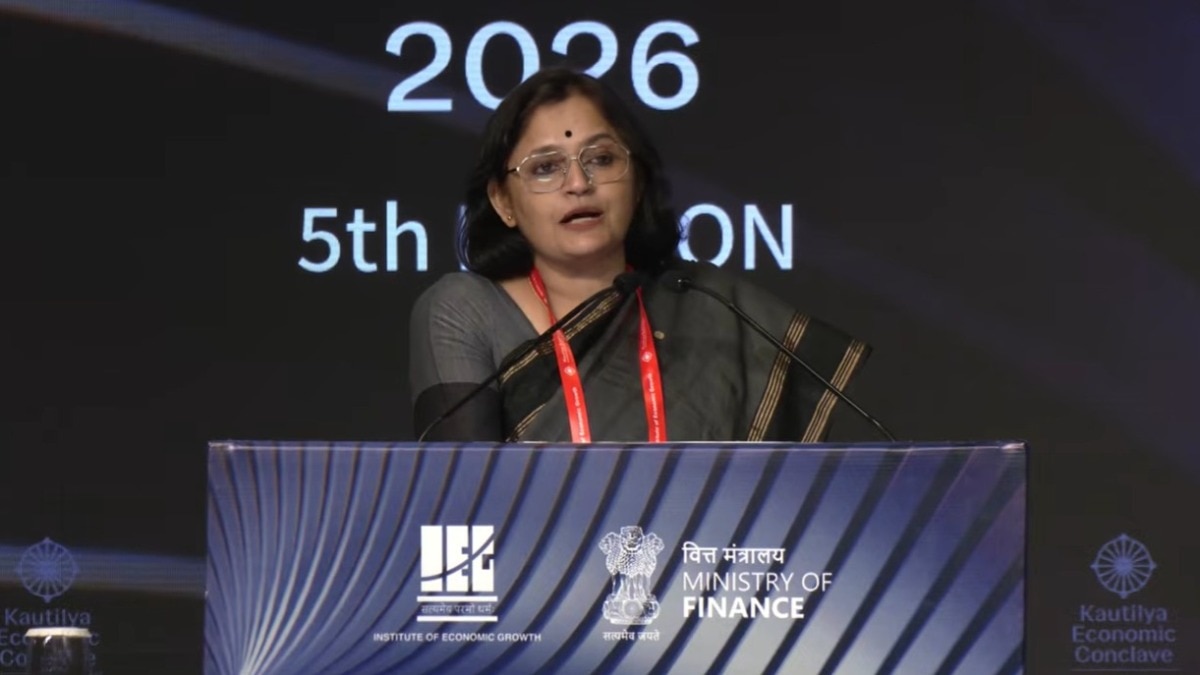
Anuradha Thakur said borrowing money is becoming more expensive around the world.
Governments are borrowing a lot, and investors are asking for more in return for taking risks.
Big investments in artificial intelligence also require money for things like data centres, chips and electricity.
These changes can make it harder for emerging economies to pay for projects.
Thakur said India attracted record gross foreign investment of about $97 billion last fiscal year.
She also said private companies are investing more.
India has reduced its government deficit and has introduced reforms, she said.
These steps can help the country stay stable and attract investment.

Economic affairs secretary Anuradha Thakur said government borrowing, higher risk premiums and AI investment are raising capital costs worldwide.
She said these pressures pose particular challenges for emerging economies as bond markets play a larger role in financing.
India received about $97 billion in gross foreign direct investment last fiscal year and $29.3 billion in the June quarter.
Thakur said private investment is increasing, with capital formation growing at its fastest pace in more than three years in the June quarter.
She cited fiscal discipline, reforms and higher public investment as factors supporting India’s economic stability and ability to attract capital.
- Who
- Economic affairs secretary Anuradha Thakur.
- What
- She said rising borrowing, risk premiums and AI investment are increasing global capital costs and challenging emerging economies.
- Where
- The Kautilya Economic Conclave in New Delhi.
- When
- Sunday, during a late-evening session; the article does not give a date.
- Why
- High government borrowing, greater investor risk premiums, geostrategic trade concerns and debt-financed AI infrastructure investment are contributing to higher capital costs.
Key facts
- India gross FDI
- About $97 billion in the last fiscal year, according to Thakur.
- June-quarter FDI
- $29.3 billion.
- Government papers
- More than 80% of global GDP, as stated by Thakur.
- Fiscal deficit
- The Centre's deficit fell from 9.2% of GDP in FY21 to a budgeted 4.3% for the current fiscal year.
- Capital expenditure
- The Centre's capex rose from about ₹2 trillion in FY15 to a budgeted ₹12.22 trillion for FY27.
- Economic growth
- India's economy grew at an average of over 7% in the past three years, according to Thakur.
- Capital formation
- It grew at its fastest pace in more than three years in the June quarter.
Quotes
Anuradha Thakur
India's economic affairs secretary
“When trade is organized around security and geostrategic concerns, and not comparative advantage, goods and capital move less efficiently, surpluses and deficits become sources of friction, and the price of capital further rises for everyone.”
 livemint.com
“Fiscal credibility, price stability and a sound banking system are the foundation for any country that hopes to borrow at a reasonable price when capital is scarce and expensive.”
livemint.com
Sources
Related news
Rising Global Bond Yields Challenge Emerging Markets, DEA Secretary Says

India Warned Growth Cannot Offset Rising Global Capital Challenges

India’s Principal Secretary Warns of Trade, Capital and AI Risks
Global Bond Yields Hit Multidecade Highs Amid Debt Worries

US Bond Yields, AI Spending and India’s Stock Market

RBI Governor Warns India Against Complacency Amid Global Risks

CBI Arrests DGCA Deputy Director in ₹2.5 Lakh Bribery Case

Swiss President Guy Parmelin to Meet Modi During India Visit
Priyanka Questions Modi, Shah Over Journalists’ Harassment Allegations
Jaishankar Sees Technology Driving Broader India-Europe Partnership