

Archive · 29 Dec 2025
Cracks in Thwaites Glacier Double in 20 Years
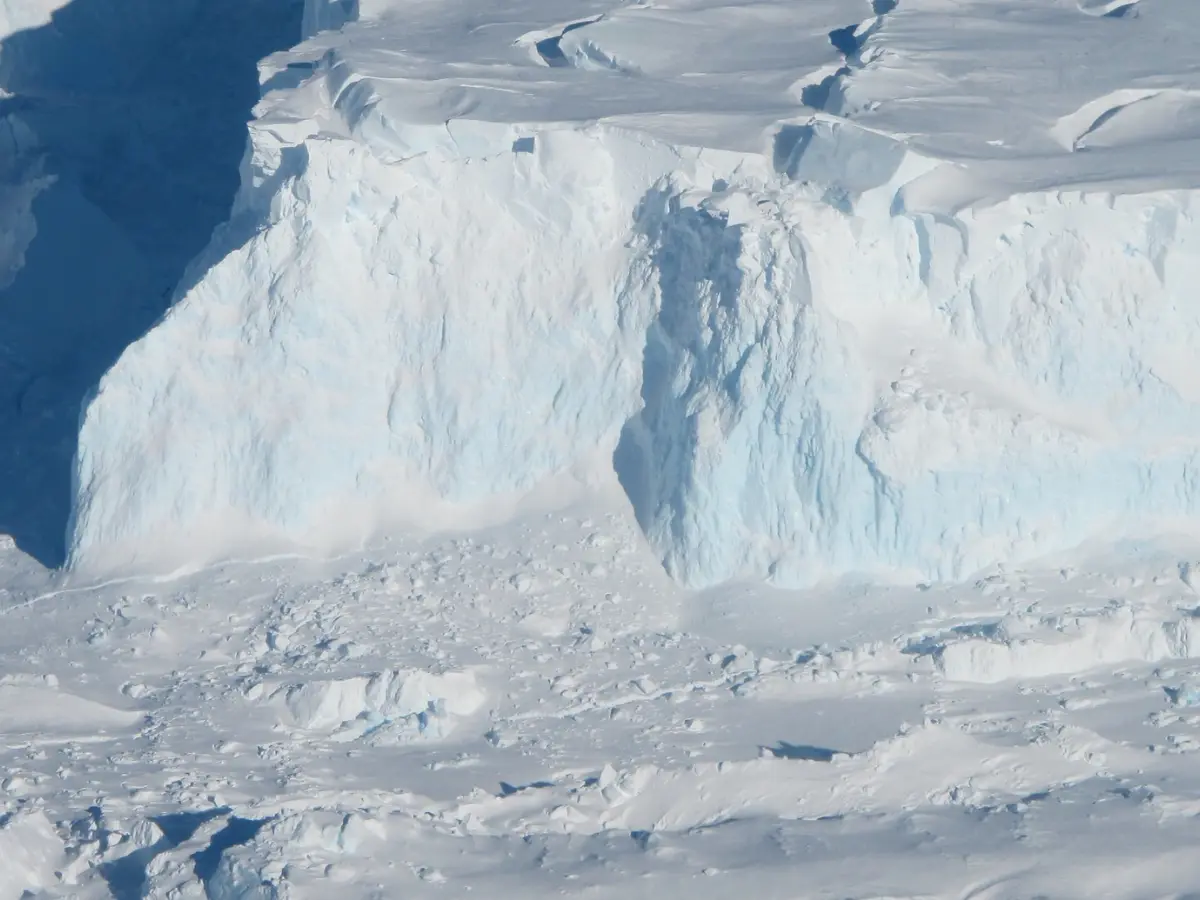
Scientists have found that big cracks in a huge glacier called Thwaites, also known as the Doomsday Glacier, have gotten much bigger over the past 20 years.
These cracks are making the glacier weaker and could cause it to break apart.
If this happens, the sea levels could rise a lot, which would be a big problem.
The glacier is in Antarctica and is very important because it helps hold back a lot of ice.
If it collapses, it could speed up the melting of other ice in the area.
Scientists are worried because the damage to the glacier can't be fixed, and it might collapse soon, maybe even by 2032.

Cracks in the Thwaites Glacier have doubled in length from 100 miles to over 200 miles between 2002 and 2022.
The glacier, known as the Doomsday Glacier, is at risk of imminent collapse, which could raise sea levels by up to 11 feet.
Researchers from the University of Manitoba and the International Thwaites Glacier Collaboration (ITGC) have observed progressive fracturing around a shear zone.
The Thwaites Ice Shelf, which holds the eastern portion of the glacier, is expected to collapse by 2032, speeding up the outflow and leading to a complete breakdown.
Warming oceans are melting glaciers faster, contributing to the increased stress and fracturing of the Thwaites Glacier.
- Who
- Researchers from the University of Manitoba and the International Thwaites Glacier Collaboration (ITGC)
- What
- Cracks in the Thwaites Glacier have doubled in length over two decades, weakening its structural integrity
- When
- Between 2002 and 2022
- Where
- Thwaites Glacier, West Antarctica
- Why
- Warming oceans are melting glaciers faster, leading to increased fracturing and potential collapse
- Glacier Name
- Thwaites Glacier (Doomsday Glacier)
- Observation Period
- 2002-2022
- Crack Growth
- From 100 miles to over 200 miles
- Potential Sea Level Rise
- Up to 11 feet
- Expected Collapse
- Thwaites Ice Shelf by 2032
- Researchers
- University of Manitoba, International Thwaites Glacier Collaboration (ITGC)