

Archive · 20 Jan 2026
Shrines Used in Minority Abuse in Pakistan's Sindh
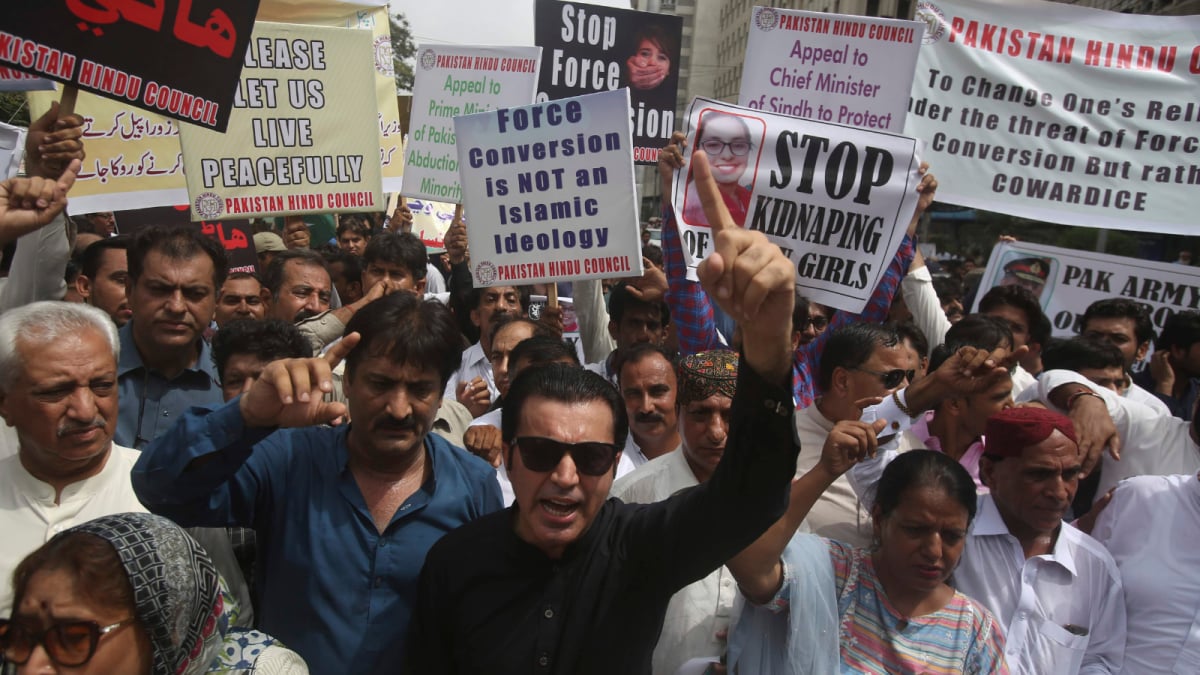
In Pakistan's Sindh province, there is a troubling pattern where young Hindu girls from poor and marginalized communities are being targeted.
They are often lured or forced into leaving their homes with promises of marriage or jobs.
Once away from their families, they are taken to religious shrines or madrassas where they are converted to Islam and quickly married off, sometimes to older men.
The families of these girls find it very hard to get them back because the legal system often accepts the conversions as voluntary.
This happens because the girls are poor and don't have strong legal support.
The situation shows how vulnerable groups can be taken advantage of when there are weaknesses in the law and society.

Girls from marginalized Hindu communities in Sindh are targeted for abduction and forced conversion.
Religious shrines and madrassa-linked locations are used for conversions, with claims of 1,000 girls converted at one shrine.
Victims are lured or coerced, then quickly moved to prevent family and legal intervention.
Forged documents are used to bypass child marriage laws, and marriages occur within days of conversion.
Legal proceedings often accept claims of voluntary conversion, making it difficult for families to challenge the process.
- Who
- Hindu girls from marginalized communities in Sindh, Pakistan
- What
- Abduction, forced conversion, and marriage of underage minority girls
- When
- Ongoing, with recent intelligence inputs
- Where
- Sindh province, Pakistan, particularly at shrines and madrassa-linked locations
- Why
- Due to poverty, social exclusion, and weak access to legal remedies
- Targeted Communities
- Bheel, Meghwar, Kolhi
- Primary Locations
- Shrines, madrassa-linked locations
- Alleged Conversion Claims
- 1,000 Hindu girls (contested)
- Legal Process
- Forged documents, rapid marriages
- Systemic Issues
- Legal loopholes, social vulnerability, institutional apathy