Archive · 5 Nov 2025
CISF Warns of New Scam: Fraudsters Posing as Personnel to Defraud Public

Imagine someone pretending to be a police officer from a special security force called CISF.
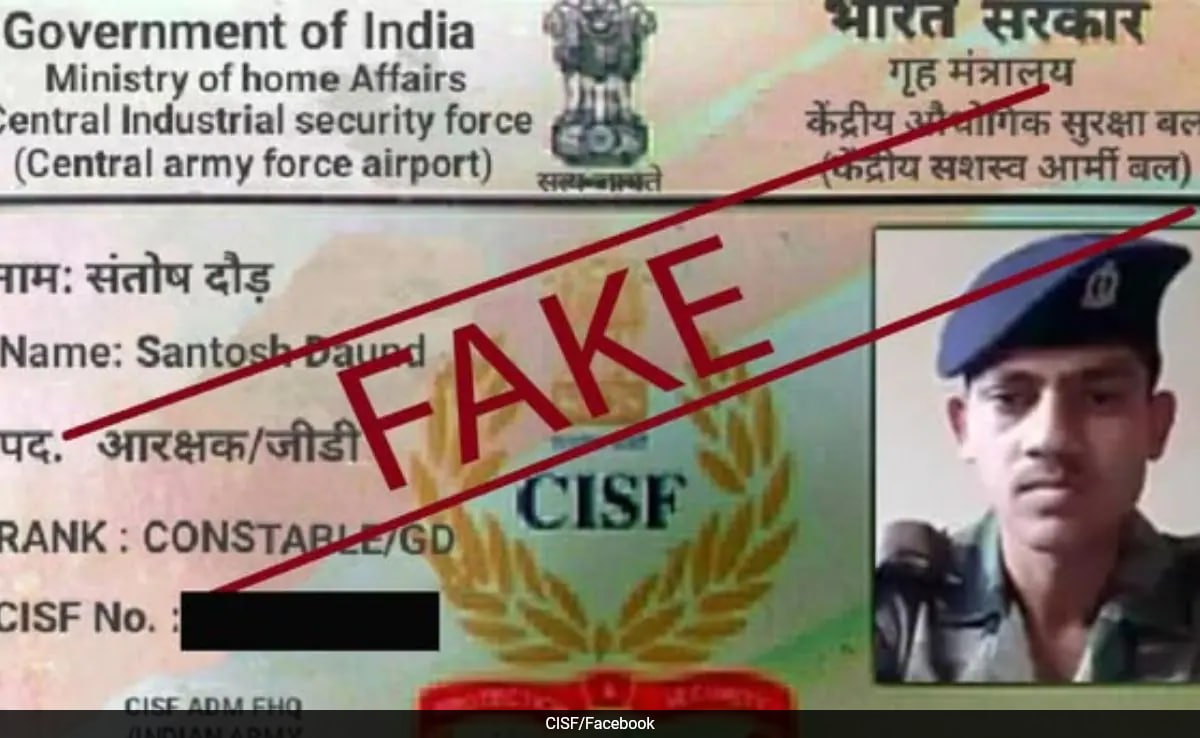
They might send you a fake ID card that looks real and say they need to rent your house because they are being moved to a new city.
They'll ask for your bank details to pay rent, but then they steal your money.
Another trick is they pretend to sell their furniture or car online because they are being transferred and ask you to send money first.
After you send the money, they disappear and you never get the items.
The real CISF is warning everyone to be very careful.
Don't trust fake IDs right away.
Always try to meet people in person before paying them money for rent or for buying things.
If someone seems suspicious, don't send any money and tell the police by calling 1930.

Fraudsters are posing as Central Industrial Security Force (CISF) personnel in a new scam.
Scammers use fake CISF ID cards and impersonate officers to gain trust for various fraudulent activities.
One method involves targeting homeowners by posing as tenants needing accommodation due to transfer, then stealing bank details.
Another tactic is advertising household items or vehicles for sale online, claiming transfer as a reason, and defrauding buyers after receiving payment.
The CISF advises the public to be cautious of online transactions, verify identities, avoid immediate payments, and report suspicious activity to helpline 1930.
- Who
- Criminals posing as Central Industrial Security Force (CISF) personnel.
- What
- A new scam where fraudsters impersonate CISF personnel to defraud people by posing as tenants needing accommodation or sellers of items/vehicles.
- When
- Recently emerged, with an advisory issued in January.
- Where
- Across India, targeting individuals using online platforms for rentals and sales.
- Why
- To obtain money from victims through fraudulent means by exploiting the perceived authority and trustworthiness of CISF personnel.
Fraudsters' Tactics
CISF Recommendations
Impersonation and Fake IDs
Fraudsters' Tactics
Criminals pose as CISF personnel, sharing fake ID cards with their photograph in uniform to gain trust.
CISF Recommendations
Do not immediately trust anyone who shares their service ID card; gather complete information first.
Targeting Property Rentals
Fraudsters' Tactics
Fraudsters obtain contact details of homeowners renting out property online, claim they are CISF officers needing accommodation due to transfer, and request bank details to transfer rent, then steal money.
CISF Recommendations
Avoid falling prey to such scams and meeting people in person before any transactions. Real CISF personnel do not conduct official business this way.
Online Sales Scams
Fraudsters' Tactics
Fake CISF officials advertise household items or vehicles for sale online, claiming transfer as a reason for selling, and defraud buyers after receiving payment.
CISF Recommendations
Exercise caution with online advertisements, especially those claiming urgent sale due to transfer. Refrain from making payments without meeting and verifying.
Transaction Methods
Fraudsters' Tactics
Money is transferred to fraudsters' accounts under the guise of rent payment or for purchasing items/vehicles.
CISF Recommendations
No transactions should be made over the phone or in a text message without meeting the person.
- Scam Type
- CISF Personnel Impersonation Scam
- Impersonated Officials
- Central Industrial Security Force (CISF) personnel (Sub-Inspector, Constable)
- Fraudster Tactics
- Sharing fake CISF ID cards, fake Aadhaar and PAN cards, posing as officers needing accommodation, or selling items/vehicles due to transfer.
- Methods Used
- Targeting online rental listings, posting fake ads on platforms like Facebook and OLX.
- Victim Actions
- Sharing bank details for rent transfer, transferring money for purchased items or vehicles.
- CISF Advisory
- Exercise caution with online transactions, verify callers, do not make payments without meeting, report suspicious activity.
- Reporting Helpline
- National Cybercrime Helpline No. 1930