

Archive · 9 Jan 2026
US-led Pax Silica aims to counter China's critical minerals dominance
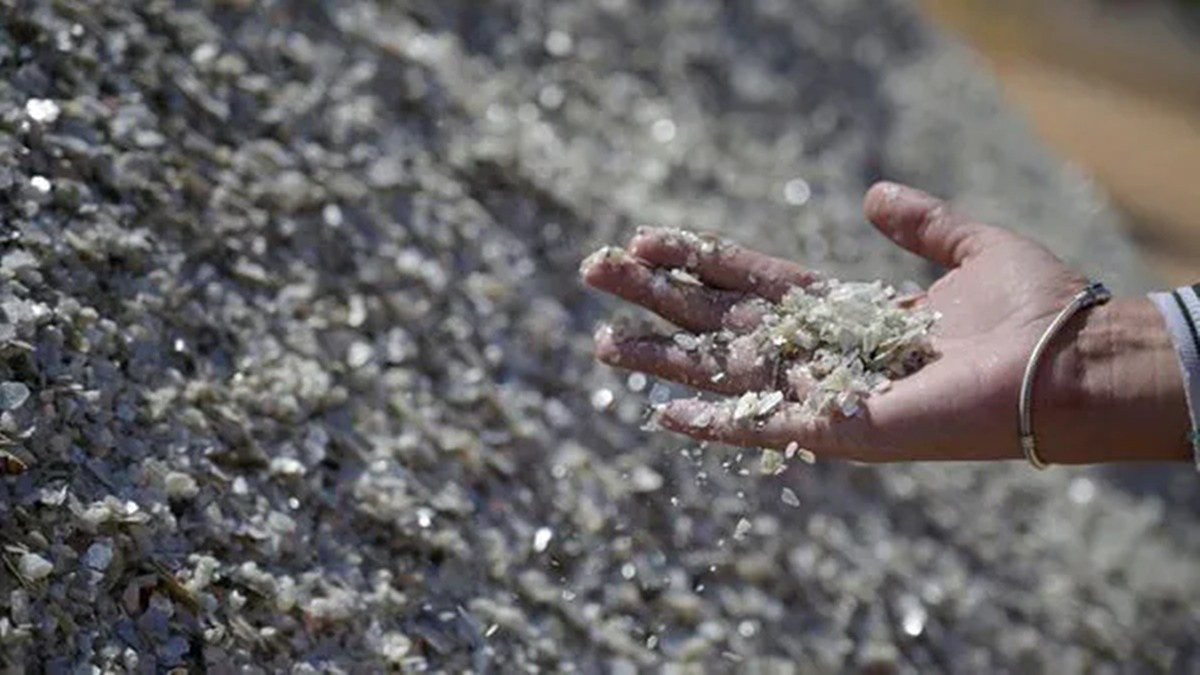
The US has started two groups, Pax Silica and the Minerals Security Partnership, to challenge China's control over important minerals like silicon, which are used in things like computer chips and AI.
China controls most of the mining and processing of these minerals, making it hard for other countries to compete.
The US and its partners are trying to find ways to reduce their dependence on China, but it's a big challenge because China has a huge head start and produces these minerals much more cheaply.
India is a big market for these minerals but doesn't have many reserves or the technology to process them.
The new group, Pax Silica, includes countries that are good at research and technology, but it's unclear if they can really break China's dominance anytime soon.

US-led Pax Silica (PS) and Minerals Security Partnership (MSP) aim to counter China's dominance in critical minerals.
China controls 70% of critical minerals mining and 90% of processing, making it difficult for other countries to compete.
India is a large market for critical minerals but lacks significant reserves and processing technology.
Pax Silica includes countries with strengths in AI, semiconductor design, research, innovation, and cybersecurity.
Breaking China's monopoly is seen as a Herculean task due to technical, financial, and environmental challenges.
- Who
- US-led initiatives Pax Silica (PS) and Minerals Security Partnership (MSP) with various countries
- What
- Efforts to counter China's dominance in critical minerals and rare earths
- When
- Recent initiatives, with MSP formed a year before India joined in 2023
- Where
- Global, with focus on countries like US, Japan, South Korea, India, China
- Why
- To break China's monopoly in critical minerals and rare earths, which is seen as a Herculean task
- Pax Silica (PS)
- US-led initiative including Japan, South Korea, Singapore, Netherlands, UK, Israel, UAE, Australia
- Minerals Security Partnership (MSP)
- US-led initiative with 14 countries including EU and India
- China's dominance
- 70% of critical minerals mining, 90% of processing
- India's reserves
- Reports of lithium reserves in Jammu and Kashmir, but not proven
- India's role
- Large market for critical minerals, but lacks reserves and processing technology
- Time horizon for mining
- 15 years or more from mining to final products
- China's cost advantage
- Produces critical minerals at a fraction of the cost compared to the West
- PS composition
- Nine countries with edge in AI, semiconductor design, research, innovation, cybersecurity