Archive · 16 Sep 2026
US House Advances Russia Sanctions Bill, Kharge Attacks Modi
The US Congress is considering a law to punish Russia and countries that buy its oil and gas.
The law could let President Donald Trump place very high taxes, called tariffs, on goods from countries such as India and China.
The US says money from Russia's oil trade helps pay for its war against Ukraine.
The US House took an important step toward passing the bill, but it has not approved the final version yet.
The US Senate already passed it by a large vote.
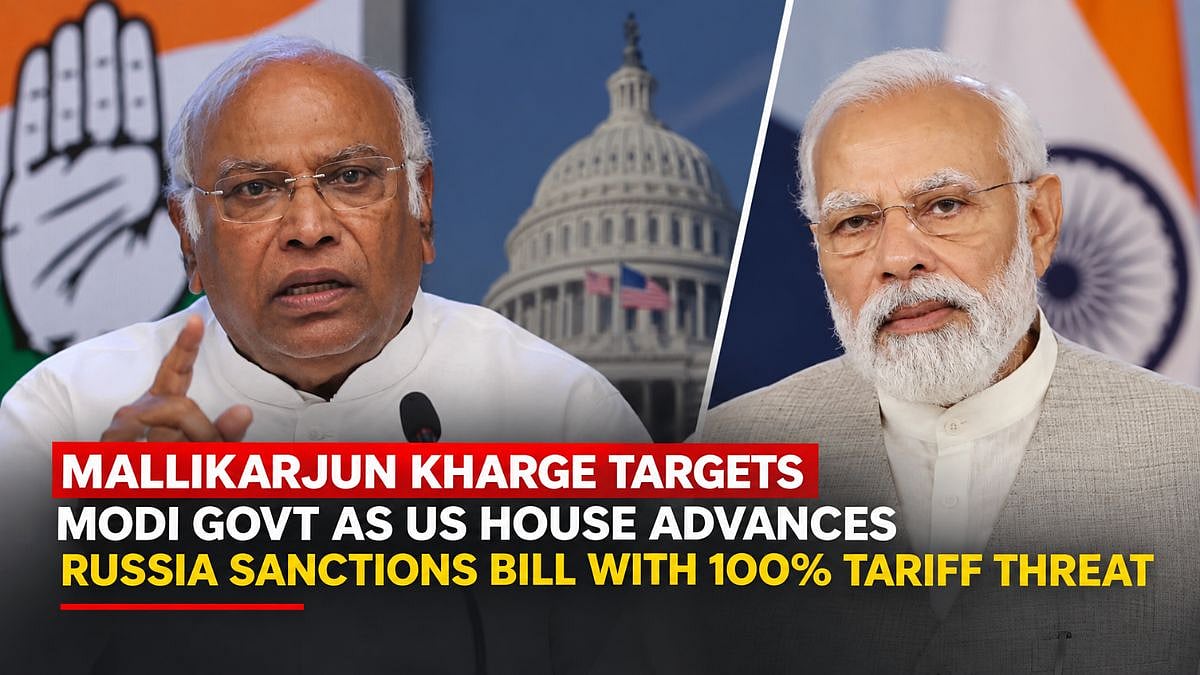
India's Congress leader Mallikarjun Kharge criticized Prime Minister Narendra Modi's government over the possible tariffs.
He said many Indian industries and farmers could be hurt.
Another US lawmaker objected because he thought the bill would give the president too much tariff power.

The US House advanced a Russia sanctions bill by a 214-211 procedural vote.
The measure could authorize President Donald Trump to impose tariffs of up to 100% on major buyers of Russian energy, including India and China.
Congress president Mallikarjun Kharge said the tariff threat showed that the Modi government's foreign and trade policies had failed.
Kharge warned that Indian pharmaceuticals, textiles, engineering goods, chemicals, auto components, jewelry, electronics and technology could be affected.
The Senate passed the bill 86-11, but it still requires final House approval before reaching the president.
- Who
- The US House of Representatives, US Senate, President Donald Trump, Mallikarjun Kharge, Prime Minister Narendra Modi and other US and Indian lawmakers.
- What
- The US House advanced a Russia and Iran sanctions bill that could authorize tariffs of up to 100% on major buyers of Russian oil and gas, prompting criticism from Kharge.
- When
- The House procedural vote occurred on Tuesday, September 15, 2026; Kharge's comments and the expected final House vote were reported on Wednesday, September 16.
- Where
- The legislative action took place in Washington, while Kharge's political reaction was issued from New Delhi.
- Why
- The United States says Russian crude-oil revenue helps fund the war against Ukraine; the bill seeks to increase economic pressure on Russia and its major energy buyers.
Critics of the Bill and Modi Government
Supporters of Sanctions and Tariff Pressure
Effect on India
Critics of the Bill and Modi Government
Mallikarjun Kharge said the possible tariffs demonstrated the failure of the Modi government's foreign and trade policies and could severely harm Indian industries and farmers.
Supporters of Sanctions and Tariff Pressure
The US position is that Russia's crude-oil revenue helps fund its war against Ukraine, so pressure on major Russian energy buyers is justified as part of a sanctions strategy.
Presidential tariff powers
Critics of the Bill and Modi Government
Democratic Congressman Gregory Meeks argued that the bill would give President Trump unchecked or sweeping authority to impose tariffs without sufficient safeguards.
Supporters of Sanctions and Tariff Pressure
The bill's supporters advanced it in the House, and the Senate had already approved it by an 86-11 majority.
India-US trade policy
Critics of the Bill and Modi Government
Kharge alleged that the Modi government had repeatedly yielded to US pressure, including through a trade framework expanding American access to Indian agricultural products and a claimed $500 billion purchase commitment.
Supporters of Sanctions and Tariff Pressure
The articles report the US legislative rationale and congressional support for sanctions but do not provide a detailed defense from the Modi government.
- House procedural vote
- The measure advanced 214-211, with two Democrats joining Republicans.
- Senate vote
- The Senate passed the bill 86-11 on August 7, 2026.
- Potential tariff
- The bill could authorize tariffs of up to 100% on countries buying Russian oil and gas.
- Potentially affected countries
- India and China were identified as major Russian energy buyers that could face the measure.
- Potentially affected Indian sectors
- Pharmaceuticals, textiles, engineering goods, chemicals, auto components, gems and jewelry, electronics and technology.
- Bill provisions
- The measure targets Russia's leadership, energy sector and vessels described as its sanctions-evading shadow fleet, while extending sanctions on Iran.
- Next step
- The bill must pass a final House vote before being sent to the president for signature.