

Archive · 28 Jul 2026
India's Education System Needs Structural Reforms Beyond Stricter Laws
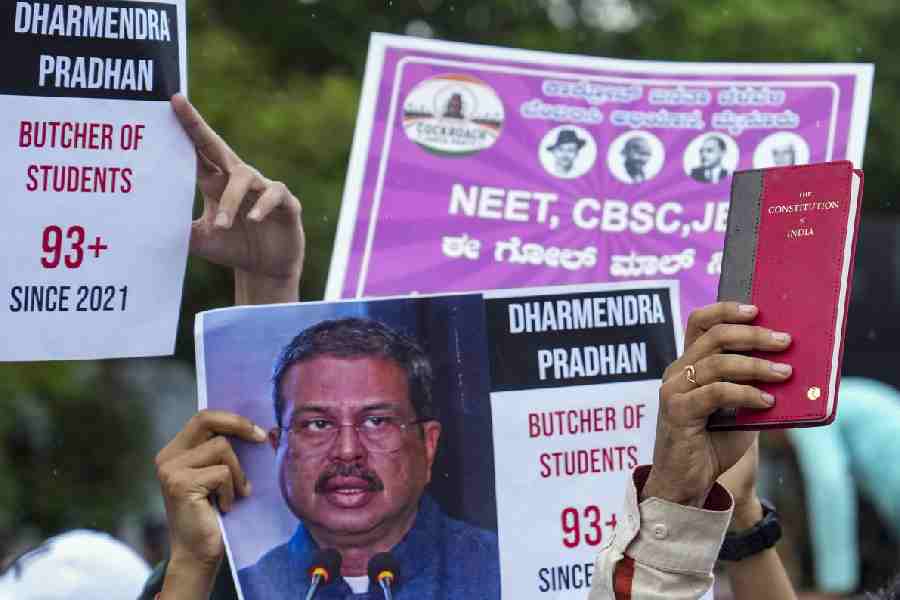
The Indian government introduced a new bill to make punishment stricter for those who leak examination papers.
This was part of the prime minister's promise to students who were protesting against paper leaks.
However, experts say that stricter laws alone won't solve the problem.
They believe the education system needs bigger changes.
The current system, which was set up by the National Education Policy in 2020, is too centralized.
This makes it easier for corruption and leaks to happen.
The National Testing Agency, which conducts exams, is also accused of being connected to coaching centers, which can lead to unfair practices.
Experts say that allowing schools to have their own tests and syllabus would be better.
This way, students with different talents can be assessed fairly.
The new bill doesn't address these deeper issues, so it might not be enough to fix the problems in the education system.

The Indian government introduced a new bill to make punishment stricter for examination paper leaks.
Experts believe that stricter laws alone won't solve the problem; structural reforms are needed.
The National Education Policy, 2020, emphasizes centralization and privatization, leading to issues like opacity and corruption.
The National Testing Agency (NTA) is accused of being connected to coaching institutions, encouraging corruption.
Experts advocate for allowing educational institutions to have their own admission tests and syllabi to assess diverse talents fairly.
- Who
- Students, academics, experts, and the Indian government.
- What
- The introduction of a new bill to make punishment more stringent for examination paper leaks and the need for structural reforms in the education system.
- When
- The bill was introduced in Parliament, following the prime minister's promise to agitating students.
- Where
- India.
- Why
- To address the issues of paper leaks and the deeper structural problems in the education system.
Proponents of Stricter Laws
Advocates for Structural Reforms
Effectiveness of Punitive Measures
Proponents of Stricter Laws
Stricter laws and harsher punishments will deter paper leaks and improve the examination system.
Advocates for Structural Reforms
Punitive measures alone are insufficient; structural reforms and systemic changes are necessary to address the root causes of paper leaks.
Centralization of Education
Proponents of Stricter Laws
Centralized examinations ensure uniformity and fairness across the country.
Advocates for Structural Reforms
Centralization leads to opacity, corruption, and fraud, making paper leaks and assessment errors inevitable.
Role of the National Testing Agency
Proponents of Stricter Laws
The National Testing Agency (NTA) is essential for conducting standardized examinations.
Advocates for Structural Reforms
The NTA's alleged connections with coaching institutions encourage corruption, and its computer-based, multiple-choice questions do not gauge diverse talents effectively.
- Prime Minister's Promise
- Arrest of suspects in paper leaks, fast-track courts, and a task force on examination reforms headed by Nandan Nilekani.
- New Bill
- Introduced in Parliament to make punishment more stringent for leaks in examination papers.
- National Education Policy, 2020
- Emphasizes centralization and privatization, leading to issues like opacity and corruption.
- National Testing Agency (NTA)
- A registered society conducting national-level examinations, allegedly connected with coaching institutions.
- Expert Opinions
- Academics and experts advocate for structural reforms and systemic changes to address the root causes of paper leaks.