

Archive · 24 Dec 2025
Indian Army Endures Extreme Himalayan Winter Conditions
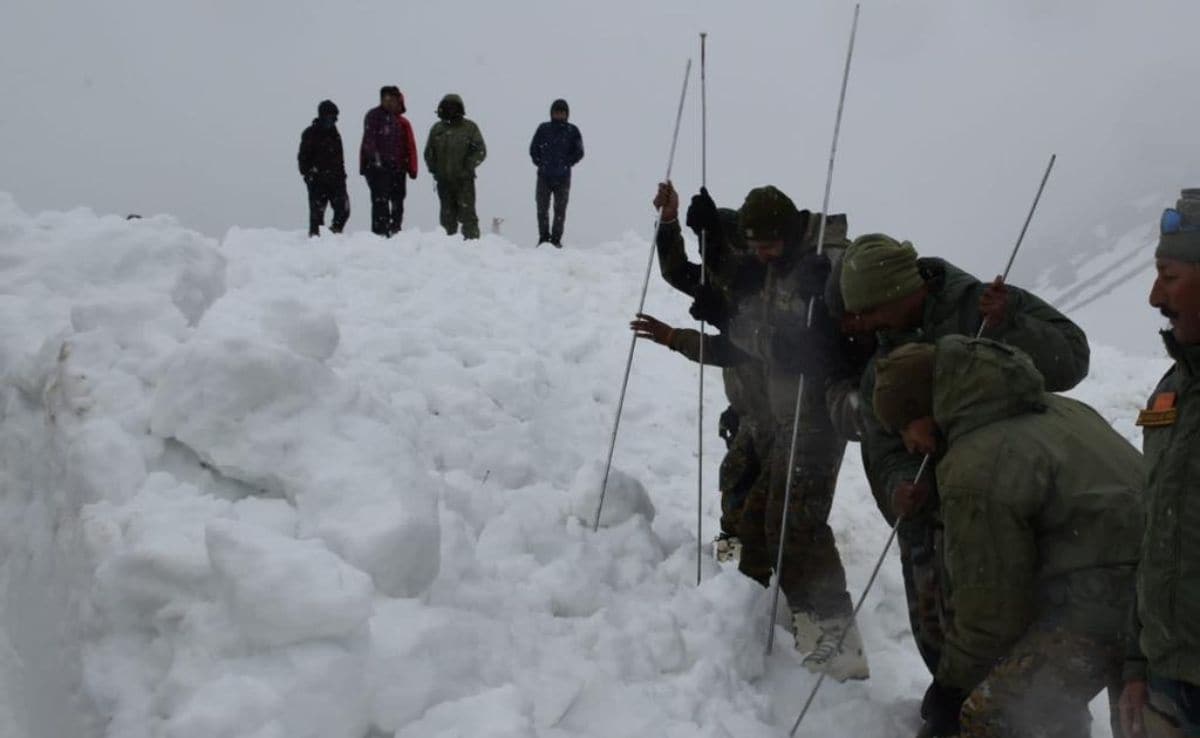
The Indian Army is working very hard in the cold Himalayan mountains during winter.
It's so cold that water turns into ice quickly, and the soldiers have to wear special clothes to stay warm.
They work all day and night to protect the country's borders.
The weather is very tough with lots of snow, strong winds, and not enough oxygen to breathe.
But the soldiers are very brave and trained to handle these challenges.
They use special equipment and training to do their jobs.
In some places, terrorists try to cross the border, and the army has to be extra careful.

Temperatures in the Himalayas have dropped to minus 30°C or below, with heavy snowfall and strong icy winds.
Indian Army soldiers are deployed in extreme conditions, maintaining round-the-clock vigil and operational duties.
Special winter clothing, high-altitude equipment, and accurate weather monitoring systems are used to cope with the challenges.
In Siachen Glacier, soldiers wear a three-layered extreme cold weather clothing system (ECWCS) to protect against extreme cold and high winds.
The army faces additional challenges from terrorist infiltration attempts facilitated by the Pakistani Army in Kashmir sectors.
- Who
- Indian Army soldiers
- What
- Enduring extreme winter conditions in the Himalayas
- When
- During winter
- Where
- Ladakh, Kargil, Galwan, North Sikkim, Shamshabari Range, Greater Himalayas
- Why
- To secure the country's borders and maintain operational readiness
- Temperature Range
- Minus 30°C to 8°C
- Locations
- Ladakh, Kargil, Galwan, North Sikkim, Shamshabari Range, Greater Himalayas
- Challenges
- Heavy snowfall, strong icy winds, low oxygen, limited visibility
- Special Gear
- Three-layered extreme cold weather clothing system (ECWCS)
- Operational Duties
- Round-the-clock vigil, patrolling, logistics, communications, surveillance
- Altitude
- Above 4,000 meters in North Sikkim and Greater Himalayas
- Terrorist Activity
- Pakistani Army facilitating infiltration in Kashmir sectors