

Archive · 29 Dec 2025
Carbon Credits for India's Rice Farmers
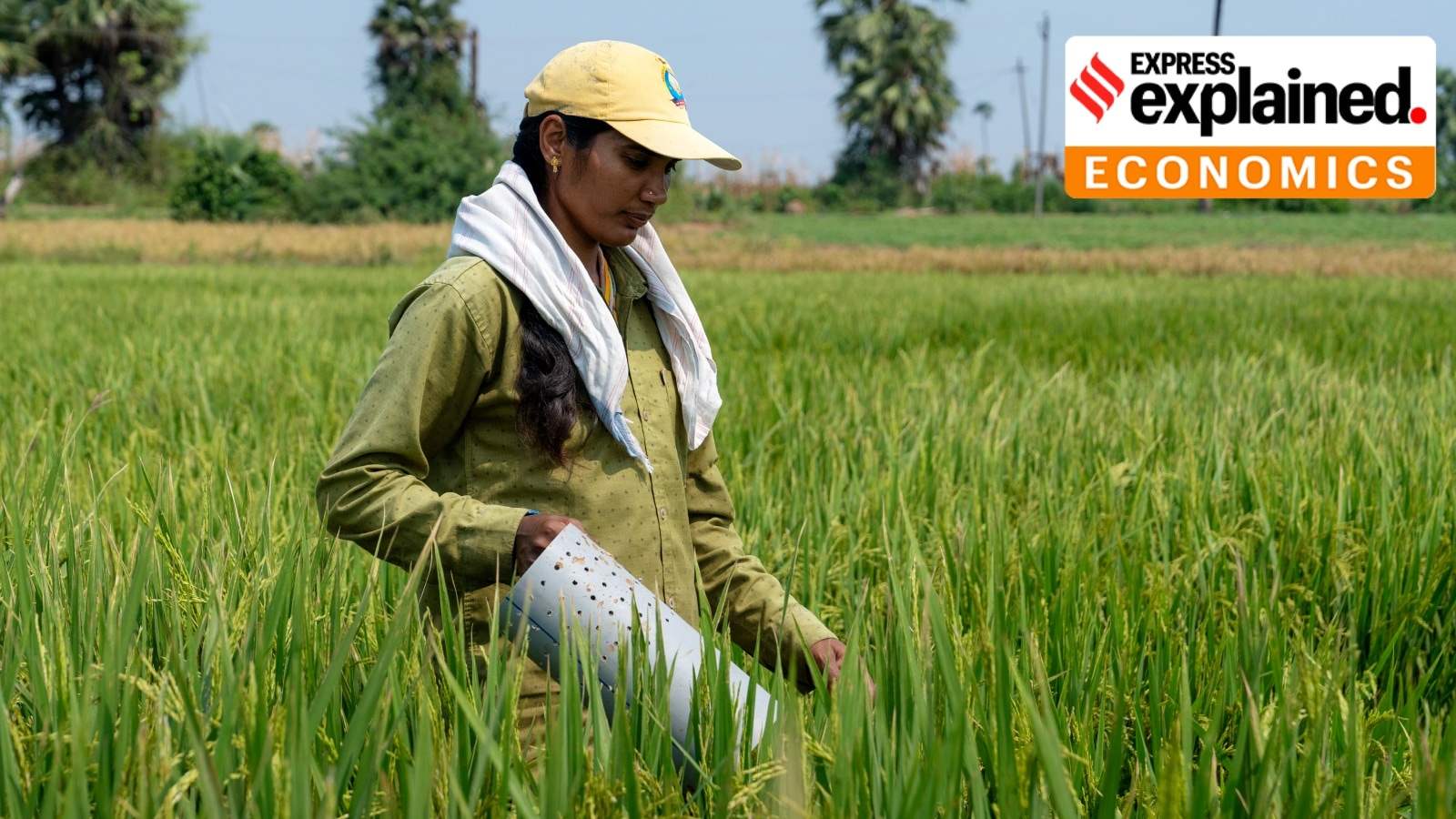
Farmers in India are using a new method called Alternate Wetting and Drying (AWD) to grow rice.
This method helps save water and reduces the amount of methane, a harmful greenhouse gas, that comes from rice fields.
By using AWD, farmers can earn carbon credits, which are like special certificates they can sell to companies that want to reduce their own emissions.
This not only helps the environment but also gives farmers extra money.
Companies like Mitti Labs and the Good Rice Alliance are helping farmers adopt this method, making it easier for them to participate and benefit from the carbon credit system.

Alternate Wetting and Drying (AWD) is a rice cultivation method that reduces methane emissions and water consumption.
AWD reduces methane emissions by 3.5 tonnes of CO2 equivalent per hectare compared to continuous flooding.
Mitti Labs has enrolled 69,000 farmers across multiple states to implement AWD and earn carbon credits.
Carbon credits from methane abatement are trading at $15-25 per tonne of CO2 equivalent, providing farmers with a new revenue source.
The Good Rice Alliance, a partnership of Bayer, Shell Energy India, and GenZero, is promoting AWD and direct seeding of rice, enrolling 12,000+ farmers across 13 states.
- Who
- India's rice farmers, climate-tech startup Mitti Labs, and the Good Rice Alliance (Bayer, Shell Energy India, GenZero).
- What
- Implementation of Alternate Wetting and Drying (AWD) in rice cultivation to reduce methane emissions and earn carbon credits.
- When
- The study and implementation have been ongoing, with significant enrollment of farmers in 2023-24, 2024-25, and 2025-26.
- Where
- Farmers in Telangana, Andhra Pradesh, Odisha, Tamil Nadu, and Karnataka are involved in the AWD program.
- Why
- To reduce methane emissions, conserve water, and provide farmers with a new revenue source through carbon credits.
- AWD
- Alternate Wetting and Drying, a rice cultivation method that reduces methane emissions.
- Methane Emissions Reduction
- AWD reduces methane emissions by 3.5 tonnes of CO2 equivalent per hectare compared to continuous flooding.
- Water Consumption
- AWD reduces water consumption by 1.82 million litres per acre compared to continuous flooding.
- Carbon Credit Value
- Carbon credits from methane abatement are trading at $15-25 per tonne of CO2 equivalent.
- Farmers Enrolled
- Mitti Labs has enrolled 69,000 farmers across multiple states to implement AWD.
- Good Rice Alliance
- A partnership promoting AWD and direct seeding of rice, enrolling 12,000+ farmers across 13 states.
- Methane Emissions Reduction by Good Rice Alliance
- Reducing methane emissions equivalent to around 120,000 tonnes of CO2 per year.