

6 days ago
Gossip Turns Information Into Money, Welfare, and Social Power
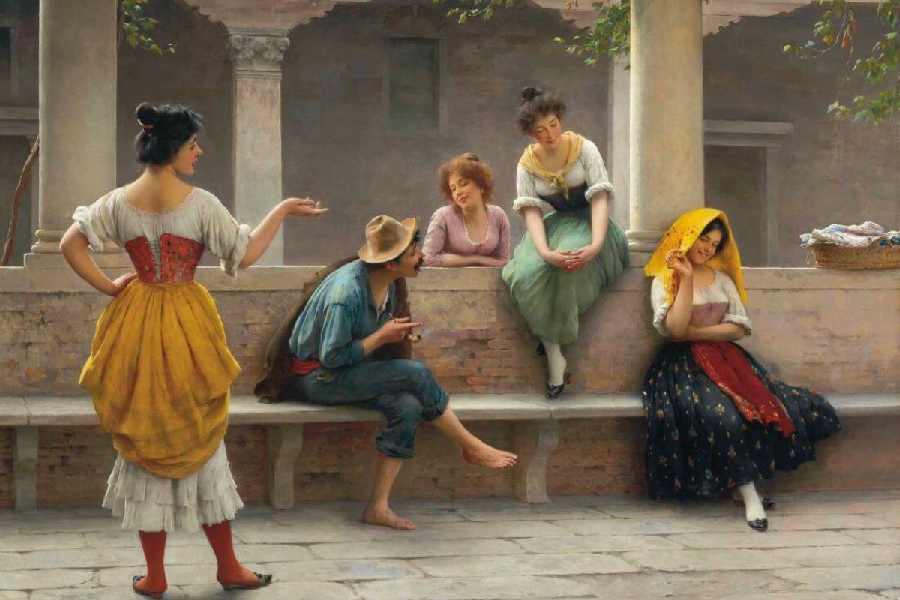
Gossip means sharing information about other people, whether it is true or not.
A woman named Miryam reportedly makes money by collecting and selling gossip in Colombia.
She writes down rumors and checks whether they seem true before selling them.
Some people think this makes her a clever businesswoman, while others think it is unfair and harmful.
Gossip has existed for thousands of years.
In the past, it could help women support one another and build strong communities.
Studies show that both men and women gossip.
Gossip can also spread helpful information, such as messages that encourage families to vaccinate their children.
But rumors can hurt people because they often spread without a fair way to prove the truth.

Miryam, from Colombia’s agrarian province of Armenia, reportedly monetizes neighborhood gossip and owns two mansions.
She records and verifies rumors, charging 5,000–10,000 pesos for ordinary information and once earning 700,000 pesos for an adultery claim.
Historical accounts suggest gossip once represented female companionship and solidarity before becoming associated with idle, immoral talk.
Research found that men and women gossip alike, while village information networks in India helped improve childhood vaccination rates.
Gossip can support social commentary and welfare, but misinformation and the absence of fact-checking make it ethically dangerous.
- Who
- Miryam, researchers, historians, and economists discussed in the article.
- What
- The article examines gossip as a source of income, social connection, public information, and potential harm.
- Where
- Examples come from Colombia, India, Mesopotamia, medieval England, and other cultural settings.
- When
- From examples dating to 1500 BCE through the medieval and modern periods, including the digital-media era.
- Why
- Miryam’s reported business prompts discussion of gossip’s economic value, social uses, historical meanings, and ethical risks.
Gossip as Useful Social Capital
Gossip as Unethical Misinformation
Economic opportunity
Gossip as Useful Social Capital
Miryam’s activities can be viewed as entrepreneurial because she turns locally gathered information into income.
Gossip as Unethical Misinformation
Selling private or damaging claims can exploit people and reward intrusion into their personal lives.
Community and welfare
Gossip as Useful Social Capital
Gossip has historically helped create social bonds, and information networks can support goals such as higher vaccination rates.
Gossip as Unethical Misinformation
Rumors can circulate without a defendant, impartial judge, or reliable method for establishing truth.
Media and culture
Gossip as Useful Social Capital
Newspapers, literature, television, and digital media have used gossip for moral criticism, social commentary, and cultural storytelling.
Gossip as Unethical Misinformation
Sensational reporting and online rumor can amplify prurience, prejudice, and falsehood at high speed.
Key facts
- Miryam’s reported business
- She gathers neighborhood information, records it in notebooks, and sells it to clients.
- Reported prices
- Benign information reportedly sells for 5,000–10,000 pesos.
- Largest reported payment
- Miryam said she once earned 700,000 pesos for information about an alleged adultery.
- Historical reference
- Roger Wilkes cites a Mesopotamian tablet from 1500 BCE containing gossip about a mayor’s affair.
- Gender research
- A study of 467 adults found that both men and women engaged in gossip.
- Public welfare
- Experiments in Karnataka and Haryana found that effective village information transmitters were associated with better child vaccination rates.
- Modern risk
- Social media and algorithm-driven technology can spread gossip rapidly where accuracy and truth-telling are weakened.
Sources
Related news

Sexist 'climber' label follows women who date successful men

Meena Kandasamy’s Novel Turns Deepfake Misogyny Into a Social Mirror

Preeti Simoes on Headlines Calling Her Kapil Sharma's Ex-Girlfriend

A Kolkata Grandmother’s Whisky Ritual and Women’s Fierce Bonds
