Archive · 30 May 2025
ASI Defends Keeladi Report Publication Process Amidst Controversy
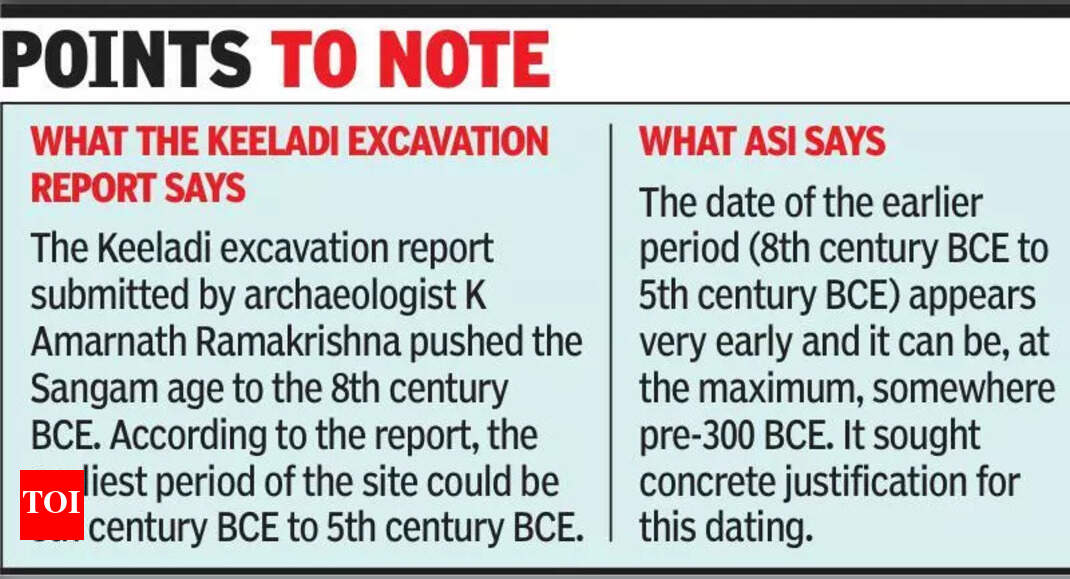
The Archaeological Survey of India (ASI) is defending its process regarding the Keeladi excavation report.
They are responding to claims of disinterest, stating that all reports undergo a standard process of vetting, editing, and proofreading before publication.
The ASI asked the excavator, Amarnath Ramakrishna, to make corrections based on expert suggestions, which he defended.
The ASI says the report is being vetted by experts, which takes time before it can be published.
A politician has called the ASI statement a joke, further adding to the controversy.

ASI denies claims of disinterest in publishing the Keeladi excavation report.
The ASI states reports need vetting, editing, and proofreading before publication.
Archaeologist Amarnath Ramakrishna was asked to correct the report.
Ramakrishna defended the findings.
Madurai MP Su Venkatesan called the ASI's release a joke.
- Who
- The Archaeological Survey of India (ASI), archaeologist Amarnath Ramakrishna, and Madurai MP Su Venkatesan.
- What
- The ASI is responding to claims it is uninterested in publishing the Keeladi excavation report.
- When
- Thursday, following a week of controversy.
- Where
- Keeladi, Tamil Nadu.
- Why
- The ASI wants to address the claim that it is not interested in publishing the Keeladi report.
Media/Public Perception
ASI's Perspective
Publication Interest
Media/Public Perception
The ASI is uninterested in publishing the report.
ASI's Perspective
The ASI is following standard procedures, edits by experts, and vetting before publication.
Report Revisions
Media/Public Perception
Archaeologist Ramakrishna's initial findings are being rejected.
ASI's Perspective
ASI requested corrections based on expert advice.
- ASI's Stance
- Denies claims of disinterest in publishing the Keeladi report.
- Report Corrections
- Archaeologist asked to make corrections.
- Archaeologist's Response
- Ramakrishna defended the original findings.
- Publication Process
- Vetting, editing, and proofreading are standard procedures.
- Director's Communication
- Director regularly requests changes.