

8 hrs ago
Karnataka High Court Upholds Cancer Treatment Insurance Reimbursement
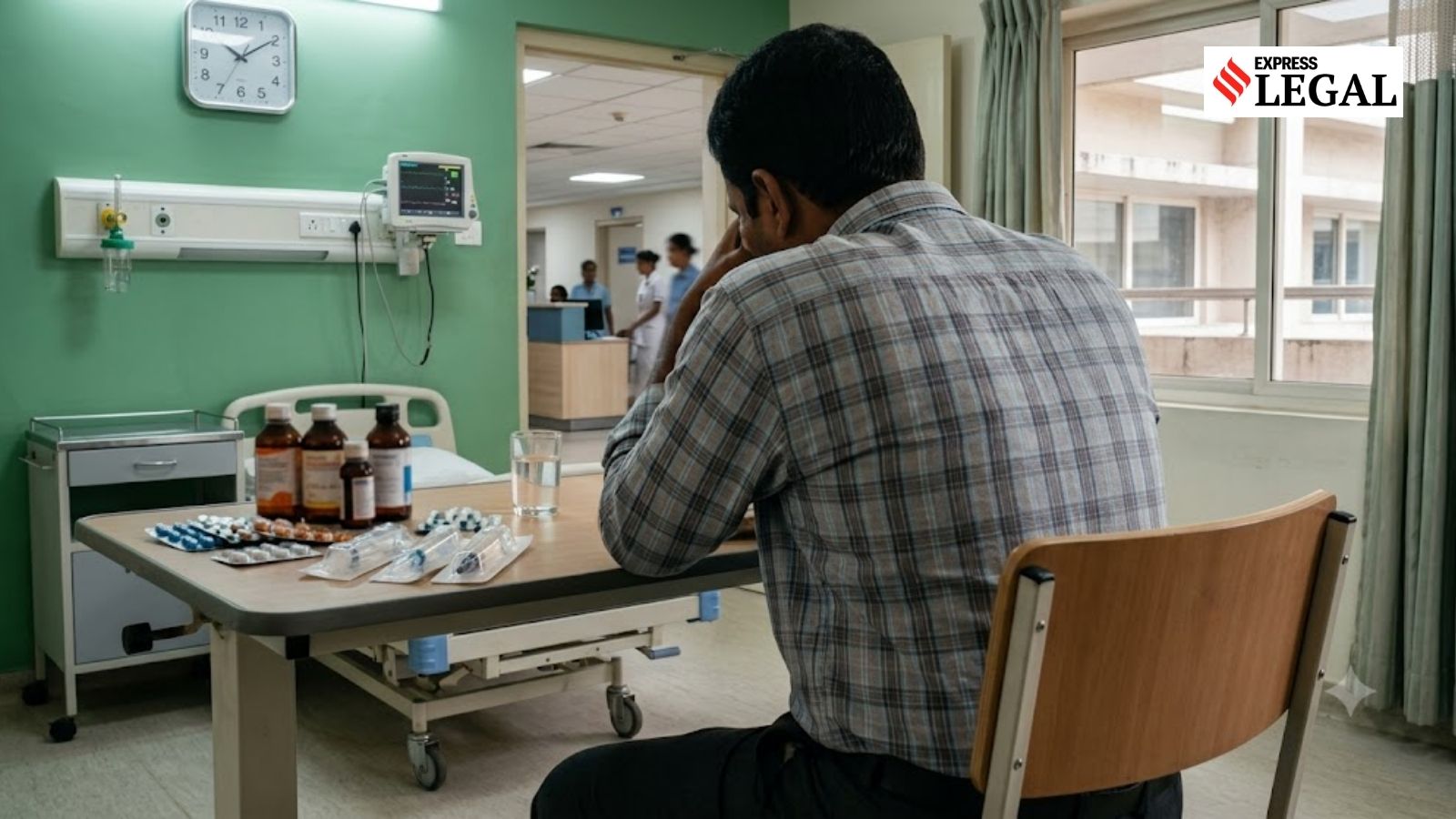
A retired bank employee had advanced prostate cancer and received chemotherapy.
His doctors also prescribed two injections after the chemotherapy.
The injections were given every three months without keeping him in a hospital.
His insurance company refused to pay for them.
The company said the treatment did not meet the policy’s hospitalisation or day-care requirements.
A legal forum ordered the insurer to pay the claim and compensation.
The insurer challenged that decision in the Karnataka High Court.
The court said treatment should not lose insurance coverage simply because modern medicine allows it to be given outside a hospital.
It upheld the payment because the injections were directly connected to the man’s cancer treatment.

The Karnataka High Court upheld reimbursement of Rs 2.85 lakh for two cancer-treatment injections given without hospitalisation.
The injections, Zoladex and Xgeva, were prescribed every three months after chemotherapy for stage-4 prostate cancer.
The court said hospitalisation is a method of delivering treatment, not a requirement that automatically determines insurance coverage.
The insurer argued the injections did not qualify as hospitalisation or “Day Care Treatment” under the policy.
The court ordered payment of Rs 2.85 lakh with 6 per cent annual interest and Rs 25,000 compensation.
- Who
- A retired Vijaya Bank employee, his insurer, and the Karnataka High Court.
- What
- The court upheld reimbursement of Rs 2.85 lakh for post-chemotherapy cancer injections administered without hospitalisation.
- Where
- The case was decided by the Karnataka High Court and involved treatment in Bengaluru and Mangaluru.
- When
- The High Court order was issued on September 1; the insurance coverage period ran from November 1, 2021, to October 31, 2022.
- Why
- The court found that the injections were part of the prescribed treatment for stage-4 prostate cancer and that lack of hospitalisation alone could not justify denying coverage.
Retiree and Court’s View
Insurer’s View
Connection to cancer treatment
Retiree and Court’s View
The injections were prescribed by treating doctors as continuing management of stage-4 prostate cancer and were directly connected to the insured condition.
Insurer’s View
The insurer disputed liability for the two injections and argued that the claim did not fall within the policy terms.
Need for hospitalisation
Retiree and Court’s View
The court said hospitalisation is only a way to administer treatment and that modern outpatient treatment should not lose coverage solely because a hospital bed was unnecessary.
Insurer’s View
The insurer argued that the injections did not involve treatment or a surgical procedure requiring hospitalisation for more than 24 hours.
Policy interpretation
Retiree and Court’s View
The court held that coverage should be assessed by the treatment’s therapeutic purpose and connection to the disease, rather than only by how it was administered.
Insurer’s View
The insurer argued that the Permanent Lok Adalat had failed to properly consider the policy’s specific terms and the reasons for rejecting the claim.
Key facts
- Claim amount
- Rs 2.85 lakh
- Additional compensation
- Rs 25,000
- Interest ordered
- 6 per cent annually
- Treatment
- Zoladex and Xgeva injections every three months after chemotherapy
- Medical condition
- Stage-4 prostate cancer
- Insurance coverage
- Rs 9 lakh annually from November 1, 2021, to October 31, 2022
- Earlier decision
- The Permanent Lok Adalat ordered the insurer to pay the claim, interest, and compensation
Quotes
Justice Suraj Govindaraj
Karnataka High Court judge who delivered the ruling
“Hospitalisation is not an end in itself; it is a mode in which medical treatment may be administered. Where advances in medical science enable a treatment which would otherwise have required a longer hospital stay to be administered safely and effectively without hospitalisation, the absence of hospitalisation cannot, by itself, be treated as determinative of whether the treatment is connected with the insured disease.”
 indianexpress.com
“However, where the claim falls within a reasonable construction of the policy and the treatment is admittedly connected with the insured disease, the insurer cannot adopt an unduly restrictive interpretation merely because the treatment was capable of being administered without hospitalisation.”
indianexpress.com
Sources
Related news

Haryana commission orders insurer to pay full US treatment claim

What to Check Before Filing AYUSH Health Insurance Claims
Himachal Commission Upholds Insurance Payout After Hypertension Dispute

Mumbai Forum Orders Insurer To Pay Rejected Pancreatitis Claim

Pregnancy Illness Claims May Face Insurance Disputes

Rajasthan Lok Adalat awards compensation after cancer-TB misdiagnosis

Panel urges more Indian bank mergers for larger lenders

Three sentenced in 16-year-old bank loan fraud case
