

Archive · 27 Jan 2026
Monroe Doctrine's Evolution and Modern Implications
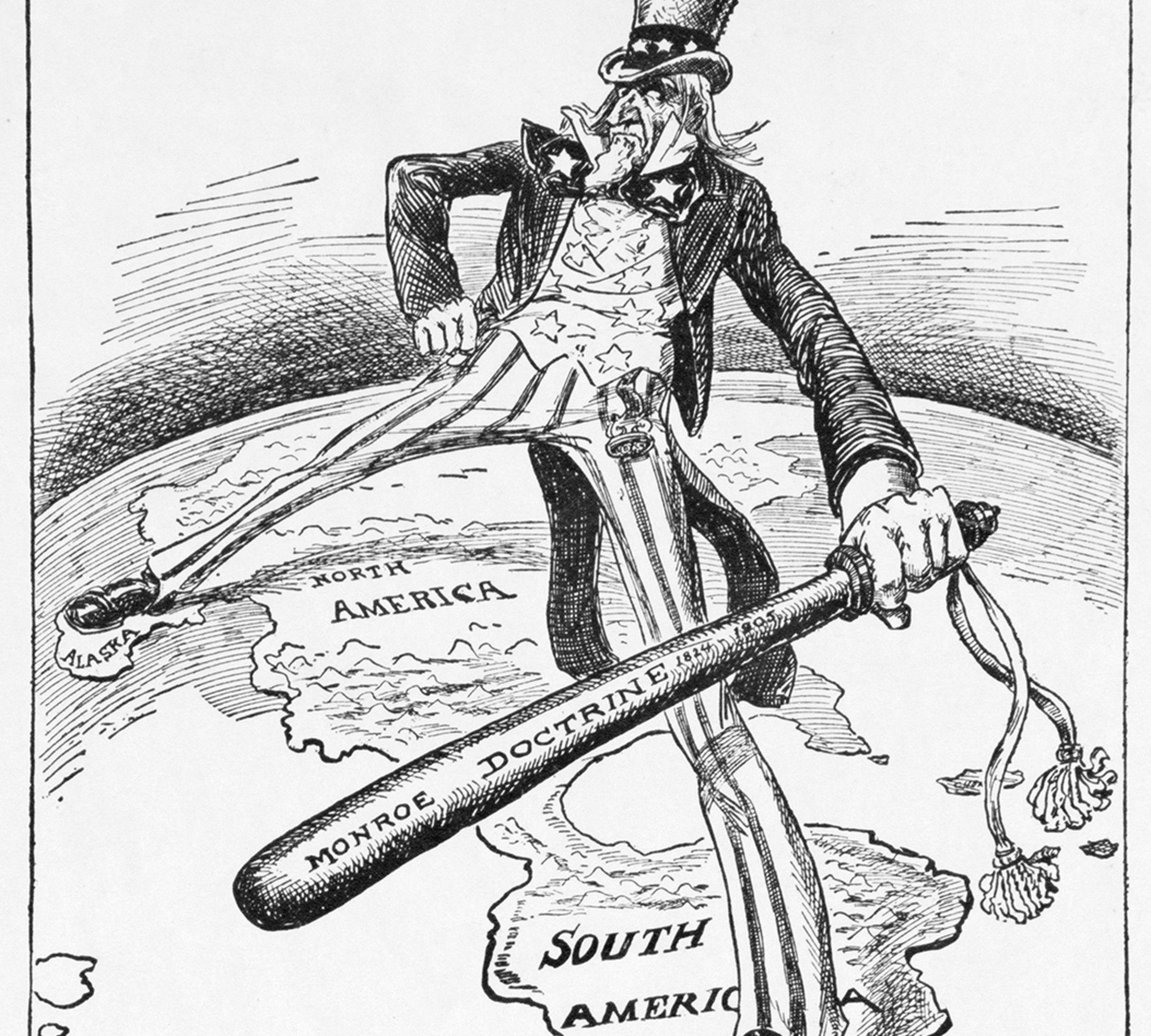
The Monroe Doctrine is a foreign policy idea first shared by President James Monroe in 1823.
It said that European countries should not try to control or colonize countries in the Americas.
At first, not many people took this seriously because the U.S. wasn't very powerful.
But over time, the U.S. started to enforce this policy more strongly.
President Theodore Roosevelt even added a new part to it, saying the U.S. should act like a police officer to keep the Americas stable.
This led to the U.S. sending troops to many countries in the region.
Later, President Franklin D. Roosevelt stopped this with a policy called the Good Neighbor Policy.
But during the Cold War, the Monroe Doctrine was used again to stop communism.
Recently, President Trump has brought back the Monroe Doctrine, saying the U.S. will fight against things like migration, drug trafficking, and foreign influence in the Americas.

The Monroe Doctrine, first articulated in 1823, aimed to prevent European colonization in the Americas.
Initially, the doctrine was more aspirational than enforceable, with European powers continuing to intervene in the Americas.
President Theodore Roosevelt expanded the doctrine with the Roosevelt Corollary, asserting U.S. intervention to maintain stability in the region.
The U.S. intervened militarily in several Latin American countries, leading to unpopular occupations and conflicts.
The Monroe Doctrine was resurrected during the Cold War to combat the spread of communism and has seen a resurgence under President Trump's administration.
- Who
- President James Monroe and subsequent U.S. presidents
- What
- The Monroe Doctrine, a foreign policy vision to prevent European colonization in the Americas
- When
- First articulated in 1823, with significant developments in the 19th and 20th centuries
- Where
- The Americas, with implications for global powers
- Why
- To protect U.S. and British hemispheric interests and prevent European intervention
- Year
- 1823
- President
- James Monroe
- Initial Purpose
- Prevent European colonization in the Americas
- Roosevelt Corollary
- 1904
- Good Neighbor Policy
- 1933
- Cold War Use
- Combat Soviet communism in Latin America
- Trump's Approach
- Combat migration, drug trafficking, and foreign influence