

Archive · 10 Nov 2025
Challenges in Documenting India's Revolutionary Nationalist History
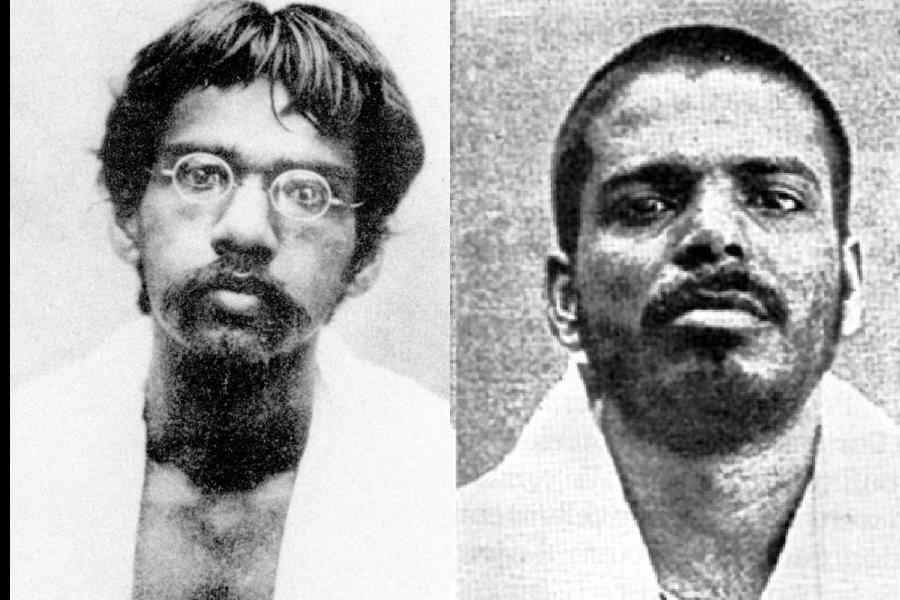
It's hard to write the full story of the brave people who fought against British rule in India a long time ago, like in Bengal.
Many of them were called 'revolutionaries' or sometimes 'terrorists' by the British.
Unlike bigger movements that kept lots of papers, these fighters worked in secret.
So, their stories are hidden in old police reports, court papers, and scattered documents.
Many of these papers are lost or hard to find, making it tough for historians to put together a complete history.
Even though they fought hard, their actions often didn't change things as much as hoped, and many faced harsh punishments like going to jail or even death.
Because they were labeled 'terrorists,' their actions were seen as unjust by the government, which then used a lot of force against them.
Recently, historians are trying harder to find these hidden stories from whispers, old interviews, and pictures.
This helps us understand their struggle better and how the idea of 'terrorism' has affected laws even today.

Reconstructing the history of colonial Indian revolutionaries is challenging due to scattered and fragmentary archival sources.
The term 'terrorist' was used by the colonial State to describe armed revolutionaries, while modern interpretations prefer 'revolutionary nationalists'.
Unlike mainstream nationalist movements, revolutionary groups operated in secrecy, leaving fewer official records.
Key sources include police files, trial records, proscribed pamphlets, and memoirs, but much material is lost or irrecoverable.
The legacy of revolutionary violence influenced colonial perceptions and continues to have an impact on modern anti-terror laws.
- Who
- Historians and researchers studying colonial India's revolutionaries.
- What
- The difficulties in reconstructing the history of revolutionary nationalists due to scattered and fragmentary archival sources, and the ongoing debate over terminology ('terrorists' vs. 'revolutionary nationalists').
- When
- Recent years, with a 'revolutionary turn' in South Asian historiography.
- Where
- Colonial India, specifically Bengal, and its impact on modern anti-terror laws.
- Why
- Secrecy of revolutionary societies, lack of official documentation, and the colonial administration's classification of revolutionaries as 'terrorists' has led to a lack of comprehensive records.
- Victoria Memorial Hall Gallery
- Biplabi Bharat ('Revolutionary India')
- Alipore Museum Origin
- Erstwhile Alipore Central Jail
- Key Publication on Bengal Terrorism
- Terrorism in Bengal (six volumes)
- Banned Bengali Books
- 555 titles listed, 120 available
- Prominent Revolutionary Memoirs
- The Tale of My Exile, Nirbasiter Atmakatha