

Archive · 15 Aug 2025
Bangladesh's Monsoon Revolution: Uncertain Future
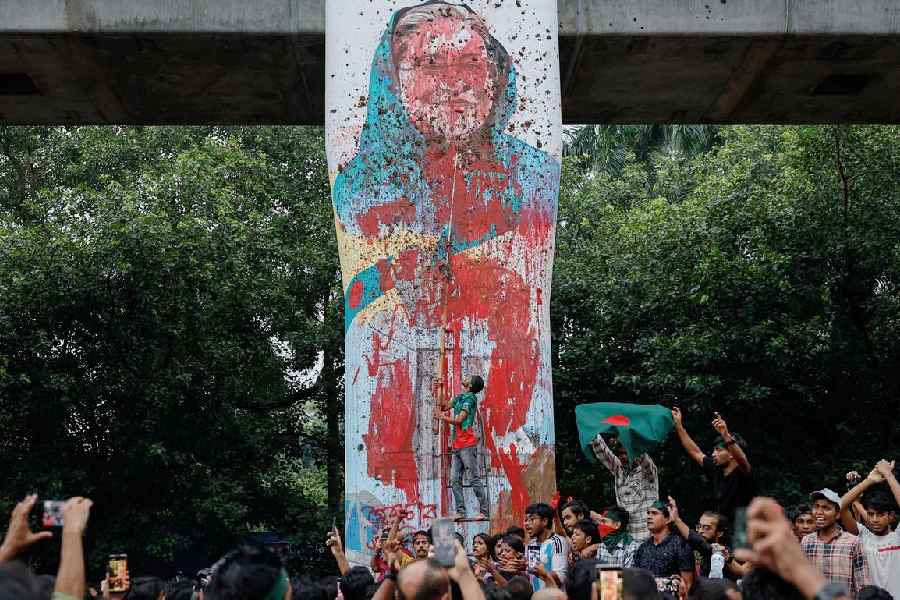
A year ago, Bangladesh experienced a big change called the 'Monsoon Revolution,' where people overthrew their government.
It's similar to what happened in Sri Lanka.
Now, people are unsure where Bangladesh is headed, particularly with upcoming elections and the role of religion.
Compared to Pakistan, Bangladesh has seen better improvements in economy and society.
The revolution also shows how different politics are in each country.
Students have formed a new political party and are seeking changes.
Meanwhile, relations between Bangladesh and Pakistan are improving, and India is watching closely.

Bangladesh's 'Monsoon Revolution' marked its first anniversary, with an uncertain future.
A civic insurrection overthrew the government and power structure, similar to the Sri Lankan Aragalaya.
Unlike Sri Lanka, Bangladesh's future direction remains unclear, especially regarding elections and secularism.
Bangladesh's economic and social indicators have improved compared to Pakistan since the 1980s.
The revolution highlights shifts in political culture and the rise of a new political party led by students.
- Who
- Students, Islamists, and various groups alienated by the government.
- What
- Bangladesh's 'Monsoon Revolution' and its aftermath.
- When
- The 'Monsoon Revolution' took place, with this article marking its first anniversary.
- Where
- Bangladesh, with comparisons to Sri Lanka and Pakistan.
- Why
- To overthrow the government and change the power structure due to corruption and misgovernance.
Differing Political Structures
Evolving Alliances
Military's Influence
Differing Political Structures
Pakistan's military is more deeply rooted within the country's political and social structures.
Evolving Alliances
Bangladesh's student population is at the vanguard, seeking change in political structure.
- Event
- Monsoon Revolution
- Anniversary
- First
- Similar Event
- Sri Lankan Aragalaya
- Elections
- Announced for early 2026
- Border
- Bangladesh shares 90% of its international border with India