

Archive · 21 Sep 2026
AfD Leads German State Vote as Merz Conservatives Routed
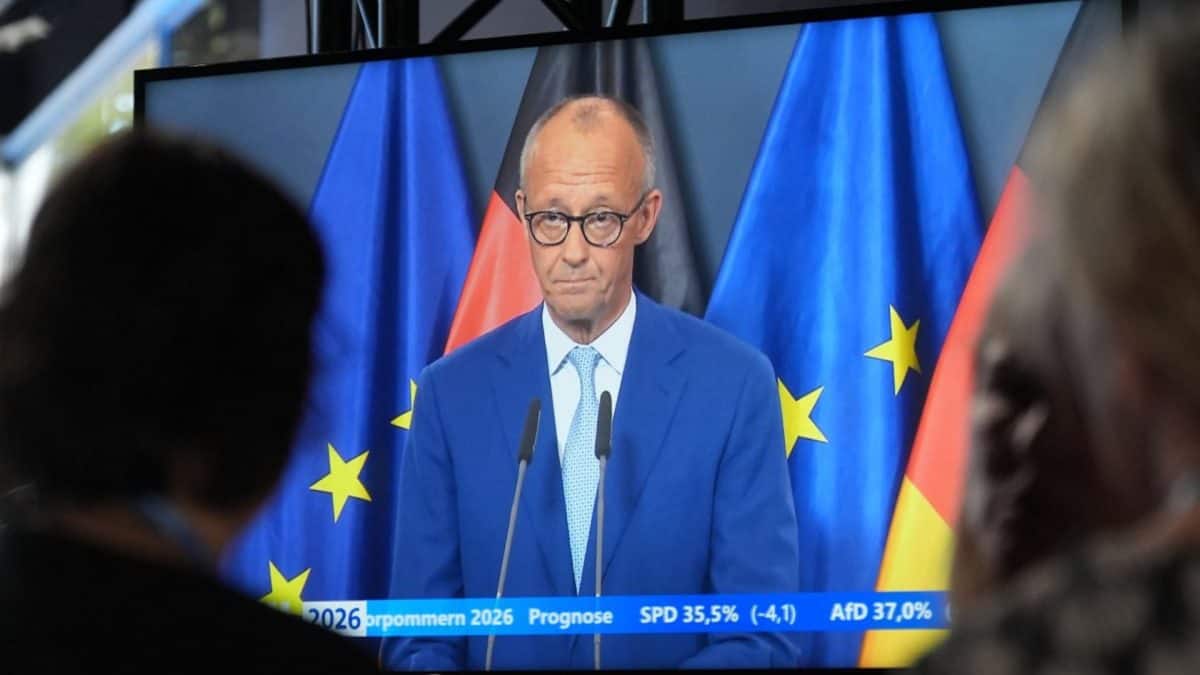
Germany held elections in Mecklenburg-Western Pomerania and Berlin on Sunday.
The AfD, a far-right party, won the most votes in Mecklenburg-Western Pomerania.
Friedrich Merz’s CDU performed very poorly there, with reports differing on whether it narrowly passed or fell below the 5% threshold.
In Berlin, the left-wing Die Linke won the most votes.
Merz called the CDU’s result a disaster but said he would stay in office.
He said Germany still needed economic reforms and patience.
Many voters were worried about high energy, housing, and everyday living costs.
Other major parties still say they will not govern together with the AfD.

The AfD finished first in Mecklenburg-Western Pomerania, with reports placing it at 37% or 37.9%.
The CDU suffered its worst state-election result, receiving either 4.9% or 5.5% and possibly falling below the 5% threshold.
In Berlin, Die Linke led with 24.5% or 25.3%, followed by the CDU and the AfD.
Friedrich Merz called the result a “disaster” but vowed to remain chancellor and pursue economic reforms.
The AfD is unlikely to govern because Germany’s mainstream parties continue to reject coalition agreements with it.
- Who
- The Alternative for Germany, the Christian Democratic Union of Germany led by Friedrich Merz, Die Linke, the Social Democratic Party of Germany, and German voters.
- What
- The AfD won the most votes in Mecklenburg-Western Pomerania, while the CDU suffered a historic defeat; Die Linke led in Berlin.
- When
- Sunday, September 20.
- Where
- Mecklenburg-Western Pomerania and Berlin, Germany.
- Why
- The results reflected dissatisfaction with Merz’s government, economic difficulties, unpopular reforms, and concerns about energy, housing, and living costs.
Mainstream Parties and Merz
AfD’s Electoral Advance
Coalition participation
Mainstream Parties and Merz
Germany’s mainstream parties reject coalition agreements with the AfD, so it may be unable to form a government despite finishing first in Mecklenburg-Western Pomerania.
AfD’s Electoral Advance
AfD leader Alice Weidel said the party had displaced the CDU as the people’s party and called for political change.
Merz’s leadership
Mainstream Parties and Merz
Merz says he will remain chancellor and pursue reforms, while senior CDU figures have backed him despite the defeats.
AfD’s Electoral Advance
The CDU’s historic result, low approval ratings, unpopular reforms, and earlier AfD victories have intensified questions about Merz’s political future.
Reasons for voter dissatisfaction
Mainstream Parties and Merz
Merz’s government has defended its reform agenda and announced consumer relief, including tax cuts on gas and diesel.
AfD’s Electoral Advance
Voters and analysts pointed to high living costs, energy and housing prices, communication missteps, and frustration with the state of the economy.
- Mecklenburg-Western Pomerania
- The AfD was reported at 37% or 37.9%, while the CDU was reported at 5.5% or 4.9%; the Social Democrats were reported at 35.5% in the Reuters exit poll.
- CDU threshold
- Parties need at least 5% to enter the state legislature; one report said the CDU fell below that threshold, while another said it barely cleared it.
- Berlin result
- Die Linke was reported at 24.5% or 25.3%, the CDU at 20% or 19.1%, and the AfD at 16% or 16.2%.
- Friedrich Merz’s response
- Merz called the result a “disaster,” vowed to remain chancellor, and said he would continue his reform agenda.
- Coalition prospects
- Mainstream German parties have pledged not to form coalition agreements with the AfD.
- Voter concerns
- Campaign concerns included soaring energy and housing costs, broader living expenses, and the government’s economic reforms.
