Archive · 11 Sep 2026
Modi, Putin Discuss $100 Billion Trade Target and Economic Cooperation

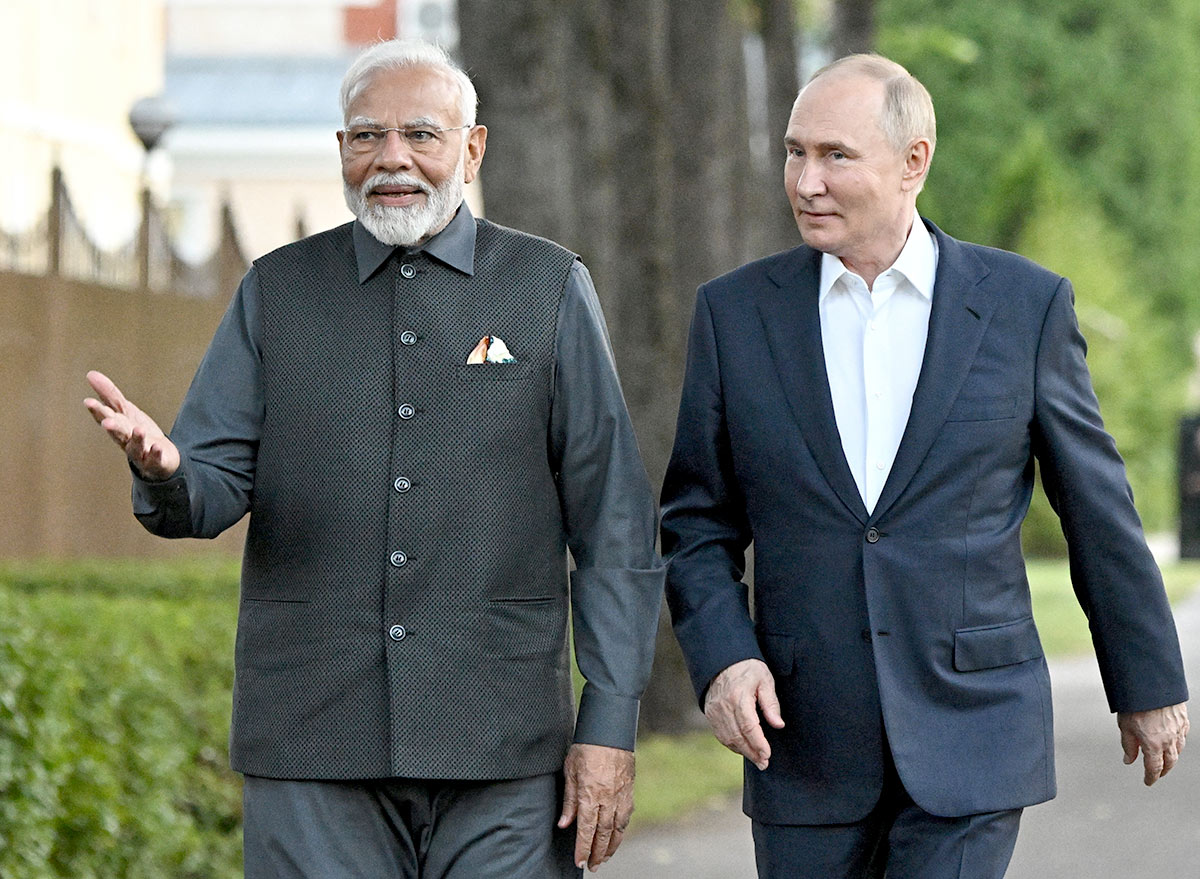
India’s Prime Minister Narendra Modi met Russia’s President Vladimir Putin in New Delhi.
Their meeting took place before the BRICS Summit hosted by India.
The two countries want to increase their trade to $100 billion by 2030.
Their trade is currently about $60 billion.
They were expected to discuss factories, railways, tunnels and steel.
They also planned to consider nuclear energy, minerals, fertilisers and jobs for skilled Indian workers in Russia.
Modi gave Putin a Russian translation of the Thirukkural, an old Tamil book of moral teachings.

Prime Minister Narendra Modi and Russian President Vladimir Putin held bilateral talks in New Delhi ahead of the BRICS Summit 2026.
India and Russia are expected to pursue a $100 billion bilateral trade target by 2030, up from approximately $60 billion.
The agenda included industrial cooperation in railways, tunnelling, steel, business partnerships and Indian access to Russian markets.
The leaders were expected to discuss civil nuclear cooperation, skilled Indian workers in Russia, critical minerals and fertiliser projects.
Modi gave Putin a Russian translation of the classical Tamil ethical text Thirukkural.
- Who
- Prime Minister Narendra Modi and Russian President Vladimir Putin.
- What
- They held bilateral talks focused on expanding India-Russia economic and industrial cooperation, with a proposed $100 billion trade target by 2030.
- When
- Friday, ahead of the BRICS Summit 2026, which was scheduled to begin Saturday.
- Where
- Bharat Mandapam in New Delhi, India.
- Why
- To deepen bilateral trade, investment, energy, industrial and supply-chain cooperation.
- Trade target
- India and Russia are seeking bilateral trade of $100 billion by 2030.
- Current trade
- Bilateral trade was described as approximately $60 billion, driven largely by crude oil imports.
- Industrial cooperation
- Potential areas included railways, tunnelling, steel, business-to-business opportunities and Indian access to the Russian market.
- Nuclear cooperation
- The agenda included civil nuclear cooperation across the fuel cycle and life-cycle support for nuclear projects.
- Workforce mobility
- The countries were expected to explore sending more skilled Indian workers to Russia.
- Strategic supplies
- Critical minerals and fertilisers, including strategic joint-venture projects, were identified as cooperation areas.
- Cultural exchange
- Modi presented Putin with a Russian translation of the Thirukkural.