10 months ago
Camel Prices Surge in Pushkar Amidst Eased Transport Rule Buzz, But Buyers Face Hurdles
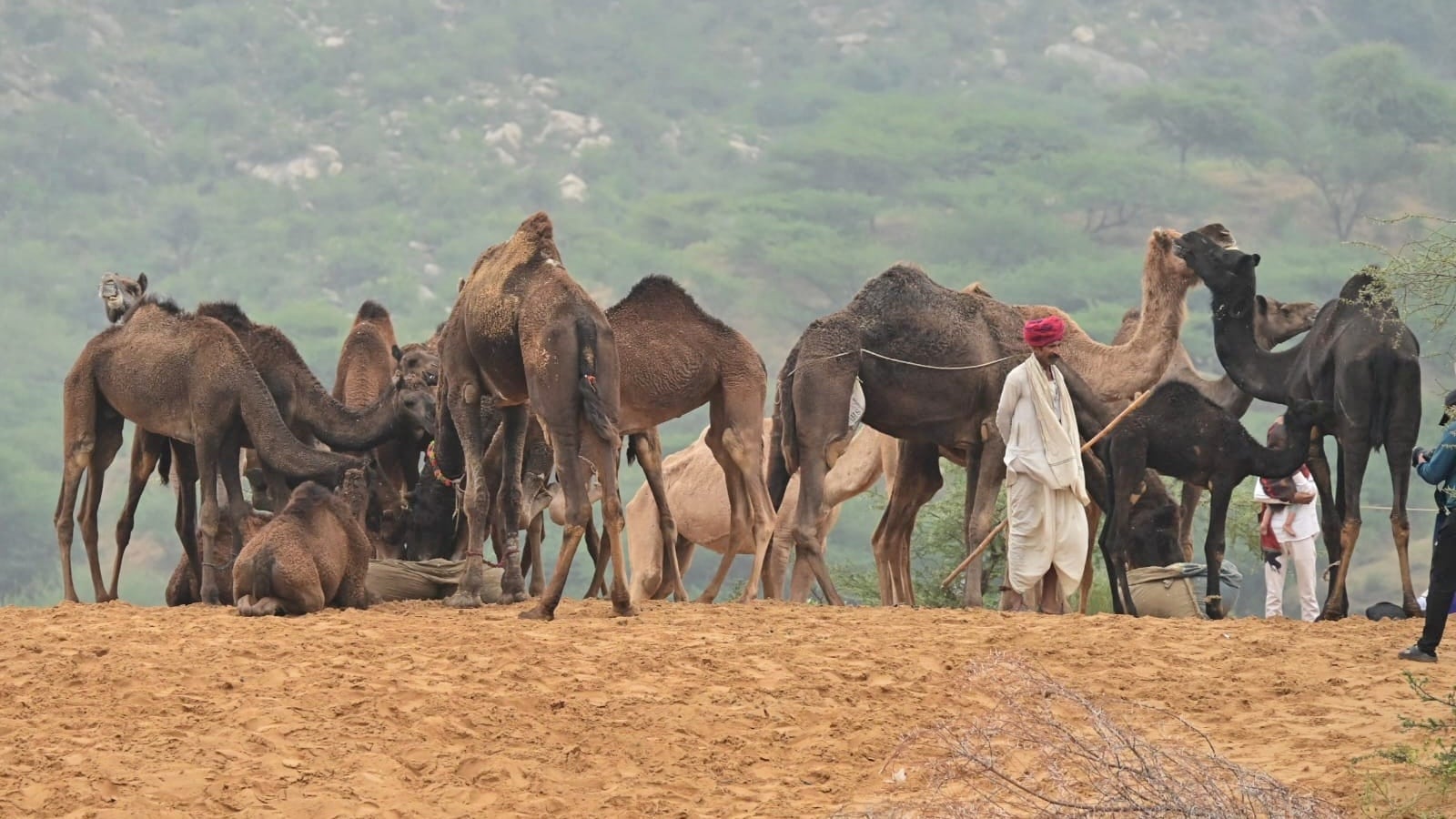
Imagine camels are like special toys that people in Rajasthan love.
For a long time, it was hard to take these camel toys out of the state because of strict rules, which made them less valuable.
Recently, people heard that the rules were going to become easier, like allowing more people to give permission to move the camel toys.
Because of this good news, sellers started asking for much more money for their camels, with prices going up from a few thousand to as much as Rs 90,000!
However, the actual paperwork to make the rules easier hasn't been officially changed yet.
So, even though people are paying more for the camels, they are still having trouble actually taking them to their homes in other states.
It's like hearing a new game is coming out but you can't play it yet.

Camel prices in Pushkar have surged from Rs 5,000 to Rs 90,000 due to expected easing of transport restrictions.
The Rajasthan government had imposed restrictions on camel transport in 2015 under the Rajasthan Camel Act to prevent slaughter.
Officials confirm a decision to ease transport norms has been made, intending to make permit issuance more accessible.
However, no official notification has been issued, meaning the original transport curbs remain in place.
The camel population in Rajasthan has decreased by nearly 35% between 2012 and 2019.
- Who
- Camel breeders, buyers, and officials from the Rajasthan Animal Husbandry Department
- What
- Camel prices have significantly increased due to perceived easing of restrictions on transporting camels out of Rajasthan, although formal notification is pending, leading to confusion and practical difficulties for buyers.
- Where
- Pushkar, Rajasthan
- When
- Leading up to and during the Pushkar Fair, with trading beginning days before the official start on October 29.
- Why
- News reports indicated eased restrictions on camel transportation after a decade-long ban, following the declaration of the camel as the state animal in 2015, aiming to prevent slaughter and control migration.
Government Officials
Camel Breeders and Buyers
Notification Status of New Rules
Government Officials
Officials confirm a decision to ease restrictions has been made, and new rules for applying for transportation permits have been notified, with efforts to expedite the process for issuing permits by SDMs and Joint Directors.
Camel Breeders and Buyers
Despite assurances, no official notification has been issued, meaning current transportation curbs remain in place, causing significant issues for buyers attempting to transport purchased camels.
Permit Issuance Authority
Government Officials
While new rules outline a process for permits, the ultimate authority still rests with the District Collector until the rules are fully implemented. However, Joint Directors at livestock fairs also have permit issuing power under the new rules.
Camel Breeders and Buyers
The uncertainty over permit issuance and the lingering authority of the District Collector creates practical difficulties for immediate transportation, despite officials' statements about increased accessibility.
Purpose of Camel Transport
Government Officials
Permits will only be granted for tourism, dairy, or agriculture purposes, not for slaughter, reflecting a flexible approach rather than a complete lifting of restrictions.
Camel Breeders and Buyers
The initial news of eased restrictions has led to a significant price increase, with buyers facing practical challenges in transporting camels bought at higher prices due to the lack of a formal notification.
Key facts
- Event
- Pushkar Fair
- Fair Dates
- October 29 - November 5
- Camel Price Range (This Year)
- Rs 5,000 to Rs 90,000
- Camel Population Decrease
- Nearly 35% from 2012 to 2019
- Previous Camel Population (2012)
- 3.26 lakh
- Current Camel Population (2019)
- 2.10 lakh
- Original Act
- Rajasthan Camel (Prohibition of Slaughter and Regulation of Temporary Migration or Export) Act, 2015
Quotes
Subhash Bari
Deputy director of the Camel Protection and Development Mission under the Animal Husbandry Department
“During livestock fairs like Pushkar, the Joint Director of Animal Husbandry, who is usually present at the fair, also has the power to issue permits, as per the new rules. But this notification is yet to be issued. We are trying to expedite the process so that the notification allowing Joint Directors and SDMs to issue permits can be released soon.”
 indianexpress.com
“We have made new rules for camels in Rajasthan, under which a process has been notified outlining how to apply for transportation and obtain a permit. However, the power to issue permits still lies with the District Collector, not with the SDM, because the rules have not yet been fully implemented.”
indianexpress.com
Officials from the Animal Husbandry Department
Officials from the Rajasthan Animal Husbandry Department
“who is usually present there”
indianexpress.com
He
Subhash Bari, deputy director of the Camel Protection and Development Mission under the Animal Husbandry Department
“The plan was not to entirely lift the restrictions on transporting camels outside Rajasthan, but on making the rules more flexible. Permits will only be given if the camel is being transported for tourism, dairy or agriculture purposes, not for slaughter”
indianexpress.com

Hanwant Singh
Founder of the Lok Pashu Palak Samiti, a Jodhpur-based group for the conservation of camels
“The people who arrived in Pushkar from all over the country to purchase camels are now facing a problem transporting them.”
indianexpress.com
Sources
Related news

Two prisoners escape from Ayodhya jail
Malerkotla District Faces Infrastructure and Administrative Challenges Four Years Post-Establishment
Central Team's Solapur Visit: Farmers Question Damage Assessment in Darkness

Child Rights Expert Calls for Accountability in India's Juvenile Justice System