Archive · 4 Sep 2026
ISRO Launches India’s First Geo-Orbit Imaging Satellite
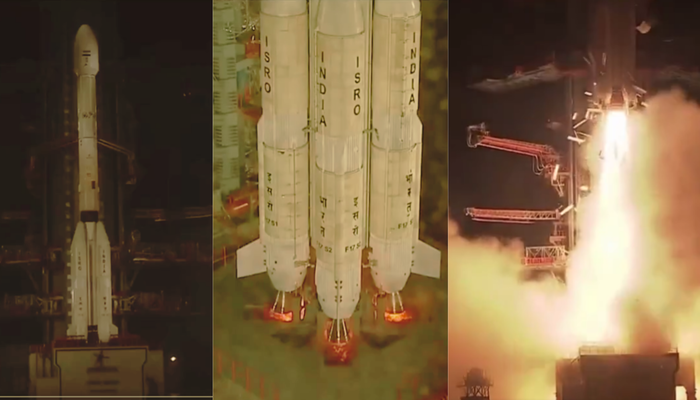
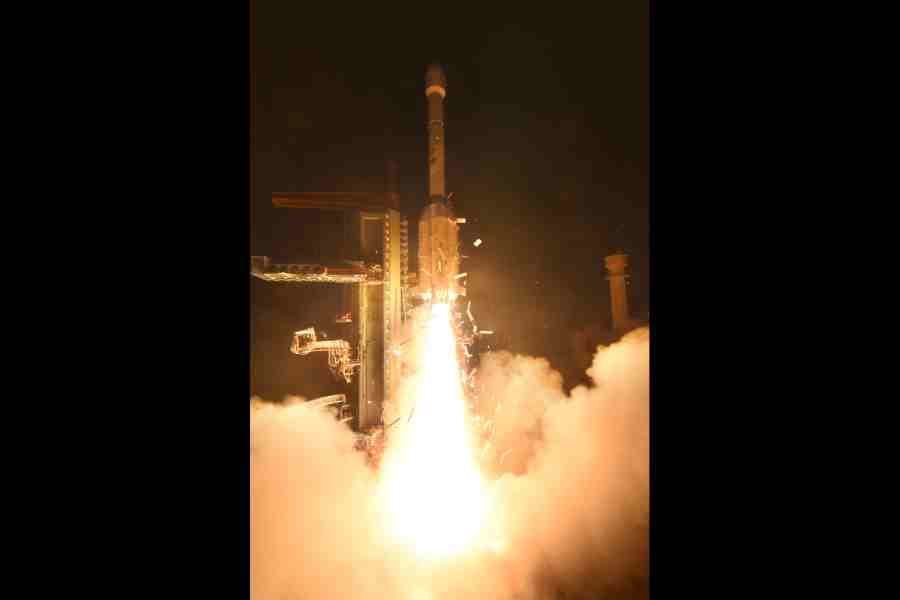
India’s space agency, ISRO, launched a large satellite called EOS-05.
It used a rocket named GSLV-F17 to carry the satellite into space.
The launch happened early Friday from Sriharikota.
The satellite weighs about 2,367 kilograms.
It first reached a special transfer orbit about 18 minutes after launch.
Engineers will later raise it to a geosynchronous orbit about 36,000 kilometers above Earth.
From there, it can watch large parts of the same region more often.
Its pictures could help farmers, emergency workers, and people tracking storms.
Prime Minister Narendra Modi and other officials praised the mission as an important achievement.

ISRO launched the EOS-05 imaging satellite aboard the GSLV-F17 rocket early Friday from Sriharikota.
The satellite, weighing about 2,367 kilograms, reached its intended sub-geosynchronous transfer orbit roughly 18 minutes after liftoff.
Once operationalized, EOS-05 is expected to become India’s first dedicated imaging satellite operating from geosynchronous orbit.
The satellite is designed to provide near-real-time imagery for agriculture, disaster management, and monitoring severe weather.
The launch was ISRO’s first success of 2026 after earlier failures involving EOS-03, EOS-09, and EOS-N1 missions.
- Who
- The Indian Space Research Organisation launched EOS-05; Prime Minister Narendra Modi and Union Home Minister Amit Shah praised the mission.
- What
- A GSLV-F17 rocket successfully carried the EOS-05 Earth-imaging satellite into its intended sub-geosynchronous transfer orbit.
- When
- Early Friday in 2026, at 2:55 a.m., after a 27-hour countdown.
- Where
- The Second Launch Pad at the Satish Dhawan Space Centre in Sriharikota, Andhra Pradesh, India.
- Why
- EOS-05 is intended to provide frequent, near-real-time Earth imagery for agriculture, disaster management, weather monitoring, and national activities.
- Satellite
- EOS-05, also referred to as Gisat-1A.
- Rocket
- GSLV-F17, a three-stage Geosynchronous Satellite Launch Vehicle.
- Satellite mass
- About 2,367 kilograms, making it the heaviest satellite carried by a GSLV according to ISRO chief V Narayanan.
- Initial orbit
- The intended sub-geosynchronous transfer orbit, reached about 18 minutes after liftoff.
- Planned operating altitude
- Roughly 36,000 kilometers above Earth in geosynchronous orbit.
- Launch time
- 2:55 a.m. on Friday, following a 27-hour countdown.
- Mission significance
- ISRO’s first successful launch of 2026 and India’s first dedicated Earth-imaging satellite intended for a geosynchronous platform.
- Launch record
- The 107th launch from Sriharikota and the 19th GSLV mission, according to V Narayanan.