

4 days ago
Trump loses bid to move New York hush money case
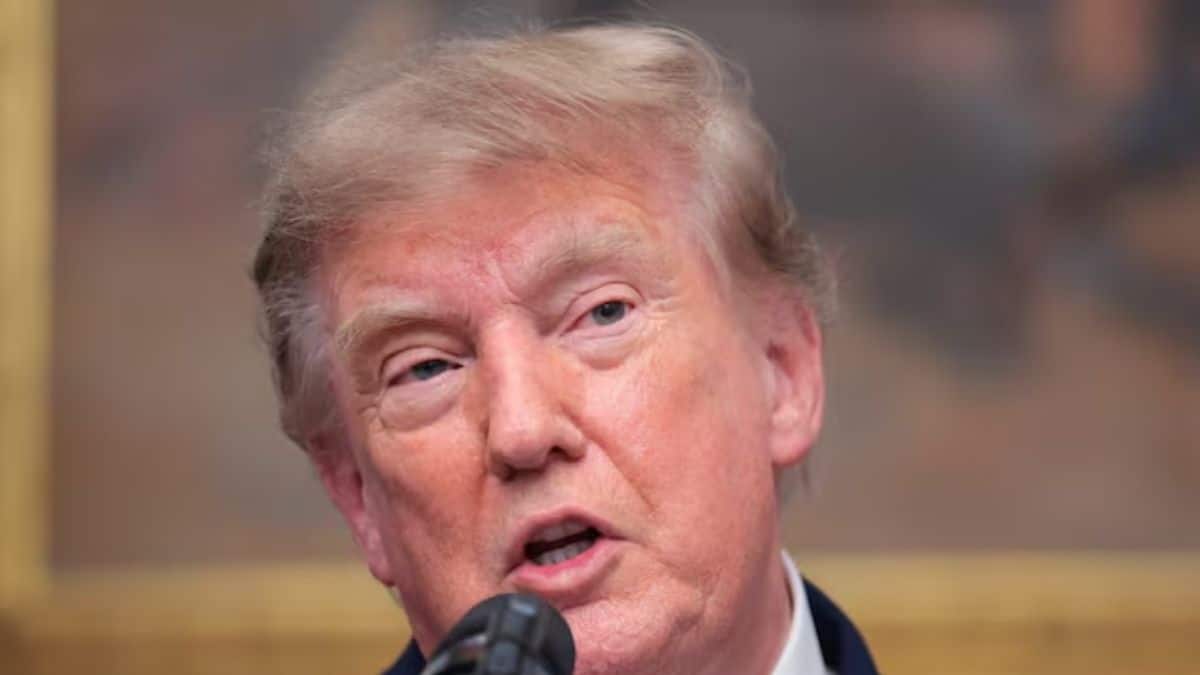
A jury in New York found Donald Trump guilty of falsifying business records.
The case involved a $130,000 payment to Stormy Daniels before the 2016 election.
Trump denied Daniels’ claim and denied wrongdoing.
He tried to move the case from state court to federal court.
His lawyers argued that presidential immunity should protect him from the case.
Judge Alvin Hellerstein said the actions were personal and not part of being president.
The conviction therefore stays in place.
Trump’s lawyers said they will appeal the judge’s decision.

A federal judge rejected Donald Trump’s attempt to move his New York hush money case to federal court.
Judge Alvin Hellerstein ruled the conduct involved personal actions, not presidential duties protected by immunity.
Trump was convicted in May 2024 of 34 felony counts involving a $130,000 payment to Stormy Daniels.
The conviction remains in place after Trump received an unconditional discharge with no jail time or fine.
Trump’s lawyers said they would appeal, while Trump is also challenging the conviction in New York state court.
- Who
- Donald Trump, Judge Alvin Hellerstein, Manhattan District Attorney Alvin Bragg, and Stormy Daniels were central figures.
- What
- A federal judge rejected Trump’s request to transfer his New York hush money case to federal court.
- Where
- The case was brought in New York state court in Manhattan, and Trump sought transfer to federal court.
- When
- The ruling was issued on Friday; Trump was convicted in May 2024 and sentenced on January 10, 2025.
- Why
- Trump argued that presidential immunity and evidence from his first White House term should invalidate or affect the conviction.
Trump’s position
Prosecution and court position
Presidential immunity
Trump’s position
Trump argued that the Supreme Court’s presidential-immunity ruling should protect him from prosecution or invalidate his conviction.
Prosecution and court position
Hellerstein ruled that paying hush money and covering up an embarrassment were personal conduct, not official presidential acts.
Evidence from the White House
Trump’s position
Trump argued that jurors heard evidence from his first White House term, including testimony from Hope Hicks, and that this affected the case.
Prosecution and court position
The court was instructed to examine whether the evidence related to presidential acts, but Hellerstein still rejected the transfer request.
Political motivation
Trump’s position
Trump has described the prosecution as politically motivated and called it Democratic weaponization.
Prosecution and court position
Manhattan District Attorney Alvin Bragg pursued the state case, which resulted in a jury conviction that remains in place.
Key facts
- Ruling
- Judge Alvin Hellerstein rejected Trump’s federal-court transfer request.
- Underlying payment
- The case concerned a $130,000 payment to Stormy Daniels.
- Conviction
- A Manhattan jury convicted Trump on 34 felony counts of falsifying business records.
- Sentence
- Trump received an unconditional discharge, with no jail time or fine.
- Immunity argument
- Trump relied on the Supreme Court’s July 2024 ruling on presidential immunity.
- Next step
- Trump’s lawyers said they would appeal Hellerstein’s decision.
Quotes
Alvin Hellerstein
US District Judge who rejected Trump’s attempt to move the case to federal court
“Paying hush money to an adult film star or engaging in a cover-up of an embarrassment are not subsumed in presidential immunity.”
 firstpost.com
Trump’s legal team spokesman
Spokesperson for Donald Trump’s legal team
“President Trump will be filing a powerful appeal, and will continue defeating Democrat weaponization at every turn.”
firstpost.com
Sources
Related news
Supreme Court again rejects Trump's appeal in Carroll case
Media Groups Sue Trump Over Truth Social Early Access
US Judge Rejects Ghislaine Maxwell's Bid to Overturn Sex-Trafficking Conviction
Trump administration revives effort to fire Fed Governor Lisa Cook
Trump's H-1B Fee Struck Down After Court Rejects Presidential Authority
Judge grants DOJ request to dismiss Oath Keepers cases
Trump Used Catering Truck, Decoy Jet to Evade Iran Threat
