Archive · 16 Nov 2025
Benazir Bhutto Becomes Pakistan's First Woman PM on Historic November 16
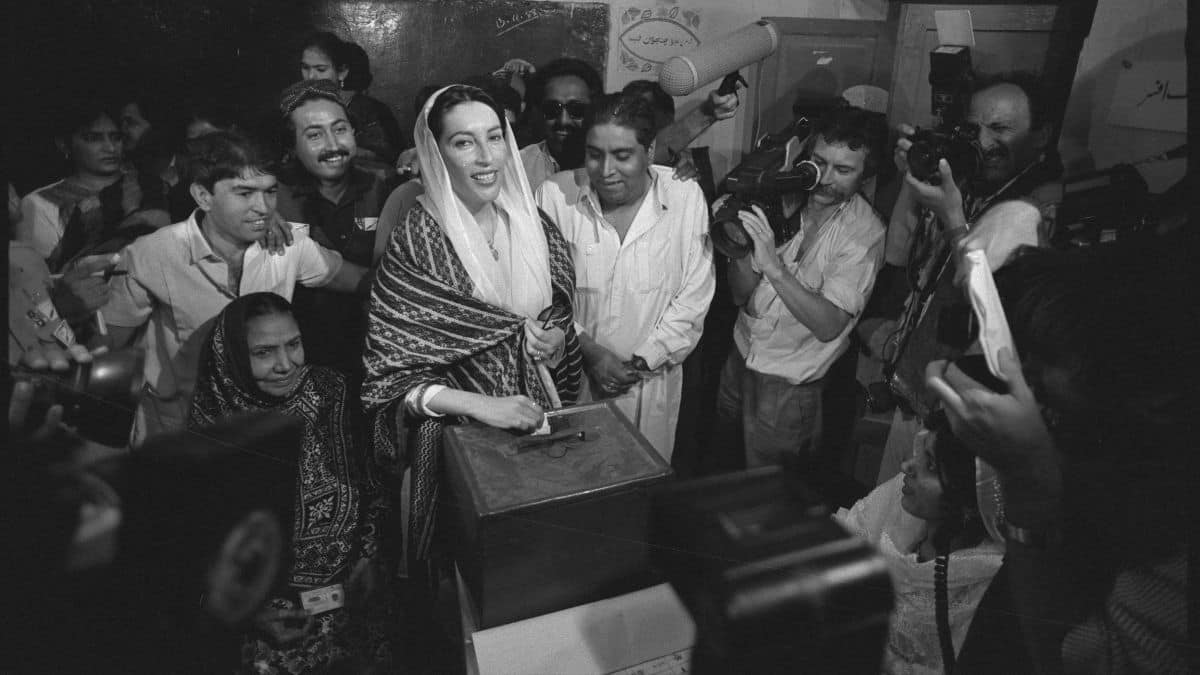
On November 16, 1988, a woman named Benazir Bhutto became the leader of Pakistan, making her the very first woman to lead a country where most people are Muslim.
This was a big deal because women leaders were rare, especially in that part of the world.
Her father was also a leader, and she wanted to bring democracy back after a long time without it.
While she faced many challenges, like powerful military leaders and a president who could limit her power, her election was celebrated globally.
Also on November 16th, but in different years, other important things happened.
In 1849, a famous writer named Fyodor Dostoevsky was supposed to be put to death, but his sentence was changed at the last minute, which greatly influenced his famous books.
In 1941, a man named Joseph Goebbels wrote a very hateful article as part of Nazi propaganda.
Much later, in 2001, the first Harry Potter movie came out, starting a huge worldwide movie series.

Benazir Bhutto was elected Prime Minister of Pakistan on November 16, 1988, becoming the first woman to lead a Muslim-majority nation.
Her election followed the end of a decade of military rule and marked a significant moment for democracy and female leadership.
The PPP, led by Bhutto, won a plurality of seats in the 1988 general election, leading to a coalition government sworn in on December 2, 1988.
On November 16, 1849, Fyodor Dostoevsky's death sentence was commuted, profoundly influencing his literary work.
November 16 also marked the premiere of the first Harry Potter film in 2001 and the publication of a propaganda essay by Joseph Goebbels in 1941.
- Who
- Benazir Bhutto was elected Prime Minister of Pakistan; Fyodor Dostoevsky faced a death sentence; Joseph Goebbels published an essay; the first Harry Potter film premiered.
- What
- Benazir Bhutto became the first woman Prime Minister of Pakistan and the first female leader of a Muslim-majority nation. Other historical events on this date include Dostoevsky's death sentence commutation, Goebbels' propaganda essay, and the premiere of the first Harry Potter film.
- When
- November 16, 1988 (Bhutto's election), November 16, 1849 (Dostoevsky's sentence), November 16, 1941 (Goebbels' essay), November 16, 2001 (Harry Potter film premiere).
- Where
- Pakistan (Bhutto's election), Russia (Dostoevsky's sentence), Germany (Goebbels' essay), United States and United Kingdom (Harry Potter film premiere).
- Why
- Bhutto's election marked a return to civilian rule after military dictatorship and represented a significant step for female leadership in Muslim-majority nations. Dostoevsky's sentence was commuted, shaping his later work. Goebbels' essay was a piece of Nazi propaganda. The Harry Potter film premiered, launching a global phenomenon.
Bhutto's Vision
Challenges to Premiership
Political Power
Bhutto's Vision
Bhutto championed democracy, women's participation, and progressive ideals, aiming for civilian rule and economic liberalization.
Challenges to Premiership
The military remained a powerful force, and the President retained constitutional powers that curbed Bhutto's authority, leading to institutional resistance.
Government Stability
Bhutto's Vision
Bhutto sought to strengthen relations with neighboring countries and re-establish Pakistan's position in the international community.
Challenges to Premiership
Internal political disputes and allegations of corruption weakened her government, ultimately leading to its dismissal by the president.
- Benazir Bhutto Elected Prime Minister
- November 16, 1988
- Benazir Bhutto Political Party
- Pakistan Peoples Party (PPP)
- Pakistan National Assembly Seats Won by PPP
- 94 of 207
- Sworn in as Prime Minister
- December 2, 1988
- Bhutto Government Dismissed
- 1990
- Harry Potter and the Sorcerer's Stone Premiere
- November 16, 2001
- Fyodor Dostoevsky Death Sentence Commuted
- November 16, 1849
- Joseph Goebbels Essay Published
- November 16, 1941