

Archive · 9 Nov 2025
50 Years Later: Ruth Prawer Jhabvala's 'Heat and Dust' Sparks Debate
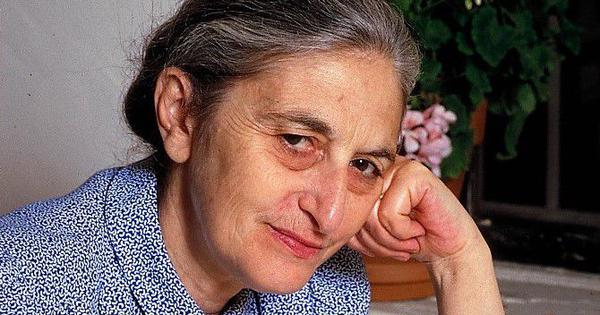
Imagine a book about India written 50 years ago by a woman named Ruth who lived there for a long time.
It tells two stories: one about a British woman in the 1920s who has an affair with an Indian prince, and another about her granddaughter visiting India in the 1970s and doing something similar.
People back then loved it, saying it was beautifully written.
But many Indians were upset, feeling Ruth didn't understand India and wrote unfairly about it.
Some British critics also found it boring or prejudiced.
Today, people wonder if a book like this would be published because we think more about who gets to tell stories.
However, the book still makes us think about relationships between different cultures and how people feel like outsiders.
It shows how one person sees India, and it makes us talk about how authors write about places they don't fully belong to.

Ruth Prawer Jhabvala's novel 'Heat and Dust,' published 50 years ago, won the Booker Prize and was later adapted into a film.
The novel interweaves two narratives set in the 1920s and 1970s, focusing on British women's relationships in India.
Initial reception was divided, with some praising its literary qualities while others found it contrived and prejudiced against India.
Indian critics, particularly, expressed strong dissatisfaction with Jhabvala's portrayal of Indian society and her 'Western' point of view.
Contemporary discussions question the novel's representation and authenticity, while acknowledging its lasting themes of cultural tension and outsider perspectives.
- Who
- Ruth Prawer Jhabvala, the author, and critics, readers, and literary figures assessing her Booker Prize-winning novel 'Heat and Dust'.
- What
- An analysis of the enduring legacy and varied reception of Ruth Prawer Jhabvala's novel 'Heat and Dust' on its 50th anniversary, exploring its literary merit, its portrayal of India, and its contemporary relevance.
- When
- The novel was published in 1975 and won the Booker Prize that year. Discussions regarding its reception and legacy are occurring 50 years later, around 2025.
- Where
- Primarily discussed in relation to Britain and India, reflecting the novel's settings and critical reception in both locations.
- Why
- To examine the novel's impact, its controversial 'inside-outsider' perspective on India, and how it holds up to contemporary standards of representation and authenticity.
Positive Reception
Critical Reception
Literary Merit
Positive Reception
Praised as 'a writer of economy, somehow filled with events, beautiful to read,' 'superb,' and 'a gift to those who care for the novel.'
Critical Reception
Criticized as 'contrived in its narrative structure, obtrusive in its authorial point of view, weak in style, stereotyped in its characters and viciously prejudiced in its vision of the Indian scene.' Some found it 'rather too contrived,' 'obscure and sombre,' and the 'literary equivalent of Coldplay; securely pedestrian, slightly patronising, tinged with the exotic, referencing far better work, but ultimately dull and pointless.'
Author's Perspective on India
Positive Reception
Anita Desai defended Jhabvala's frankness and irony, suggesting resentment stems from her position as a foreigner writing about India.
Critical Reception
Critics like Nissim Ezekiel and Eunice De Souza found Jhabvala's vision 'viciously prejudiced' and noted a lack of insight into Indian social forces, stemming from her own confessed detachment and focus on her personal experience ('Myself in India'). Salman Rushdie viewed her as a 'rootless intellect' disconnected from national literature.
Contemporary Relevance and Issues
Positive Reception
The novel's thematic tensions (colonial nostalgia, gender roles, cross-cultural desire) remain relevant, and Jhabvala's 'inside-outsider' perspective offers a unique, familiar yet disenchanted view.
Critical Reception
In today's era, the novel would raise concerns about authenticity, representation, and Western clichés about the East, with Indian characters potentially serving only as catalysts for the protagonists' development.
- Novel Title
- Heat and Dust
- Author
- Ruth Prawer Jhabvala
- Publication Year
- 1975
- Booker Prize Year
- 1975
- Film Adaptation Year
- 1983
- Setting Timeframes
- 1920s and 1970s