Archive · 14 Aug 2025
New Ethiopian Fossil Teeth Reveal Early Human Ancestor

Scientists found old teeth in Ethiopia from a new member of the human family tree.
These teeth are from a time when humans had not yet evolved, but ancestors of the Homo genus existed.
The new species lived with early Homo species in the same region.
This means multiple kinds of human ancestors lived together.
The scientists are trying to see if these ancestors ate the same foods or competed for resources.
This discovery helps show that human evolution was not a straight line.

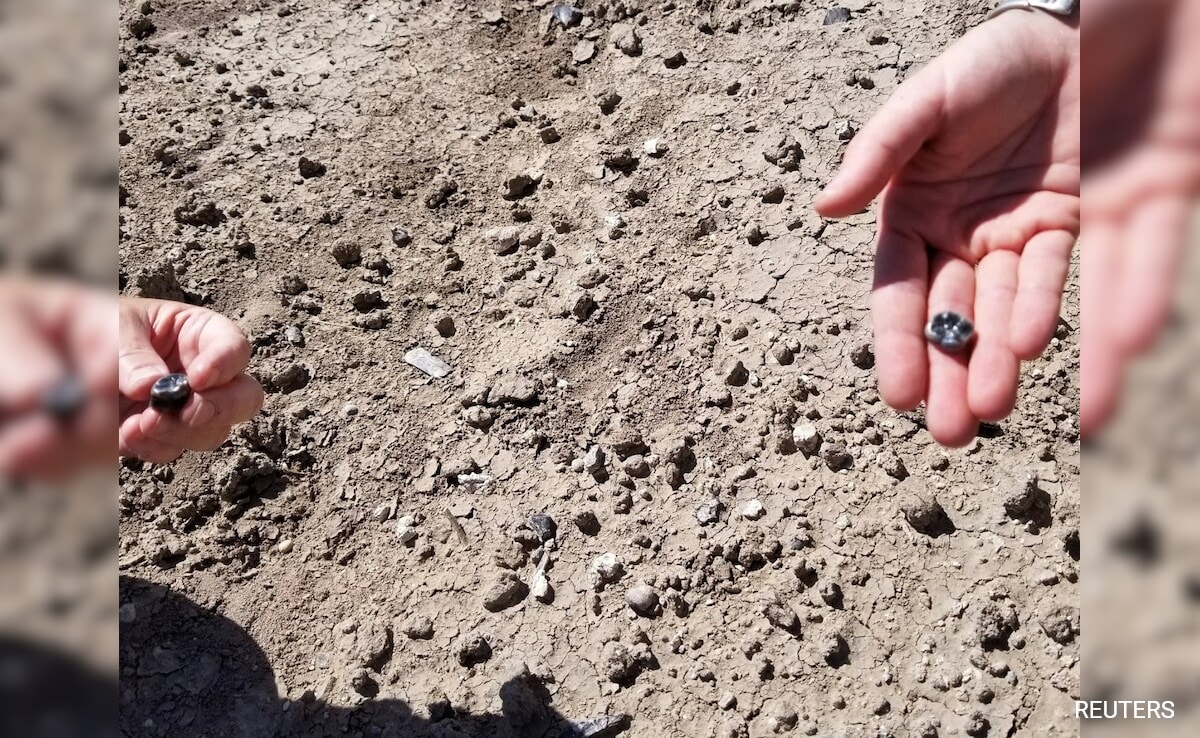
Researchers discovered new Australopithecus teeth fossils dating back approximately 2.65 million years.
The fossils were found in the Afar Region of northeastern Ethiopia.
The teeth belonged to a new Australopithecus species and early Homo species.
The findings suggest four hominins coexisted in East Africa.
Scientists are investigating resource competition between the species.
- Who
- Scientists, researchers of the Ledi-Geraru research project, and the extinct Australopithecus and Homo species.
- What
- Discovery of a new Australopithecus species based on fossil teeth.
- When
- The teeth date back about 2.65 million years ago.
- Where
- Northeastern Ethiopia’s Afar Region.
- Why
- To understand human evolution and the relationships between different hominin species.
Scientists Debate
Fossil Facts
Naming and Interpretation
Scientists Debate
Scientists have not yet assigned names to the Australopithecus and Homo species.
Fossil Facts
The discovery helps reinforce that human evolution is similar to other organisms repeatedly branching into multiple species.
- Species Discovered
- New Australopithecus species
- Location
- Afar Region, Ethiopia
- Fossil Type
- Teeth
- Approximate Age
- 2.65 million years ago
- Coexisting Species
- Early Homo Species
- Number of Hominins
- Four in East Africa at the time