

Archive · 12 Nov 2025
Lebanon's Pine Forests Decline Due to Invasive Insect and Climate Change
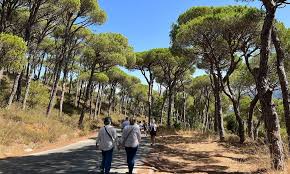
Imagine a big, old forest in Lebanon that makes delicious pine nuts.
But lately, a tiny bug from North America has come to visit.
This bug eats the parts of the pine cones that grow the seeds (the pine nuts).
This makes it hard for the trees to make many nuts.
The trees are also feeling sick because the weather is changing, getting hotter and drier, which makes them weaker.
Because there are fewer nuts, the people who pick them are losing their jobs, and the price of pine nuts has gone way up.
Even other bugs that eat wood are hurting the trees.
People are trying to help the forest by spraying bugs and teaching farmers how to take care of the trees better.
They know the forest is important for everyone.

Lebanon's pine forests, particularly in Bkassine, are suffering from an invasive insect that damages pine cones, drastically reducing pine nut yields.
Climate change, including droughts and rising temperatures, has weakened trees, making them more susceptible to pests and further decline.
The reduced productivity of the forest has led to a significant drop in employment for pine cone harvesters and a sharp increase in the price of pine nuts.
Besides the cone-eating insect, wood-boring beetles and illegal logging are also contributing to the degradation of the forest ecosystem.
Efforts to combat the decline include pest identification training for farmers and broader ecosystem management strategies, though challenges remain with pesticide application logistics.
- Who
- Farmers, forest health experts, laborers, U.N. officials, and Lebanese government bodies
- What
- Lebanon's historic pine forests are dying, leading to a decline in pine nut production and threatening livelihoods, due to an invasive insect and climate change impacts.
- When
- The insect was confirmed in 2015, with dwindling yields observed for years prior; ongoing decline.
- Where
- Bkassine forest, southern Lebanon, the Middle East's largest productive pine forest.
- Why
- An invasive North American insect (Leptoglossus occidentalis) attacks pine cones, weakening trees already stressed by climate change, exacerbated by illegal logging and past political turmoil.
Focus on Pest Control
Holistic Ecosystem Management
Effectiveness of Pest Interventions
Focus on Pest Control
Spraying pesticides is a crucial intervention, but logistical delays in accessing resources like helicopters hinder timely application.
Holistic Ecosystem Management
Pesticide spraying alone is insufficient; a broader strategy involving local communities and integrated forest management is necessary for long-term success.
Impact of Decline on Livelihoods
Focus on Pest Control
The dwindling pine nut yields directly threaten the livelihoods of families who have depended on forest resources for generations.
Holistic Ecosystem Management
The decline of the forest ecosystem impacts not only pine nut harvesting but also other aspects of community life and traditional practices.
- Location
- Bkassine forest, southern Lebanon
- Primary Threat
- Invasive insect (Leptoglossus occidentalis) feeding on pine cones
- Contributing Factors
- Climate change (droughts, erratic rainfall, rising temperatures), wood-boring beetles, illegal logging
- Impact on Productivity
- Up to 82% of seed pods can be left as empty shells
- Pine Nut Price Increase
- Nearly $100 per kilogram, up from around $65 five years ago
- Labor Reduction
- Pine-picker numbers reduced from ~250 to 20-30 in Bkassine